US court rejects Trump bid to stop transgender military recruits on January 1
The court’s action could prompt the administration to ask the conservative-majority US Supreme Court to intervene
Published December 22, 2017
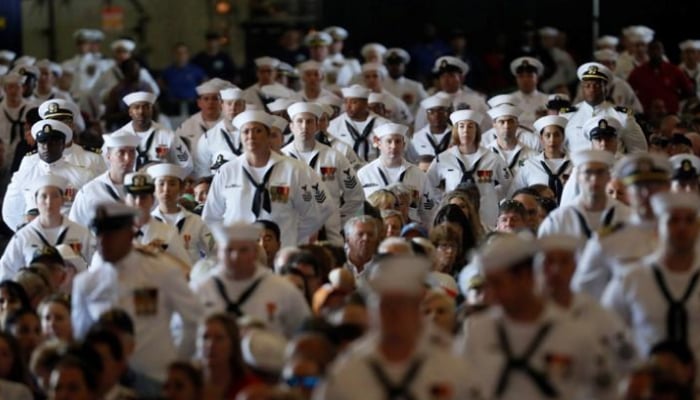
NEW YORK: A federal appeals court in Virginia on Thursday rejected a bid by President Donald Trump’s administration to prevent the US military from accepting transgender recruits starting January 1.
The administration had urged the appeals court to suspend an order by a federal judge in Baltimore for the armed forces to begin accepting transgender recruits on that date. It has also said the January 1 start date was causing the armed forces to scramble to revise their policies at the risk of harming military readiness.
In a brief two-paragraph order, the three-judge panel of the Richmond-based 4th US Circuit Court of Appeals said it was denying the administration’s request while the appeal proceeds. All three judges are Democratic appointees.
The court’s action could prompt the administration to ask the conservative-majority US Supreme Court to intervene.
“We disagree with the court’s ruling and are currently evaluating the next steps,” US Justice Department spokeswoman Lauren Ehrsam said in a statement.
Several transgender service members — backed by the American Civil Liberties Union (ACLU) — filed suit in Maryland after Trump said in July he would ban transgender people from the military, a move that would reverse a policy of the Republican president’s Democratic predecessor Barack Obama to accept them.
Trump cited concern over military focus and medical costs.
So far, three federal judges around the country have issued injunctions blocking Trump’s ban. His administration has appealed all three rulings.
Joshua Block — an ACLU attorney who represents the plaintiffs in the Maryland case — said he was happy the appeals court saw through the government’s “smokescreen” to further delay enlistment.
Thursday’s action was in response to the administration’s appeal of a November 21 ruling by US District Judge Marvin Garbis, who said that the transgender prohibition likely violates the plaintiffs’ constitutional right to equal protection under the law.
The Garbis ruling followed a similar one on October 30 by another federal judge in Washington, D.C. A third judge in Seattle also ruled against the administration on December 11.
In an August memorandum, Trump gave the military until March 2018 to revert to a policy prohibiting openly transgender people from joining the military and authorizing their discharge.
The memo also halted the use of government funds for sex-reassignment surgery for active-duty military personnel.
The Obama administration had set a deadline of July 1 of this year to begin accepting transgender recruits. But James Mattis — Trump’s defence secretary — postponed that date to January 1, which the president’s ban then put off indefinitely.
The Trump administration said in legal papers that the armed forces are not prepared to train thousands of personnel on the medical standards needed to process transgender applicants and might have to accept “some individuals who are not medically fit for service”.
The Pentagon on December 8 issued guidelines to recruitment personnel in order to enlist transgender applicants by January 1.
The memo outlined medical requirements and specified how the applicants’ sex would be identified and even which undergarments they would wear. The ban’s challengers said the memo contradicted the claim that the military was not ready.
The Justice Department disagreed, telling the court on Wednesday that “all this memorandum shows is that the military is scrambling to comply with the injunction”.
The lawsuit’s lead plaintiff Brock Stone, 34, has served in the US Navy for 11 years, including a nine-month deployment to Afghanistan, and wants to remain for at least 20 years, according to court papers.