Lockdowns are being eased worldwide; here's how North America is doing it
North America has reported more than 1.2 million cases and more than 72,000 deaths due to the coronavirus
Published May 05, 2020
In the absence of a treatment for the mysterious coronavirus, a lockdown had initially seemed like the best and only solution for world leaders as they devised strategies to avoid a widescale disaster. The prolonged suspension of life as usual since the early days of the pandemic has been unprecedented. It has also sparked economic turmoil on a grand scale, plunging the global economy into a recession.
Now, policymakers are weighing the costs of their earlier decisions and calibrating their strategies to avoid another looming disaster: the havoc that will be caused by the crumbling of the global economic order. Strict lockdown measures are therefore gradually being eased as the world attempts to limp back to normalcy.
According to Reuters, North America alone has reported more than 1.2 million cases and more than 72,000 people have died due to the coronavirus in the continent.
Despite the still-rising number of cases, Canada and the US are slowly reopening for business. In the US, some 38 million have already become unemployed due to the coroanvirus lockdown, while more than one million were unemployed in March alone in Canada.
Here’s a look at how different states in the US and some provinces in Canada have decided to ease lockdown measures.
USA
Alabama
Alabama Governor Kay Ivey has called the easing of the lockdown as the “safer at home stage”, which came into effect on April 30th and will expire on May 15.
Under the measures, people are encouraged to stay at home and follow good sanitation practices and businesses have been allowed to reopen only if they follow social distancing and sanitation. However, the state has barred “higher risk businesses and activities” to remain closed.
The state has also ordered the reopening of retails stores, but only if they are 50% occupied at any given time and if they practice social distancing and sanitation rules. Alabama has also allowed the reopening of beaches but set a 10 person limit on gatherings and asked people to maintain a separation of 6 feet.
However, non-work gatherings, regular programming at senior citizen centres, educational institutions remain closed like before. The state has also not allowed dine-in services to resume in restaurants and bars. Other entertainment venues, athletics facilities and close contact services remain closed in Alabama.
Alaska
Governor Mike Dunleavy believes that the state can go towards a “phased economic reopening” without threatening the hospital capacity in Alaska.
Al Jazeera reported that Dunleavy had announced on March 16 that state-run libraries, museums and archives will be closed through the end of March and he ordered boarding school programmes to send students home.
Some municipalities, such as the state capital Anchorage, ordered bars, eateries and public spaces to close before federal officials expanded the order statewide, starting on March 18.
However, on April 21 the governor announced that the state will open up in five phases starting from April 24 under strict health and safety guidelines as reported by NPR. Under the orders resturants can resume limited dine-in services and limited in-store shopping has been allowed.
The state has also allowed outdoor gym and fitness activities to resume along with barber shops and nail and hair salons.
The state has stated that anyone entering Alaska will have to be quarantined for 14 days and will have to fill a travel declaration form.
The state has allowed indoor and outdoor gatherings to a minimum of 20 people but has asked people to maintain social distancing.
The governor also announced that entertainment services such as libraries and museums will be closed to the public. The state has also closed schools for the ongoing academic year.
Arizona
State governor Doug Ducey has announced the reopening of retail shops with social distancing measures in place and all health and safety precautions from May 8 onwards. He also stated that he is allowing barbers and cosmetologists to resume “appointment-based services”.
“In addition, we’re announcing that restaurants can resume dine-in services beginning Monday, May 11. We’ve worked w/ industry leaders & public health officials to do this safely, while prioritizing physical distancing,” tweeted the governor on May 5.
Arkansas
Arkansas is one of the few states that have lifted the restrictions. State governor Asa Hutchinson had announced that OPDs can resume their operations from April 27 onwards.
In a tweet, Hutchinson stated that the state will also allow certain industries to open up from May 4 onwards under strict guidelines.
On April 25 he further announced that dentists can start their operations for certain dental procedues from May 18.
“Restaurants in Arkansas may resume limited (33%) dine-in services on May 11 under guidelines that require daily health screening of staff, use of masks & gloves, and strict social distancing. This is a significant but cautious step on the path back to normalcy,” tweeted Hutchinson, regarding the restaurants.
He further announced that barber, cosmetology, massage therapy, body art, & medical spa services can resume in the state from May 6 under strict guidelines.
California
State governor Gavin Newsom has announced that the state will be opened up in four stages and the reopening will be gradual, guided by public health and science.
From May 8 onwards the state has decided to open some low-risk sectors, which includes some retail stores such as clothing stores, florists, bookstores and sporting good stores with “curbside pick up facilities”.
Colorado
The state has allowed the resumption of retail services and personal care services, including hair salons, tattoo parlors, and others with strict precautions from May 1.
Gatherings in the state have been restricted to 10 people with state parks reopening, but playgrounds, picnic areas and campgrounds are closed.
Florida
The state eased up some restrictions from April 30 onwards after it went into a lockdown on March 20. The state has also allowed the reopening of state parks from May 4 onwards.
Georgia
The state has allowed people to leave their homes with mandated social distancing and recommended mask-wearing outside, reports the Wall Street Journal. However, it has said older and at-risk residents can leave home only for essential needs/work with limited visitors.
The gatherings have been limited to 10 people and nonessential businesses have been barred from allowing gatherings at their premises.
The state has also allowed dine-in with capacity limits and opened beaches and parks with social distancing.
Idaho
Stay at home orders in Idaho expired on April 30th and NPR has stated that the state has entered stage 1 of reopening on May 1.
According to NPR, in the first stage, 90% of businesses have been allowed to resume their operations but only if they follow social distancing and sanitation protocols. The state has also asked people to avoid gatherings of any size and nonessential travel.
However, indoor gyms, recreation facilities, hair and nail salons, bars, nightclubs and large venues will remain closed in the first stage. This also includes dine-in service at restaurants, but pickup and delivery have been allowed.
Indiana
State governor Eric Holcomb had stated that Indiana was in a lockdown under five stages with the first stage being the stay-at-home order.
Holcomb tweeted that starting from May 4, the state will enter the second stage under which anyone over 65 has been asked to stay at home.
“Essential travel restrictions will be lifted, and social gatherings of up to 25 people will be permitted following CDC social distancing guidelines,” said the governor.
The state has also said manufacturers, industrial and other infrastructure operations that had not been considered essential will be allowed to open, but encouraged people to work from home.
Retail and commercial businesses may open at 50% capacity. Examples include apparel, furniture, jewelry and liquor stores that have been operating as curbside or delivery only. Shopping malls can open at 50% capacity with indoor common areas restricted to 25% capacity,” said the governor.
Restaurants and bars have been asked to open up at 50% capacity, while personal services can resume operations from May 11. From May 8 onwards, indoor worship will also be allowed with social distancing.
Iowa
State Governor Kim Reynolds on April 27 allowed select businesses in 77 of 99 counties in Iowa to resume operations with limited capacity, starting May 1, reported USA Today.
The state has also allowed bars and restaurants to resume operations with limited capacity and social distancing.
Kansas
Governor Laura Kelly on Friday announced the first phase of her plans to reopen businesses in the state and allowed mass gatherings with a maximum 10 person limit.
However, in the first phase, bars and nightclubs, fitness centers, hair salons or barber shops and public swimming pools will not open, said the governor. But the state has allowed restaurants to resume operations as long as they adhere to social distancing.
According to USA Today the state is hoping that it lifts all restrictions by June 15.
Missouri
The Wall Street Journal reported that the state has allowed businesses to open up with physical distancing measures and also allowed restaurants to resume operations as long they enforce social distancing. The state parks have been allowed to open up during the day.
Montana
State Governor Steve Bullock has allowed places of worship to open up from April 26 onwards but with strict physical distancing.
“On Monday, April 27, main street and retail businesses can reopen. But that doesn’t mean things should look like they did before this virus. Just like we're now used to the markings on the floor of grocery stores, retail stores must be able to maintain physical distancing,” tweeted the governor.
From May 4 onwards the state has allowed restaurants, breweries, distilleries and bars to re-open with limited capacity. The state has also given the option to schools to resume in-class learning from May 7.
New Jersey
The authorities have changed restrictions in New Jersey and have allowed the opening of state and county parks and golf courses from May 2 with social distancing measures.
New York
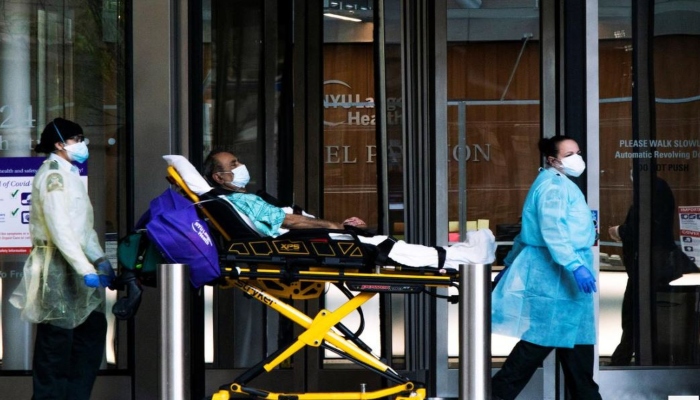
In New York, the state that accounts for about a third of all US infections, Governor Andrew Cuomo on Monday outlined plans to ease restrictions on a regional basis.
Without giving a specific time frame, Cuomo told a daily briefing that construction, manufacturing and the wholesale supply chain would be allowed to start up under the first phase of a four-step return to normality.
According to Reuters, a second phase would permit insurance, retail, administrative support and real estate businesses to open again, followed by restaurants, food services, hotels and accommodation businesses in the third stage, Cuomo said. In the final phase, arts, entertainment and recreation facilities and education would restart.
Cuomo suggested that rural parts of New York might be relaxed ahead of “higher-risk regions,” including New York City.
Ohio
In Ohio, Governor Mike DeWine allowed construction and manufacturing to reopen on Monday, and letting office workers return.
Oklahoma
State Governor Kevin Stitt has signed the "Open Up and Recover Safely" order on April 22 that allowed personal care businesses to open from April 24 by appointment only, reported USA Today. It added that the state has also allowed churches, restaurants, movie theaters, gyms and tattoo parlors to open from May 1 onwards.
South Dakota
State Governor Kristi Noem has issued a Back to Normal plan which allows individuals to stay at home when sick and has eased travel restrictions on them. The state has also allowed employers to transition back to the workplace.
While retail businesses have been allowed to resume operations with social distancing, schools have been asked to continue with remote learning.
Texas
Governor Greg Abbott has announced the first phase of the reopening of the economy in Texas and allowed certain activities to resume operations with limited occupancy.
Under an order, all retail stores, restaurants, movie theaters, and malls have been allowed to reopen from May 1 with 25% of occupancy. However, the state has ordered that food-court areas, play areas, and interactive displays and settings must remain closed in malls. The same rule has been applied to museums and libraries.
Churches and places of worship remain open. The state has also allowed outdoor sports to open up as long as no more than four participants are playing together at one time.
Public swimming pools, bars, gyms, cosmetology salons, massage establishments, interactive amusement venues, such as bowling alleys and video arcades, and tattoo and piercing studios have been asked not to open up under this plan.
The state will move on to its next plan on May 18 after reviewing this stage.
Utah
State Governor Gary Herbert has stated that Utah has moved from the "high risk" phase to the "moderate phase" of its recovery timeline on May 1.
According to NPR, under this phase people have been asked to maintain 6 feet of distance from others in public and wear face masks where that is not possible. Out of state travel remains limited, and anyone returning from high-risk areas must self-quarantine for 14 days.
The radio service also reported that previously closed businesses like gyms, bars and personal care services have been allowed to reopen if they exercise strict precautions. Dine-in services can resume if restaurants meet specific distancing and hygiene requirements, though takeout and delivery are encouraged.
Washington
State Governor Jay Inslee has announced that Washington will open in four stages and the first stage came into effect from May 5.
Under the first phase, some recreation activities such as hunting, fishing, golf boating and hiking have been allowed. It has allowed a drive-in spiritual service. Under the first phase construction, landscaping, automobile sale businesses will be allowed to open up. The retail outlets will also be allowed to open up but only for curbside pick up orders.
Canada
Meanwhile in Canada, multiple provinces have started easing down lockdown measures slowly and gradually.
According to Global News, Canadian provinces Ontario, Quebec, Alberta, Manitoba and Saskatchewan are among those deciding to ease the lockdown by allowing the resumption of some economic and social activities.
Manitoba is one of the provinces allowing museums, libraries and retail businesses, including restaurants, to return to work at half capacity.
The province along with Saskatchewan and Alberta has decided to open non-essential medical services as well.
On the other hand, Ontario is allowing a small number of mostly seasonal businesses to re-open. The publication reported that Quebec is easing the lockdown on most retail stores outside the Montreal area only.
The other Canadian provinces are yet to issue their plans.