


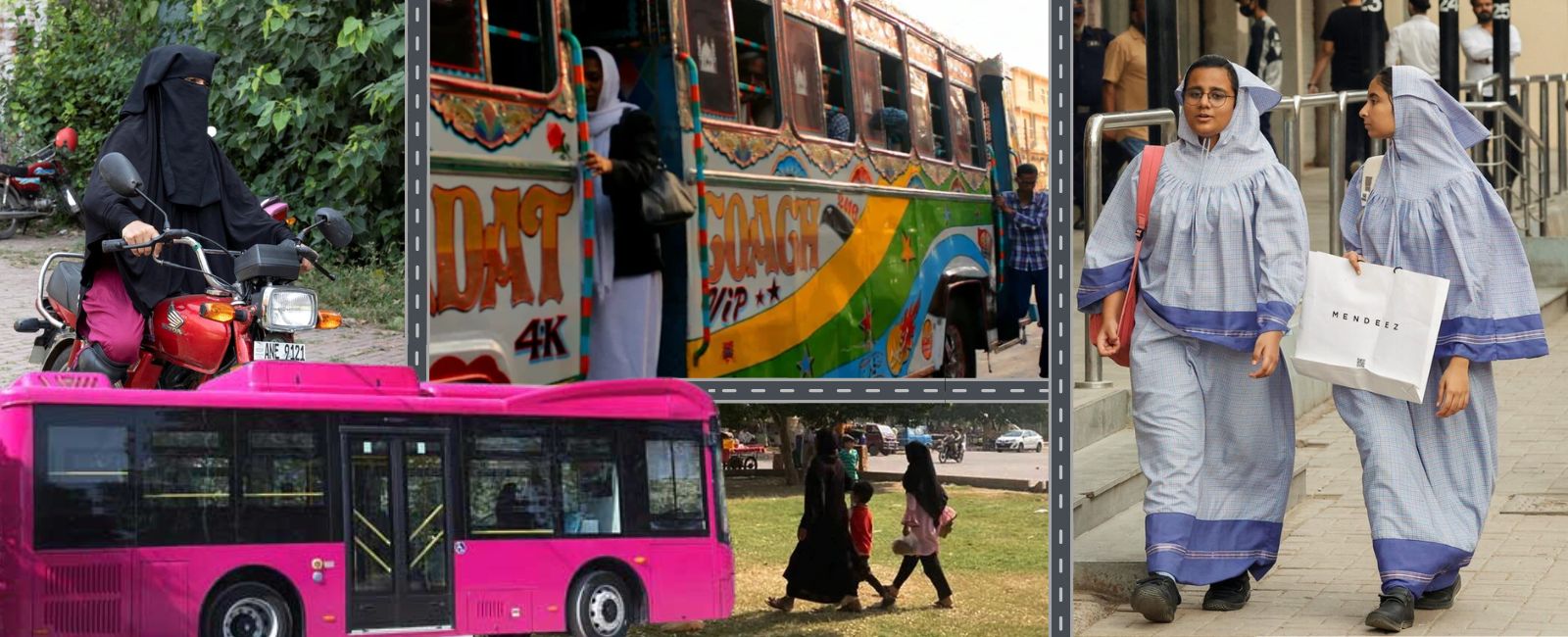
The cost of exclusion: Why women are invisible in public spaces
Poor urban planning neglects women's participation and movement worsened by substandard infrastructure and insufficient commute options




 Updated Tuesday Dec 02 2025
Safety, security, and freedom are often denied to women via patriarchal social systems, financial restrictions, and exclusionary design. But while the patriarchy within social and financial systems is a major point of debate, poor and exclusive design that enables the former two remains an often-neglected consideration because the discussion treats women’s productive and reproductive labour as a stark binary.
In Pakistan, this binary is even starker under the idea of "chadar aur char dewari", which literally translates to 'the veil and the four walls'. This particular idea emphasises the importance of seclusion and protection at home. Thus, men dominate spaces used for production, whereas women are supposed to occupy the private and social sites that are for reproduction.
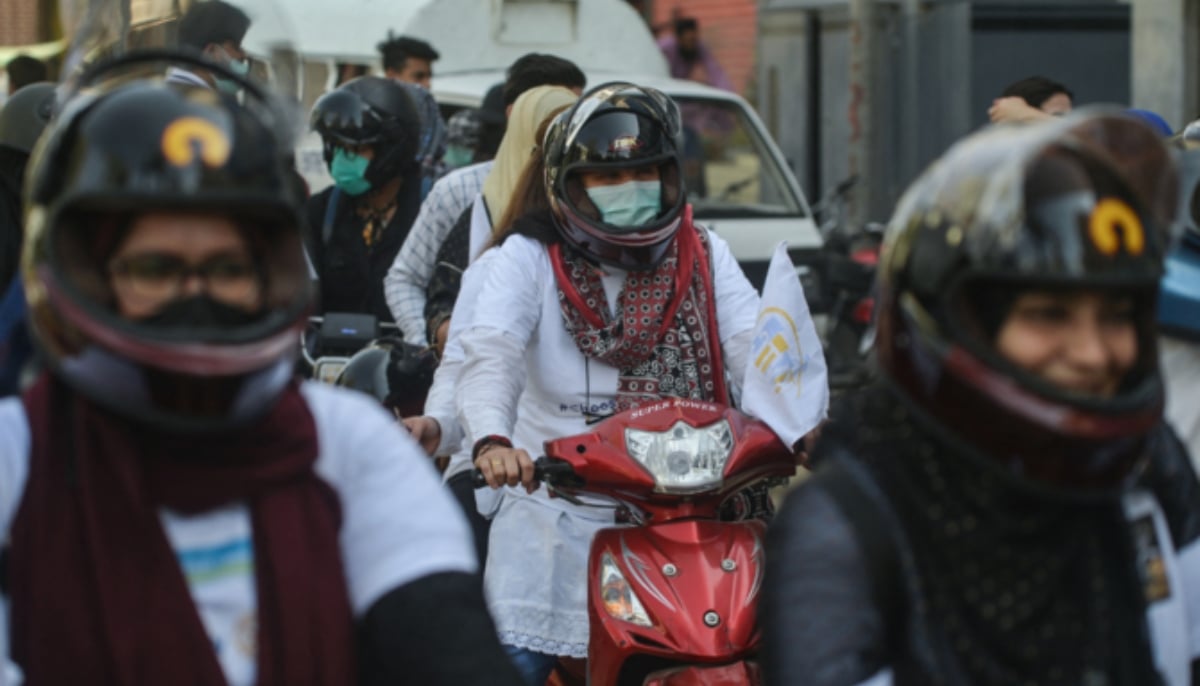
Within this spatial binary, houses and courtyards are the designated spaces for women, while city centres are the domain of men.
In a sprawling, vehicle-centric megacity like Karachi, this oversight seems more deliberate. Urban planning has historically prioritised private vehicles, leaving pedestrians and public transport users, particularly working-class women, vulnerable in poorly lit alleyways and unregulated transit networks.
Physical barrier: Male-centric transit and mobility
Rehana* climbed the steps of Khan Coach to take a front seat, next to the driver. However, the conductor hustled her off the bus, saying that if she was allowed on board after 11pm, he would lose the fares of four to six male passengers. She was left with no choice but to book a rickshaw to reach Surjani Town, which meant spending more than Rs700 to get home. She’d hoped to get done with work on time, but her privileged boss thought she wanted to go home early for a party.
While experts often point out the male-centrism of public transportation routes and designs, which pose significant challenges for women, the data confirms it. Vehicle registration data from the Pakistan Bureau of Statistics shows that while motorcycle registration soared from 55 million in 2010 to 76 million in 2020, the percentage decline in bus and taxi registration continued steadily throughout the decade, prioritising individualised, male-centric transport over functional public transit.
Research indicates that the lack of gender-inclusive planning leads to several issues, including safety concerns, harassment, and an overall feeling of being unwelcome. The absence of effective governance and the enormity of the unregulated informal transport sector further add to these issues.
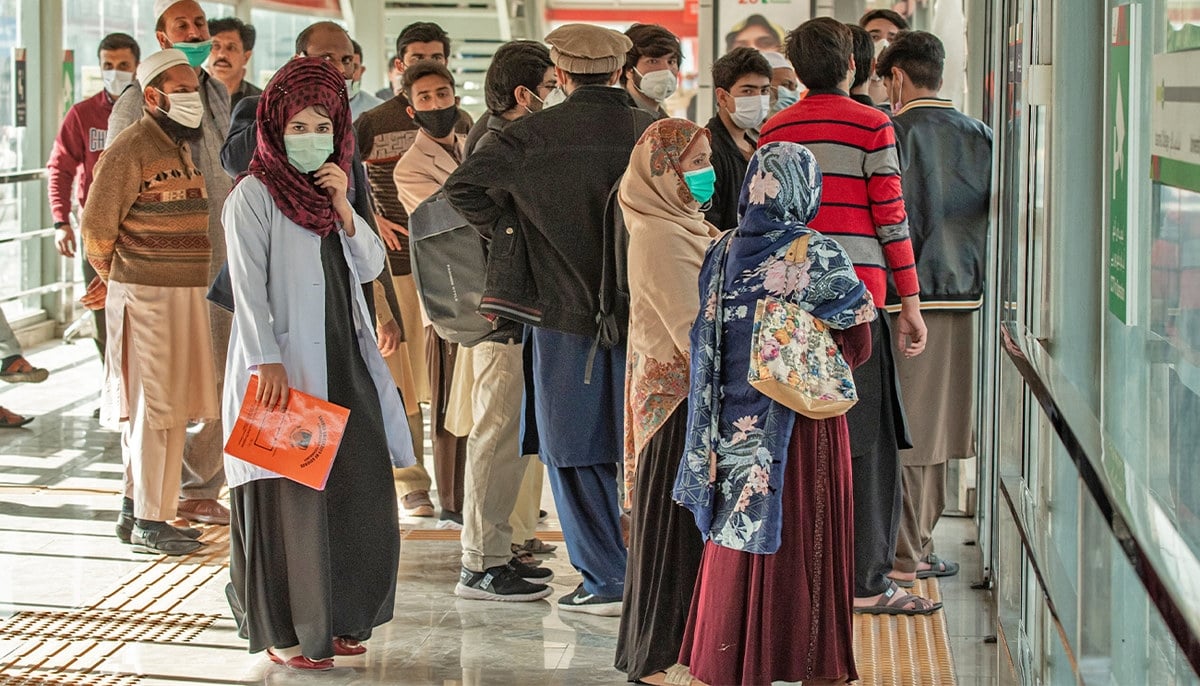
Rehana* related her story with a hint of tears in her eyes, lamenting the unfairness of the system that speaks of women’s empowerment, yet fails to deliver inclusive design. She, however, is not alone.
For Mehreen*, too, transportation is a daily irritant and a matter of dependency. She cannot travel alone, even during the day, from her home to the salon. She either asks her brother to drop her off at the salon in North Nazimabad from Ajmer Nagri on his bike, or she travels with the other girl, Saba*, in a Qingqi. Their journey home is the same every day after 8:30pm. On days like Eid, when work runs very late, Baji (the salon owner) sends them home in a ride-hailing car, Mehreen and Saba said. Women’s transportation woes are not limited to just access and vehicle type. The use of ride-hailing apps, has added a layer of concerns about the safety, suitability, and viability of the mode of transport. This again stems from the lack of a functional urban transport regulatory environment.
The government has been attempting to establish a public transportation system via the dedicated Bus Rapid Transit (BRT) tracks and red, white, and pink buses on the various existing roads. However, these systems are inadequate and designed mostly with men's needs and work timings in mind.
Research shows that women’s work timings are different and they often utilise transportation on mostly short routes, albeit multiple times a day. Women also often have children and babies with them, requiring well-designed and inclusive toilet access and sanitation. Using transportation on short routes, multiple times a day, increases the cost of travel for women, whereas the lack of clean toilets with specialised functions (for babies and children) discourages them from travelling. This non-inclusivity of the urban transportation system and poor access to sanitation facilities discourage many women from joining the formal workforce.
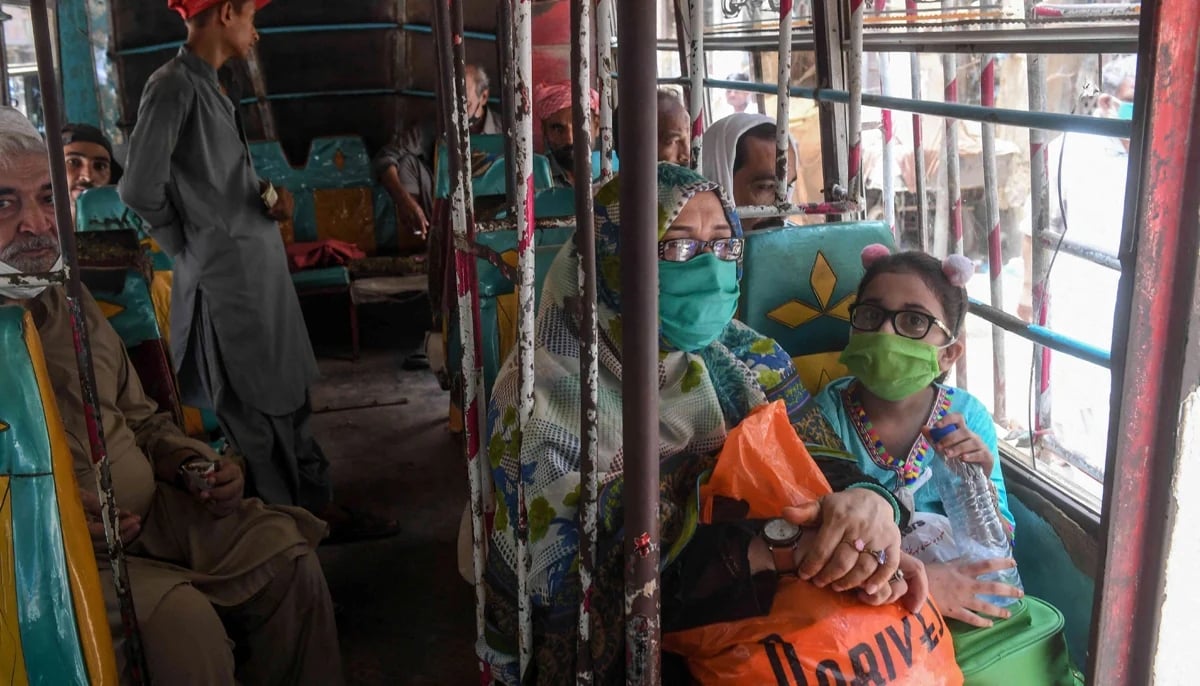
This brings into prominence the story of Nasreen*, who works as domestic help at the salon where Mehreen and Saba work. She lives in Nusrat Bhutto Colony, and though her home is hardly two to three kilometres from her workplace, continuing work had become impossible for her when the government stopped Qingqis from plying the major roads of the city.
"I had to walk almost 20 minutes from Sakhi Hasan in really hot weather to the salon," she said, while explaining that the unreliable bus timings and high cost made it impossible for her to use the red bus or other private buses plying the Sher Shah Suri Road. "I had told the other bajis (employers) that I would stop working because of the Qingqi issue. My husband was worried about my health and safety because of the daily walk," Nasreen* shared.
Public transportation was not the only bane of Nasreen’s life. The dark alleyways near her home were another danger that she must navigate to reach her home safely during the winter. For her, living this life meant endangering her well-being every single day.
An unwelcoming city: Design failures and lost dignity
Women in Karachi often face discouragement from their families when it comes to getting formal employment.
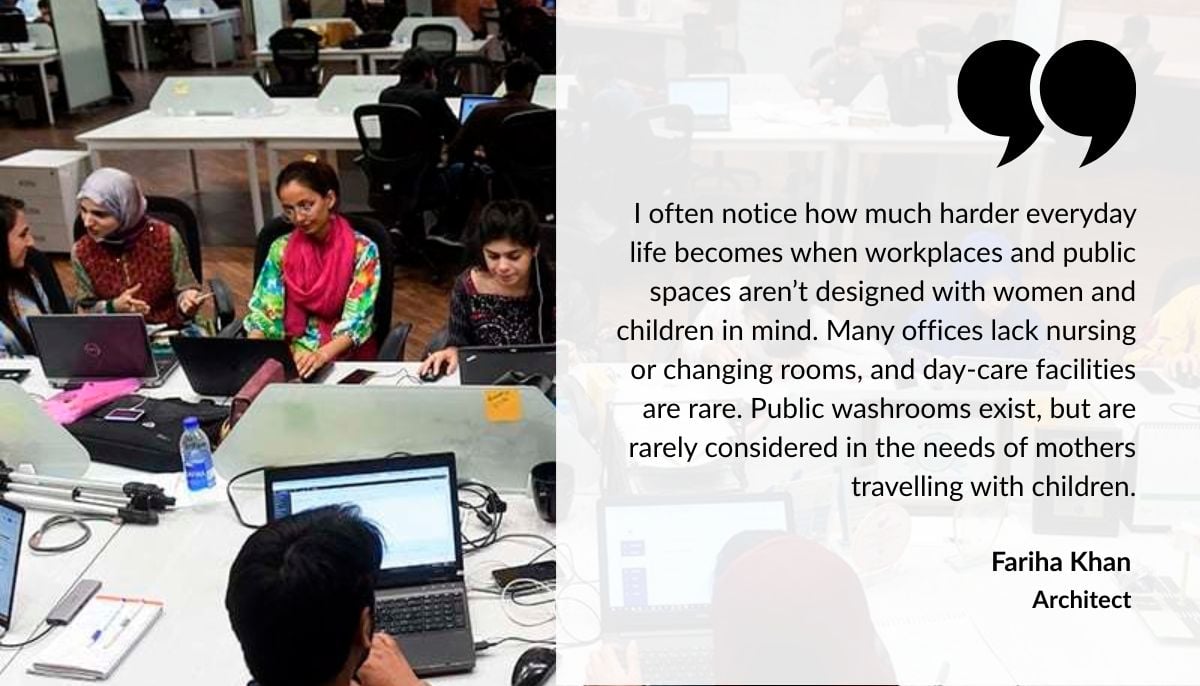
Architect Fariha Khan of the Faculty of Architecture and the Built Environment at Karachi's Nazeer Hussain University said, "I often notice how much harder everyday life becomes when workplaces and public spaces aren’t designed with women and children in mind. Many offices lack nursing or changing rooms, and day-care facilities are rare. Public washrooms exist, but are rarely considered in the needs of mothers travelling with children."
Khan, who is also a mother, said, "Streets and sidewalks make pushing a stroller feel like an obstacle course. Inclusive design is not a luxury; it helps make everyday life easier for women with children and is essential for easing these daily challenges, allowing women to care for their children and manage their work with confidence and dignity."
For many women, this dignity is denied by design. As a result, they end up staying home or prefer taking up low-paying home-based jobs.
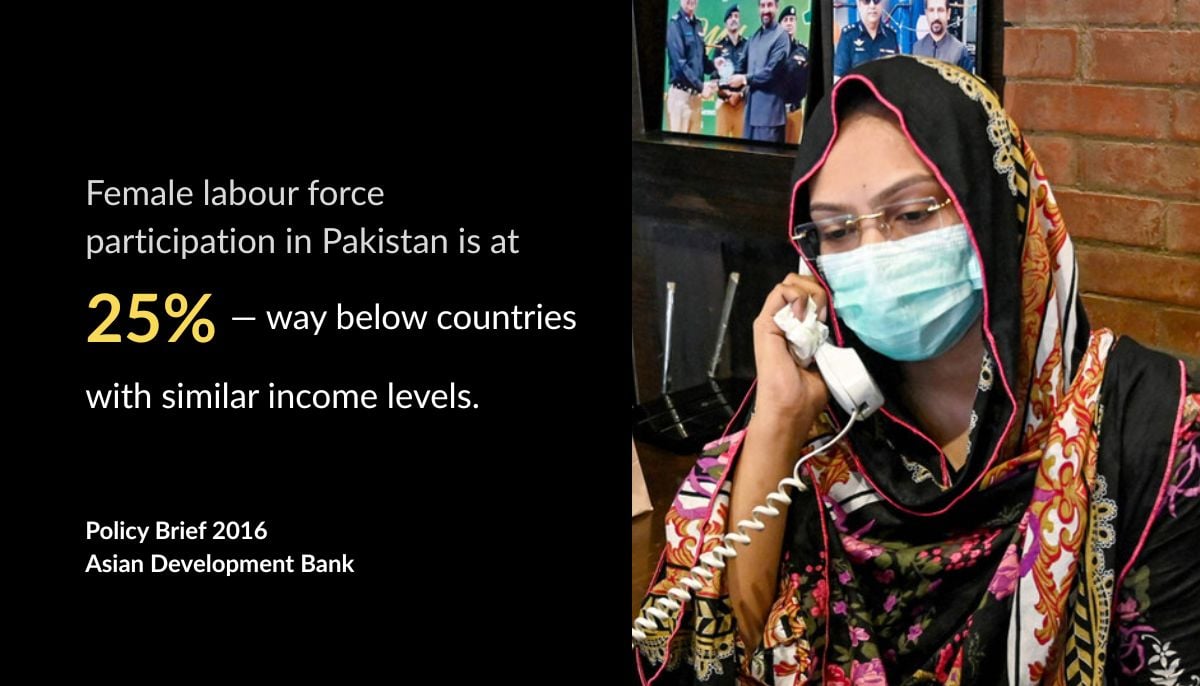
A policy brief by the Asian Development Bank showed that female labour force participation in Pakistan was at 25% in 2016, way below countries with similar income levels. The percentage, as cited by the World Bank in 2023, continued to drop down to 22.6% following a 2019 survey reported by the International Labour Organisation. Women with higher education, including university degrees, lag behind men, depicting a loss of potential productivity.
The McKinsey Global Institute (MGI) published a report, “The Power of Parity: How Advancing Women's Equality Can Add $12 Trillion to Global Growth,” 10 years ago, calling on the public, private, and social sectors to close the gender gaps in work and society.
A 2020 update from MGI noted that the global Gender Parity Score (GPS) had only inched up from 0.60 in 2015 to 0.61 in 2019 (on a scale where 1.0 is full parity). Progress on gender equality in work was even slower.
All types of inequalities have consequences. Women’s spatial inequality is very much responsible for keeping them financially dependent, reducing their access as well as control over money.
Historically, spaces have been divided into public and private. The public space is accessible to all citizens for their use and enjoyment. On the other hand, the private place is only for those allowed or authorised by law.
Globally, the trends in urban design show that from Venice to a small Anatolian town, Balıkesir, and from Pakistani cities to American cities, spaces are designed with visible gender inequality.
Women very rarely use spaces, such as parks, gardens, and sports grounds. The scarcity of these spaces in cities like Karachi further creates an exclusionary environment, with women confined to only sheltered spaces. Even if women use some public spaces, they are not at liberty to do so alone. They find safety in numbers.
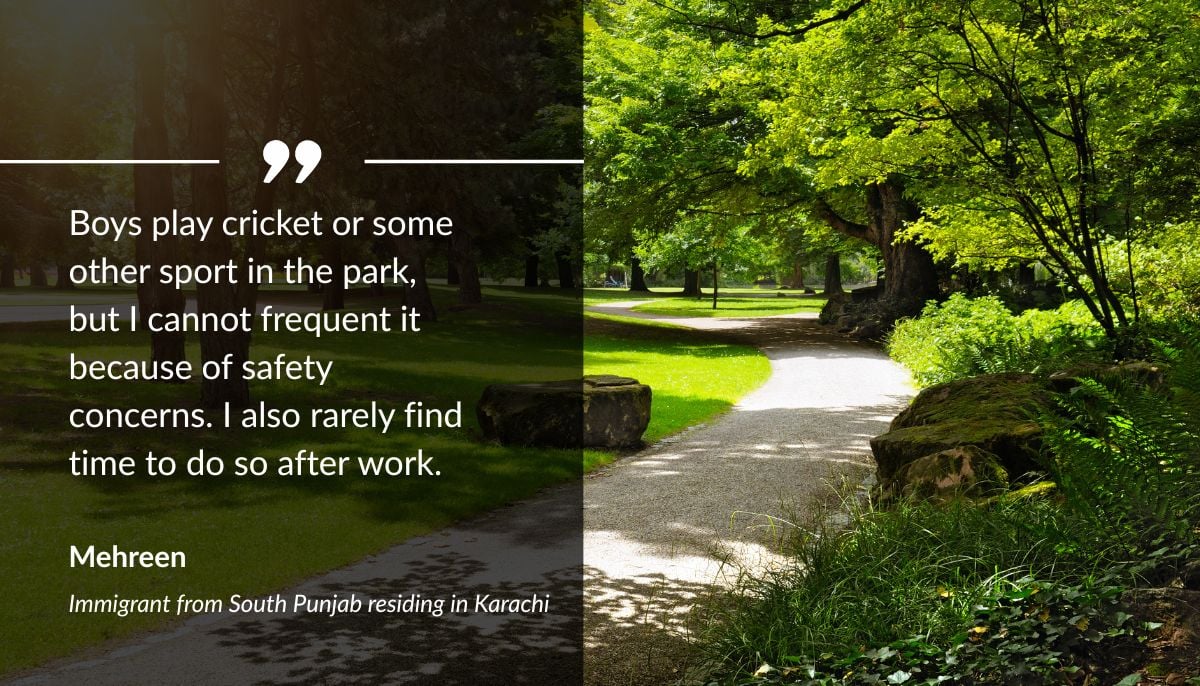
Mehreen*, an immigrant from Southern Punjab, said that it has been years since she went to the very small park in her katchi abadi. "Boys play cricket or some other sport in the park, but I cannot frequent it because of safety concerns. I also rarely find time to do so after work," she explained. The salon owner, however, said that in her neighbourhood in North Nazimabad, she was not uncomfortable when walking in the park. She admitted it could also be connected to the neighbourhood typology.
Lack of adequate planning has pushed up to 60% of people into overcrowded informal settlements, where they have little or no access to basic services like potable tap water, sanitation, security, healthcare, and education.
In such settlements and beyond, the brunt of issues is faced by the women, especially by those who work both within and outside their homes.A major hurdle, as mentioned, is the lack of care facilities for children.
A 2021 World Bank report estimated that improving access to childcare and other care services in Pakistan could boost women’s labour force participation by 10% to 15%.
Karachi’s urban sprawl is not just an oversight but also perhaps a deliberate decision. Historically, from the 1952 Greater Karachi Plan (GKP) until the 1986-2000 Karachi Development Plan, the focus has been on addressing infrastructural demands and services, with little or no discussions on grounding those plans on inclusivity and equity. The 1952 GKP aimed to address infrastructure demands and the looming water crisis. The 1958 Greater Karachi Resettlement Plan aimed for housing and settlement town development under the umbrella of the Ford Foundation.
The 1974-85 Karachi Development Plan envisioned infrastructure and major projects like the wastewater treatment system and highway bypasses. The 1986-2000 Karachi Development Plan built upon previous plans and aimed for a 24/7 water supply for all residents, addressing long-term issues like traffic, housing, and environmental concerns, but failed to do so. The 2020 Karachi Strategic Development Plan, despite reiterating the importance of water conservation and infrastructure improvements, failed to offer a clear roadmap for achieving these goals.
All these plans failed to deliver due to weak legal frameworks, poor implementation, lack of informed data, and massive interference from interest groups. In addition, women have mostly remained missing in the decision-making process of these plans. Thus, the plans suffered from implementation inclusivity.
Currently, the government is focusing on the Greater Karachi Regional Plan 2047 with an aim to address illegal constructions and bring improvements across all key sectors of the metropolis, including water supply, sewerage, health, education, transport, infrastructure and commerce. The plan has initiated a robust public consultation process, including open house exhibitions and an online feedback system. It is hoped that the government will take into account the importance of inclusivity.
Way forward: Designing the future
Architects and urban planners can help improve women’s well-being and lived spatial experiences to enhance their financial inclusion in various ways.
An integrated design approach for housing and workspaces under mixed-use development zones can reduce commute times and create vibrant, easily walkable communities with appropriate human-friendly infrastructure. Mandating housing zones near employment hubs can help prioritise the development of affordable housing under public-private partnerships. This can be linked to mixed-use buildings that combine residential units with work-live spaces, including retail units and other amenities, catering to low- and middle-income workers, thereby reducing their reliance on massive transportation networks for travelling long distances.
The world over, governments are experimenting with flexible workspaces to support co-working and remote work infrastructure. Such flexible spaces should be connected to collective amenities, including childcare facilities, healthcare, and education, to reduce the need for long commutes for essential services. If nothing else, the COVID-19 pandemic provided us with the need to come up with decentralised cities and amenity systems, to enable continuity during disasters, which are becoming a constant due to the accelerating impacts of climate change.
To realise these crucial design improvements, reduce, and ultimately remove the cost of exclusion, the government must take concrete, systemic steps. This includes the use of participatory planning as a tool to increase the number of women decision-makers in the planning departments, giving tax incentives to private developers, and establishing channels for continuous feedback and improvement of housing and transportation infrastructure.
Andaleeb Rizvi is a journalist and a former staffer at The News. She has editorial expertise on Pakistan’s economy, trade, and urban development, with academic experience in architecture and planning.
Header and thumbnail image by Geo.tv