


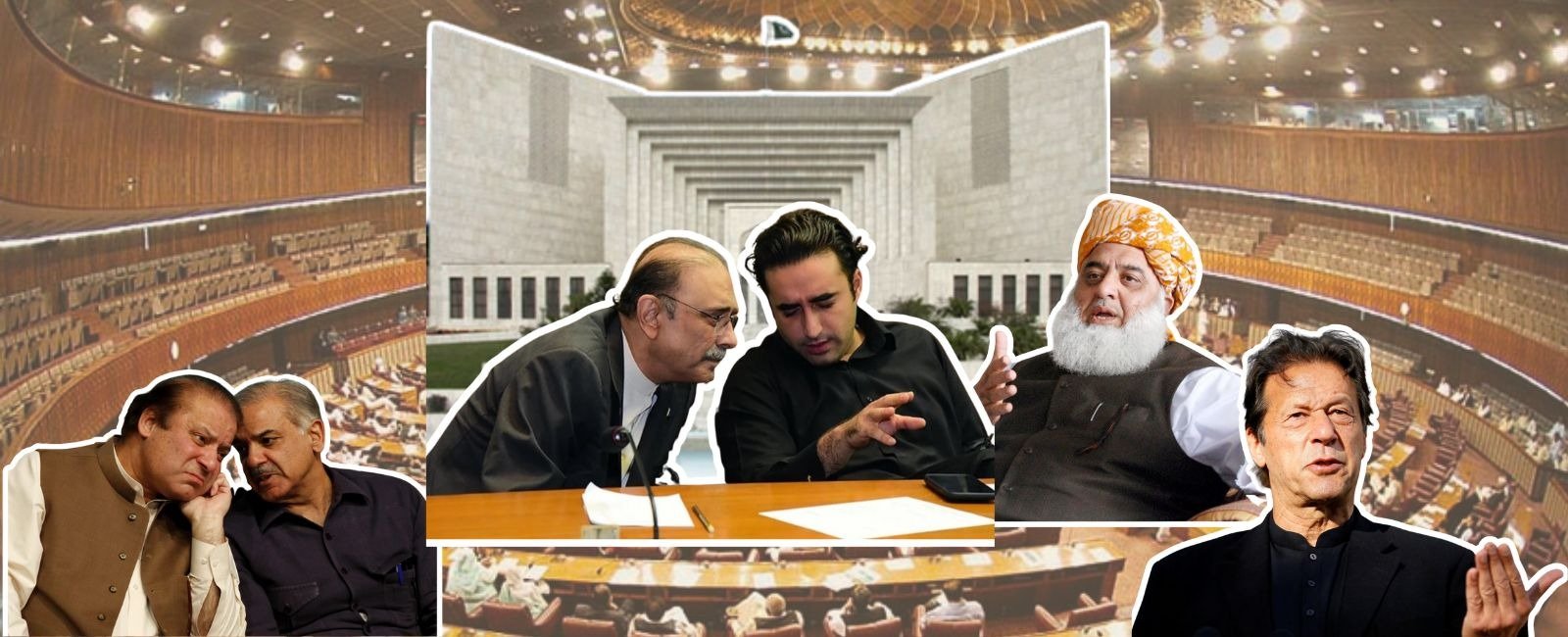
Dissecting 2025: Legislative shifts that rewrote rules of governance in Pakistan
Restructuring judicial setup and military command, lifetime immunity for president and Field Marshal among changes made in year's legislation




 Updated Tuesday Dec 30 2025
2025 has been a year of action and tension in parliament, buzzing with heated debates, high-profile legislation, and intense opposition. While the National Assembly passed 42 government bills and 13 private members’ bills, the year was dominated by the 27th Constitutional Amendment and tweaks to the Prevention of Electronic Crimes Act (Peca) 2016, which captured public and political attention alike.
Although the government claimed that all the legislation was carried out in the interest of the people, critics strongly opposed this view and argued that the measures were not meant to serve the public good but were instead executed as part of a “heist” that benefited only a “select few.”
Here is the key legislation carried out during the year.
Constitutional amendment
In November, parliament passed the 'Constitution (Twenty-seventh Amendment) Bill, 2025', with a two-thirds majority, bringing a major overhaul of the country’s judicial structure and military command.
The establishment of the Federal Constitutional Court (FCC), the abolition of the Chairman Joint Chiefs of Staff Committee (CJCSC) position, and the introduction of a new position of Chief of Defence Forces (CDF) were among the major tweaks made under the Constitutional Amendment.
Lifetime immunity for the President of Pakistan and the Field Marshal was also among the tweaks made under the amendment. Presidential immunity will be limited in cases where a former president assumes any public office after completing his tenure as head of state.
Military command
After the enactment, Chief of Army Staff Field Marshal Syed Asim Munir assumed the role of Chief of Defence Forces for a period of five years and is now commanding all three branches of armed forces — army, navy and air force.

Under the 27th Constitutional Amendment, the titles of Field Marshal, Marshal of the Air Force and Admiral of the Fleet, if awarded to any officer in recognition of services, will remain honorary ranks for life. However, parliament retains the authority to revoke these titles.
In line with the amendment, parliament also approved three related bills: the Pakistan Army (Amendment) Bill, 2025, the Pakistan Navy (Amendment) Bill, 2025, and the Pakistan Air Force (Amendment) Bill, 2025.
The federal government may, on the recommendation of the Chief of Defence Forces, authorise the Vice Chief of Army Staff or the Deputy Chief of Army Staff to exercise the powers of the Chief of Army Staff.
Among the major structural changes approved was the abolition of the post of Chairman Joint Chiefs of Staff Committee (CJCSC), which will be replaced by the Commander of the National Strategic Command.
Federal Constitutional Court
The Federal Constitutional Court has been established, while the incumbent chief justice will continue to serve as Chief Justice of Pakistan until the completion of the current term. After that, the senior-most judge between the chief justice of the Supreme Court and the chief justice of the Federal Constitutional Court will be designated as the Chief Justice of Pakistan.
The amendment also gives the president and the prime minister a central role in the judicial appointments process, changing the existing mechanism. The Judicial Commission has been tasked with deciding the transfer of high court judges, while any objections to such transfers will be reviewed by the Supreme Judicial Council.
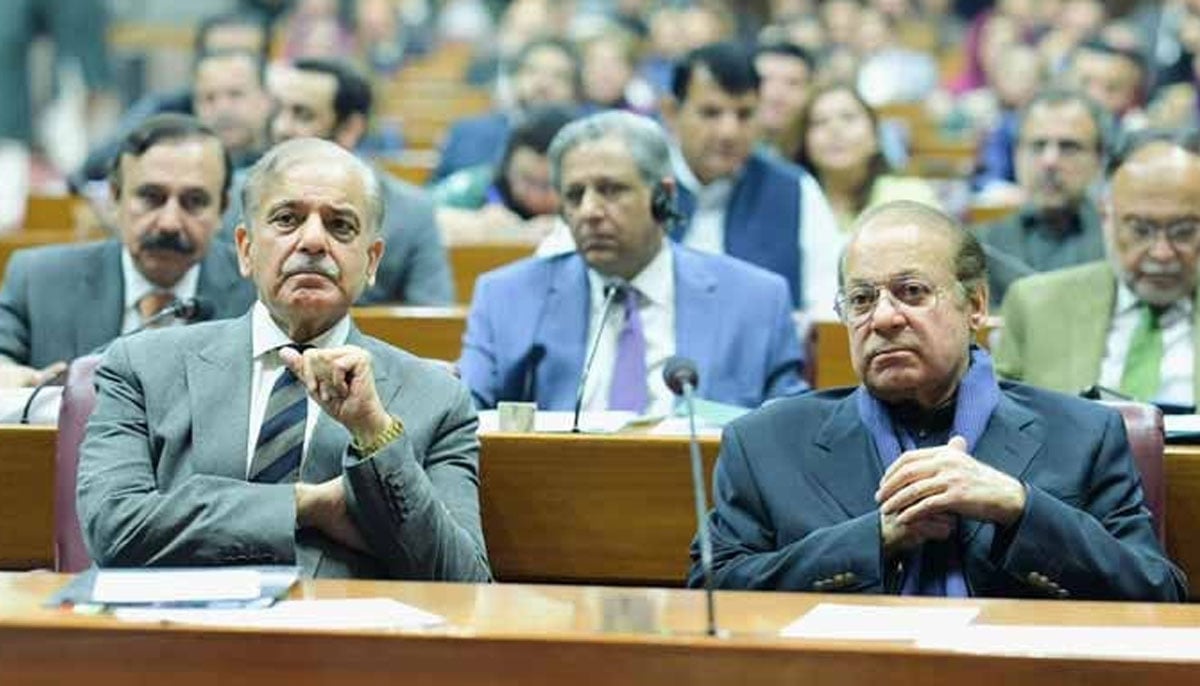
Following the amendment, Supreme Court judges Justice Mansoor Ali Shah and Justice Athar Minallah resigned from their positions.
In his 13-page-long resignation, Justice Shah termed the amendment as “a grave assault on the Constitution of Pakistan”, which “dismantles the Supreme Court of Pakistan, subjugates the judiciary to executive control, and strikes at the very heart of our constitutional democracy”.
Separately, Justice Minallah wrote that his oath as a judge was not merely to a constitution in form, but to "the Constitution in spirit." He said that despite his repeated attempts to believe otherwise, "what is left of it is a mere shadow — one that breathes neither its spirit, nor speaks the words of the people to whom it belongs."
Opposition protests against amendments
Tehreek Tahaffuz-e-Ayeen-Pakistan (TTAP), an opposition alliance led by Pakistan Tehreek-e-Pakistan, termed the 27th Constitutional Amendment a violation of the Constitution's basic structure and demanded restoration of its original form.
The alliance also comprises Pakhunkhwa Milli Awami Party, Majlis-e-Wahdatul-Muslimeen, Sunni Ittehad Council, Grand Democratic Alliance, Balochistan National Party-Mengal, and Rabita Jamiat Ulema-e-Islam, as well as other senior politicians, including Mustafa Nawaz Khokar and Muhammad Zubair.
The TTAP maintains that freedom of expression is being “suppressed” in Pakistan under the 27th Constitutional Amendment.
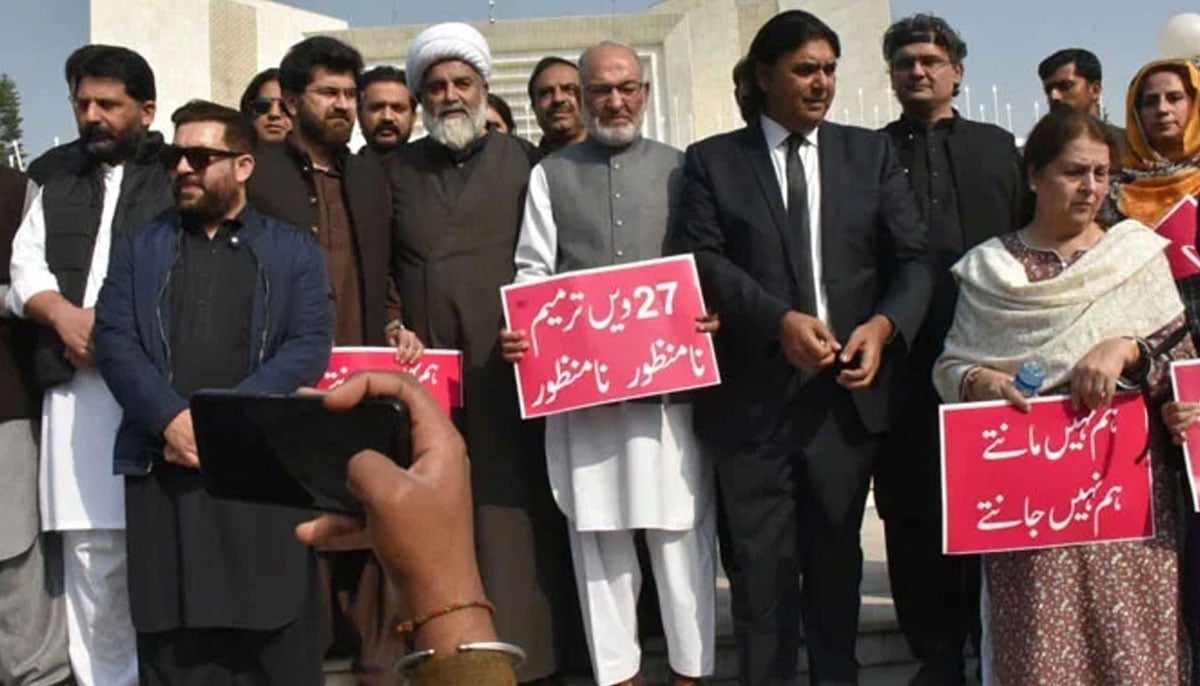
“People have been silenced, fundamental human rights are being violated, and we will not remain quiet as long as we live,” Allama Raja Nasir Abbas remarked.
The TTAP had observed Black Day and also held a national conference as part of the ongoing movement.
Minorities Rights Commission
In December, parliament passed the National Commission for Minorities Rights Bill, 2025, with a majority of votes, seeking to “safeguard” the rights of non-Muslims in the country.
The bill sought to establish a statutory commission, the National Commission for Minorities Rights, to safeguard the rights of religious minorities, ensuring their representation and protection from discrimination.
The commission will oversee the implementation of minority rights, review related policies, and has been given the authority to independently investigate cases of rights violations.
PECA
In January, parliament approved the Prevention of Electronic Crimes (Amendment) Act, 2025, paving the way for the establishment of the Social Media Protection and Regulatory Authority (SMPRA), the National Cyber Crime Investigation Agency (NCCIA), and the Social Media Protection Tribunal, primarily to curtail the spread of “fake news.”
The statement of objects and reasons of the bill read that it aimed to modernise and enhance the legislative framework for combating cybercrime in Pakistan, ensuring alignment with present-day requirements and addressing the growing complexities of cyber threats.
The move is widely opposed and rejected by the journalist community as well as human rights bodies. Pakistan Federal Union of Journalists (PFUJ) had challenged the tweaks in the Supreme Court, staged several protests, and boycotted assembly sessions.
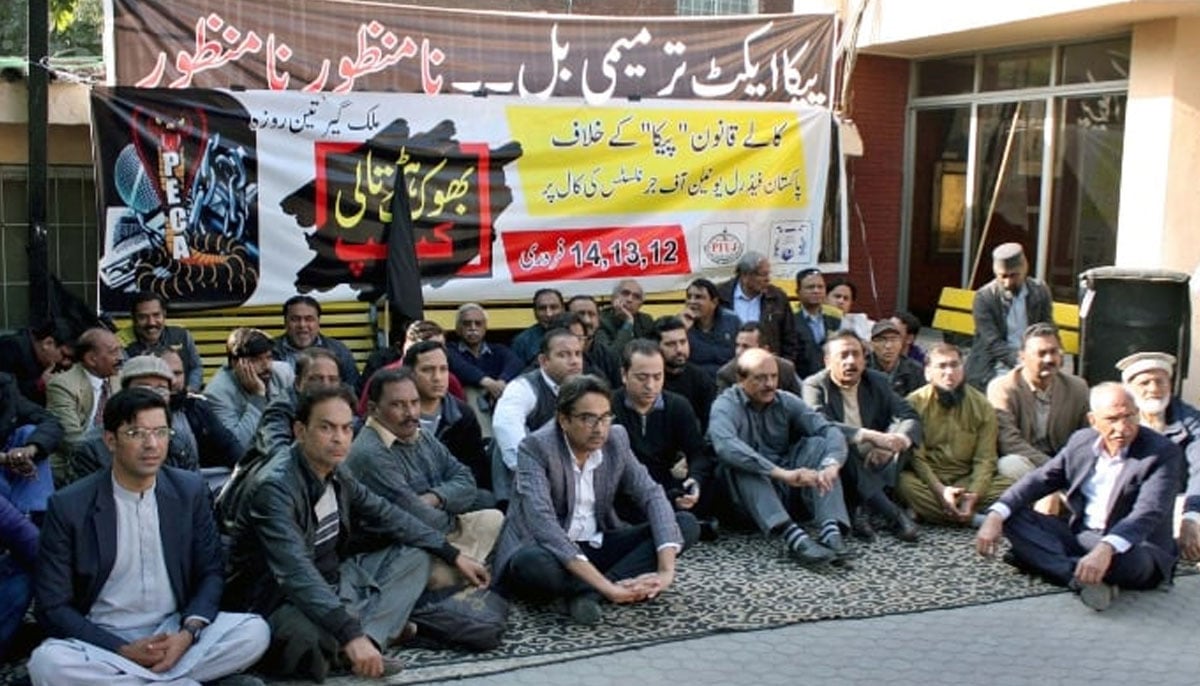
The International Federation of Journalists, the world's largest organisation of journalists representing over 600,000 members in 142 countries, also expressed concern for journalists and media workers in Pakistan amid PECA.
In a letter addressed to Chief Justice of Pakistan (CJP) Justice Yahya Afridi, IFJ General Secretary Anthony Bellanger had sought swift action to address this critical situation for Pakistan's media and protect press freedom as guaranteed in Article 19 of the country's Constitution.
“We understand that Pakistan is a signatory of the International Labour Organisation (ILO) and United Nations Conventions that confer freedom of speech and expression and key democratic rights, but the curtailing of these fundamental rights under the PECA Act is of great concern for the IFJ and international journalist community,” said the letter.
Other legislation
Following a series of deadly migrant boat tragedies that have claimed hundreds of Pakistanis’ lives, the parliament had also passed a series of bills — the Prevention of Trafficking in Persons (Amendment) Bill, 2025; The Prevention of Smuggling of Migrants (Amendment) Bill,2025; and The Pakistan Coast Guards (Amendment) Bill, 2025 — aimed at combating human trafficking and illegal migration.
According to new laws, jail terms and penalties have been increased for those found guilty of human trafficking.
For human traffickers, a minimum imprisonment of three years has been extended to a maximum of 14 years in cases involving women and children. Financial penalties have also been increased, with fines now set between Rs1 million to Rs2 million.

The legislation further cracked down on those sheltering undocumented foreigners, increasing imprisonment from three to five years and doubling fines to Rs2 million.
Additionally, the Emigration (Amendment) Bill, 2025, made prison sentences compulsory rather than allowing courts to impose fines alone.
The parliament had also passed the Digital Nation Pakistan Bill,2025, aimed at transforming Pakistan into a digitally empowered nation by fostering a dynamic digital society, a robust digital economy, and efficient digital governance.
The bill, recognising the potential of digital technologies to drive innovation, economic growth, and societal well-being, sought to accelerate sustainable development, enhance public service delivery, and modernise governance for improved transparency and effectiveness.
Verdict
The legislative and political developments of 2025 have reshaped Pakistan’s institutional landscape, from the judiciary and military structures to digital governance and minority protections. Despite protests and differing opinions, these reforms mark a decisive year of change.