


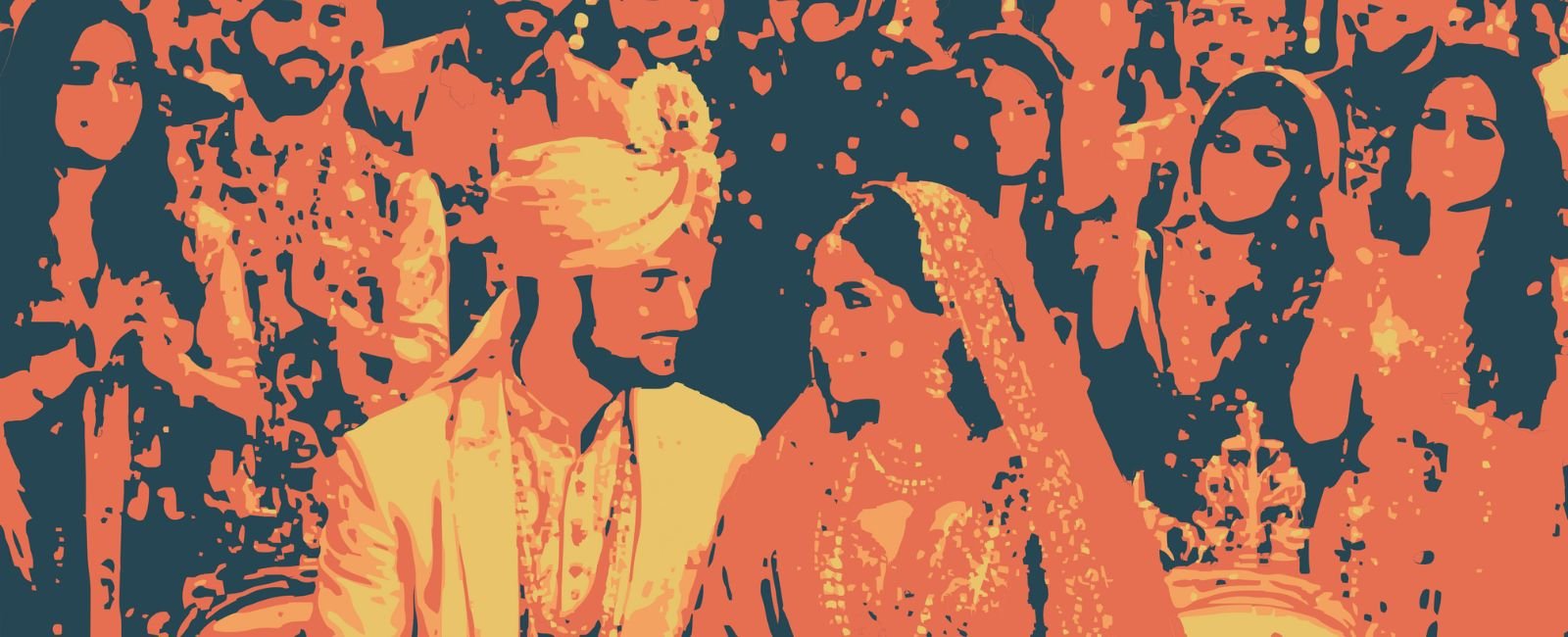
Decemberistan: What led to the creation of a monster wedding season?
At what point is Decemberistan an expression and function of culture, and at what point is it just emulation and regurgitation?




 Updated Tuesday Jan 06 2026
I was committed to a Thursday daytime mehndi, so committed that I already had clothes matching the colour scheme. How was I to know there would be another Thursday daytime invite? The Thursday in question was not a national holiday, it was just a random Thursday that had the misfortune of being in the middle of the December wedding boom, colloquially known as Decemberistan. Now, how to tell the other Thursday event that I’m already busy because their novel idea of a daytime mehndi wasn’t actually that novel. Everyone makes time for the mammoth list of events; life comes to a pause because everyone has a thousand and one 'functions' to attend at all times of day.
Let’s admit it, Decemberistan has gotten out of hand. Even though the name might suggest it is restricted to one month, the wedding season starts in October and ends during spring, but the main volume of weddings does take place towards the end of December and most of January. Now, I love a good party, but when a whole month becomes a competition, we must look at ourselves in the mirror.
"Busy" is the default state of mind; weekends are maddening between runs to tailors, parlours and finally wedding venues. If you have the (mis)fortune of being a close friend, then you’re also part of photoshoot logistics, the exclusive pre-wedding rituals at home, not to mention getting a front row seat to family drama and the forever quandary of no one ever being happy.
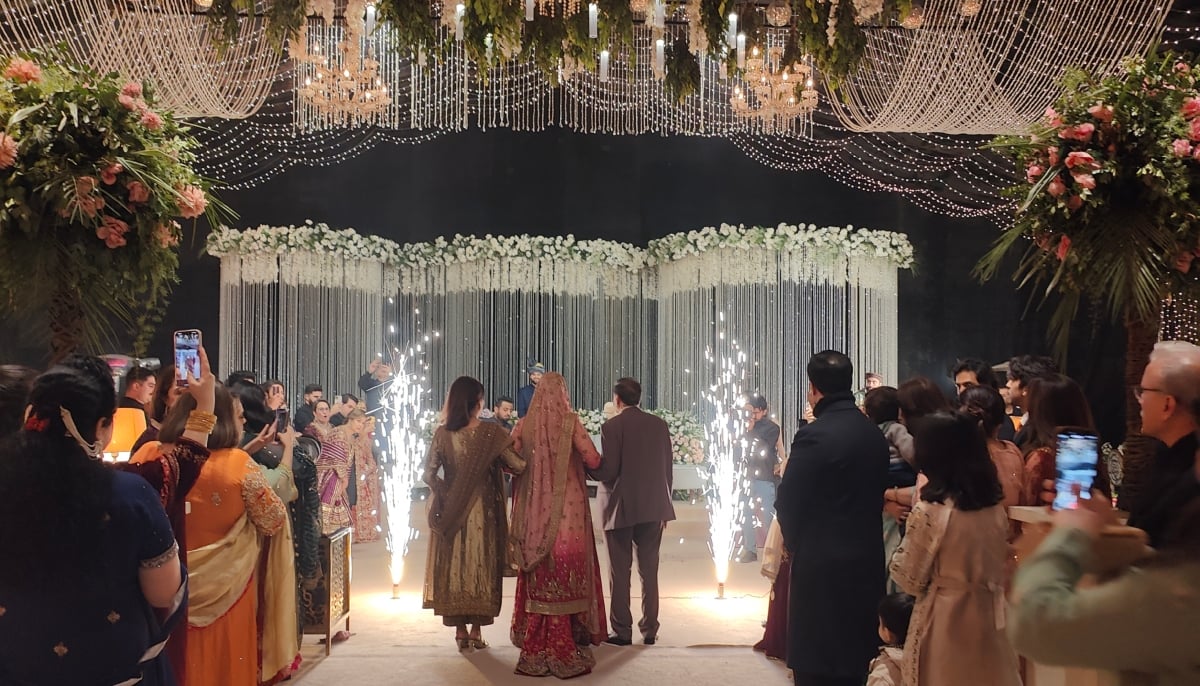
Most of us actually experience each wedding season with varying degrees of closeness; no one leaves Decemberistan as being a passive guest; at least one wedding is “close”, while others are semi-involved, with the rest being the “I have to show face here”. It is truly a calendar that no one should or would envy. Your closeness also determines how many events you can miss while making sure you’re there for the main things; "Do I attend the Qawaali Night or skip it and make sure I’m there for the dholki at Baby Khala’s house?", the perfect place to be is, "Haan, we’re not that close so I can just attend the mehndi and skip the rest dude, I’m sure they’ll understand."
This season is also a game of Instagram; capture the looks, post them and all the photos you took. The younger you are, the higher the likelihood you’ll be posting an offensive amount of stories documenting you and your friends dancing to the hit song at mehndis; the older you are, the higher the likelihood you’ll be posting ironically jaded posts about wedding season (heck, even writing articles about it all).
Decemberistan is also not a stand-alone phenomenon. It’s a year-long production. It begins with the great race of venue booking, followed by the designer appointment fiascos or the collection of screenshots for master saab, then you slide into the photographer DMs hoping for the right date, not to mention the ups and downs of managing family expectations. Oh! And in all this, I forgot the food — good luck if your families are foodies — then the stalemate of guests' lists, then managing the flight schedules and the machinery of airport pickups, then as a family you must decide where you stand on the 'WhatsApp-invite-only' versus the 'We will hand deliver each invite' debate, which flows into the question of gift exchange, not to mention countless market runs, and THEN... comes the wedding.
Even as a casual observer with no intention of taking part in this endeavour, I find myself exhausted. I mean, it couldn’t have always been this crazy? Right?
One look at your parents’ wedding photos will prove just how non-crazy "The Old Times" were; I’m sure the pressures at that time were high, a wedding is a family’s greatest production, but the intensity of the wedding season and events cannot be compared to today. In that mythical time, weddings were still a family’s biggest productions, but the scale was much smaller; mehndis were household functions with dholkis and thaals, nikahs and rukhsatis formed the cornerstone of the festivities, and the valima being the ending note from the groom’s family.
So, how did it get this... big?
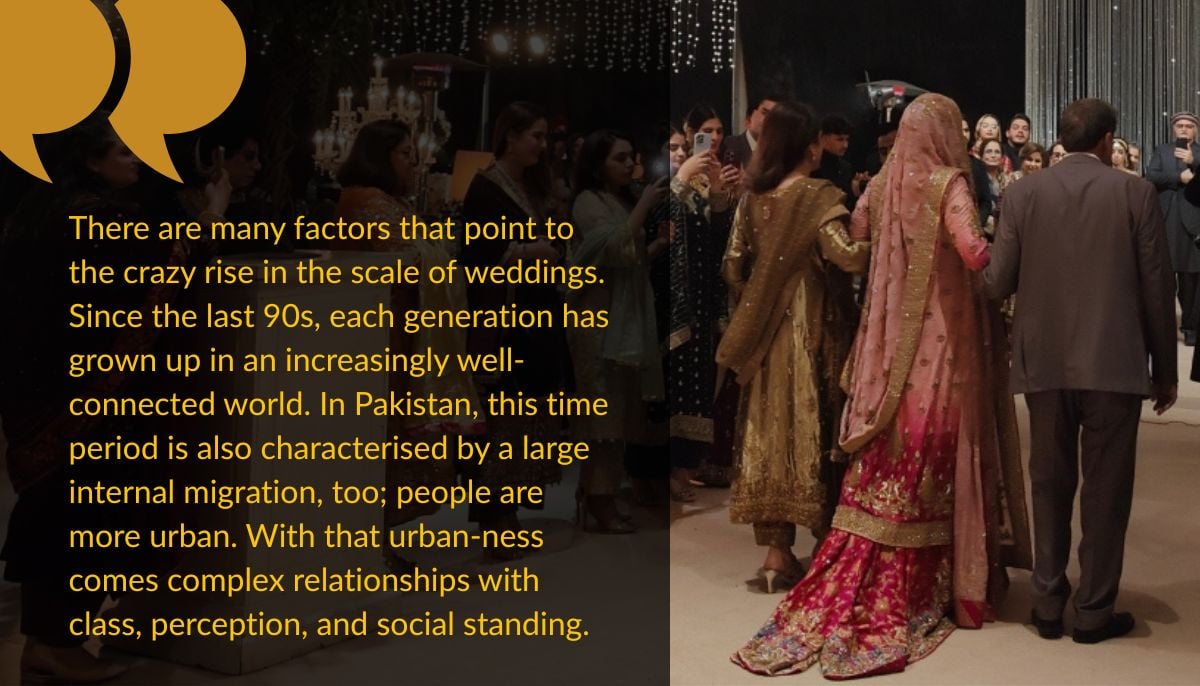
There are many factors that point to the crazy rise in the scale of weddings. Since the last 90s, each generation has grown up in an increasingly well-connected world. In Pakistan, this time period is also characterised by a large internal migration, too; people are more urban. With that urban-ness comes complex relationships with class, perception, and social standing.
The company you work in determines the friends you make, and the types of circles you socialise in, as does your position. In the same vein, your school determines your social standing for the rest of your life. There’s wide scholarship on how these definitions of class and social standing, outside of money, were created by the status quo to keep power; gatekeeping social structures ensure longevity (and who doesn’t love staying at the top).
The same differentiation was witnessed in weddings. As media became more prevalent and things once considered exclusive became visible, the upper classes needed a way to make their weddings visually distinctive. The avenues through which this played out were designer wear, special invites, and added events. Traditional events like the mayoun (one of the many cultural pre-wedding events) became a large undertaking, one that defeated the quietness built into the tradition from which the event originally got its name.
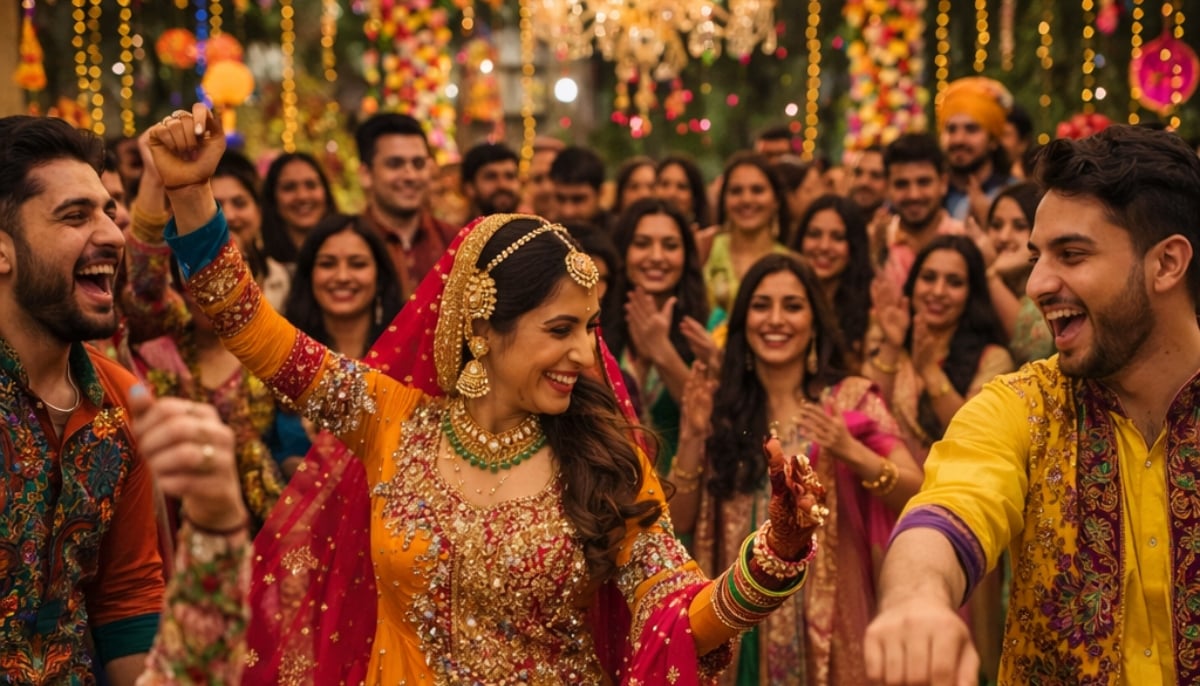
This "innovation" opened the proverbial gates; events were added, everything from 'Qawaali Nights' and 'Bridal Showers' (a direct import from the Netflix-isation of a generation). Then add social media to this equation, and what we have is an endless loop of growth. Each new iteration of the 'Great Pakistani Wedding' is publicised online (along with wanting to be different, comes the deep need to flaunt) which creates aspirations; "if they can have it, why can’t I?". The question is a completely fair one, but as each year goes by, everyone also finds themselves asking, "Where will this end?".
As people aspired to bigger and better things, business and capital flowed towards making those dreams a reality that, too, at every price point. Everyone from the wedding hall owners to the makeup artists, the photographers, and the decor vendors actively took part in the 'Wedding Industrial Complex'. The ability to create "unique" experiences helped establish how each vendor was priced; the true "innovators" charge exorbitant amounts of money. Each wedding these vendors participate in is posted online, and from there, their ideas become trends.
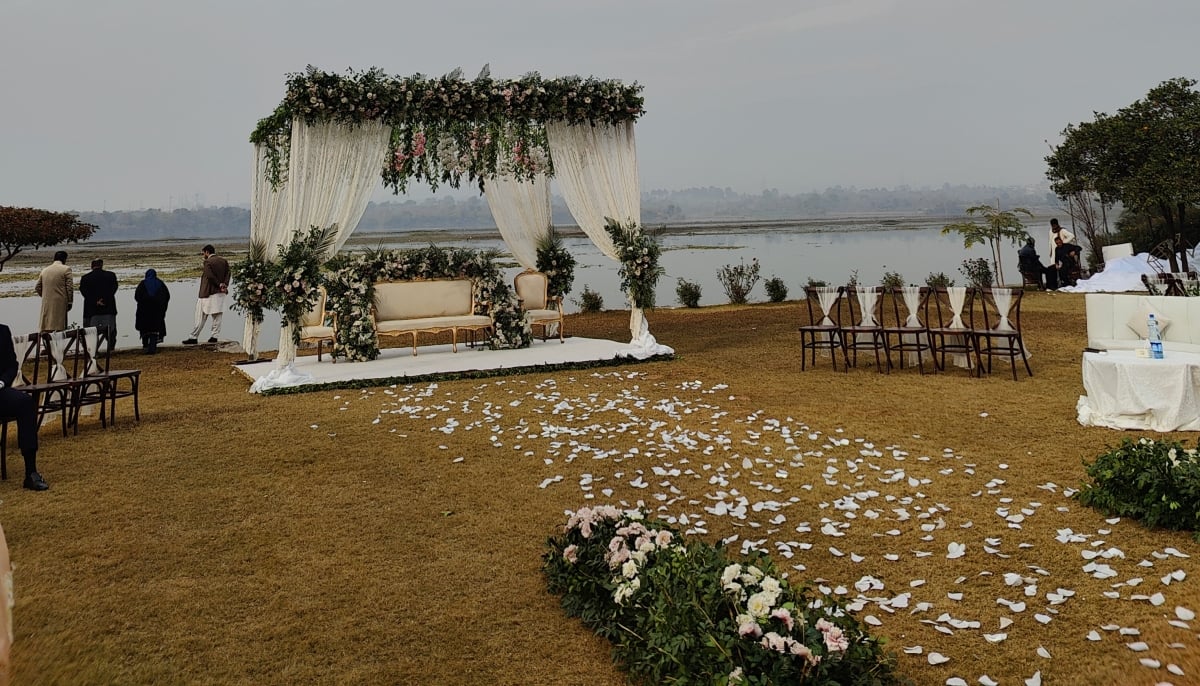
These trends are implemented and emulated at different prices across the industry. No matter the techniques used to create uniqueness, emulation is nearly guaranteed, and ironically, through the very platform used to exhibit their differentiation. This often means that all the Instagram stories of weddings begin to all look the same, and even if something feels novel, the novelty hardly remains for too long.
The move towards big weddings can also be mapped through traditional media. In fact, the original "crime" was likely committed on film and television before social media gave fodder to the exponential growth of the phenomenon. Consumption of Bollywood movies gave us, in Pakistan, an introduction to big weddings. Aesthetically speaking, Pakistani weddings were marked by simplicity, which is something we often attribute to religious reasons; however, the culture of weddings has always been comparatively extravagant in India.
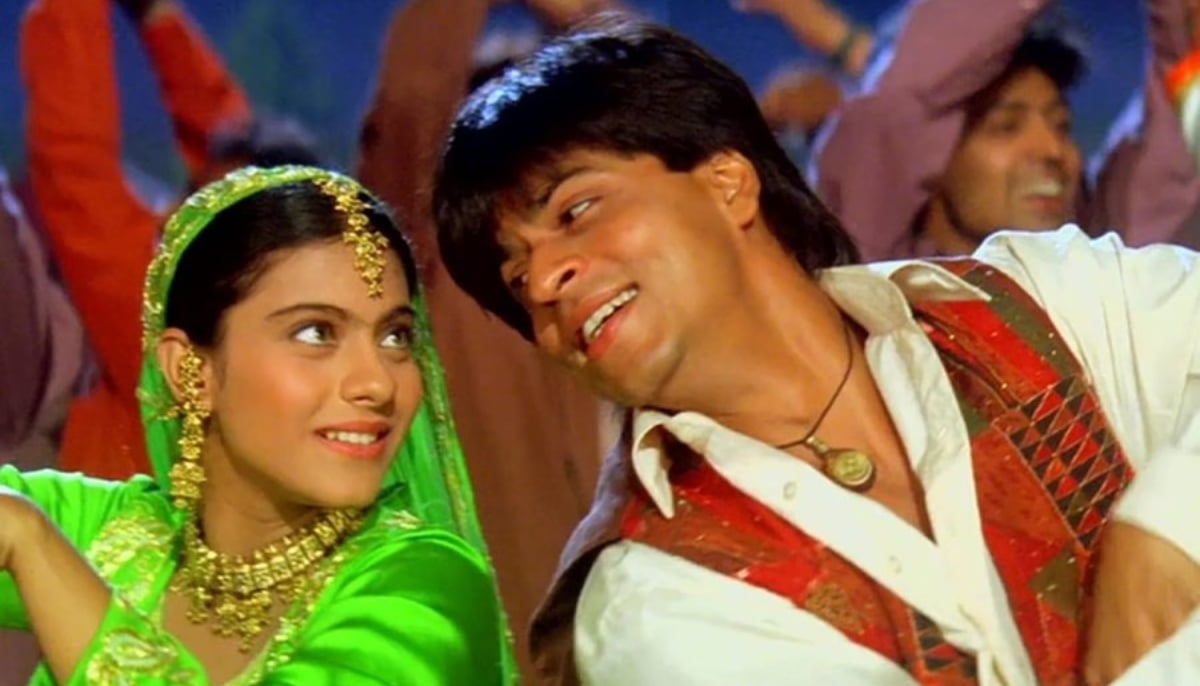
This was exaggerated by Bollywood. The 90s' Bollywood movies focused on weddings as the main plot line; many with multiple weddings. These films showed us the intricacies of the whole culture. But, they also glamorised the 'Big Fat Indian Wedding', something that definitely fed into Pakistani culture around the same time. The biggest example across both countries is the mehndi event with choreographed dances, something that has only grown in preparation and scale.
At the local level, TV dramas also caught onto this shift in the cultural fabric. Old PTV dramas were focused on showing the ills of extravagant weddings or celebrated the simplicity of the times. However, as private channels rose and the competition between them grew, the representation of weddings became just as loud. There was a time when dramas boasted about the mehndi performances they added to their shows, too.
This shift was also immediately visible on morning shows. Married celebrities did re-dos on national TV. They played the characters of coy bride and prideful groom, their fellow celebrities (all just as old) playing the part of eager friends hopping around the show's set. These weren’t one-off shows; they were dedicated programs that spanned the typical events of a wedding. What is more shocking, than the fact that these grown adults chose to do that on national TV, was that we all watched that!
Now to my favourite sub-phenomenon of the larger wedding discussion, the crazy rich weddings and the influencer/YouTuber/celebrity weddings sub-sect. Socially pervasive weddings form a big part of the reason why Decemberistan has grown to its unwieldy size today. However, we cannot undermine the impact of the big weddings we see every so often. I’m talking about the Ambani weddings, the Anush-Ammar wedding, the Bollywood weddings, and the likes of YouTuber Rajab Butt’s extravagant "getting-a-baby-lion-as-a-gift-wedding".
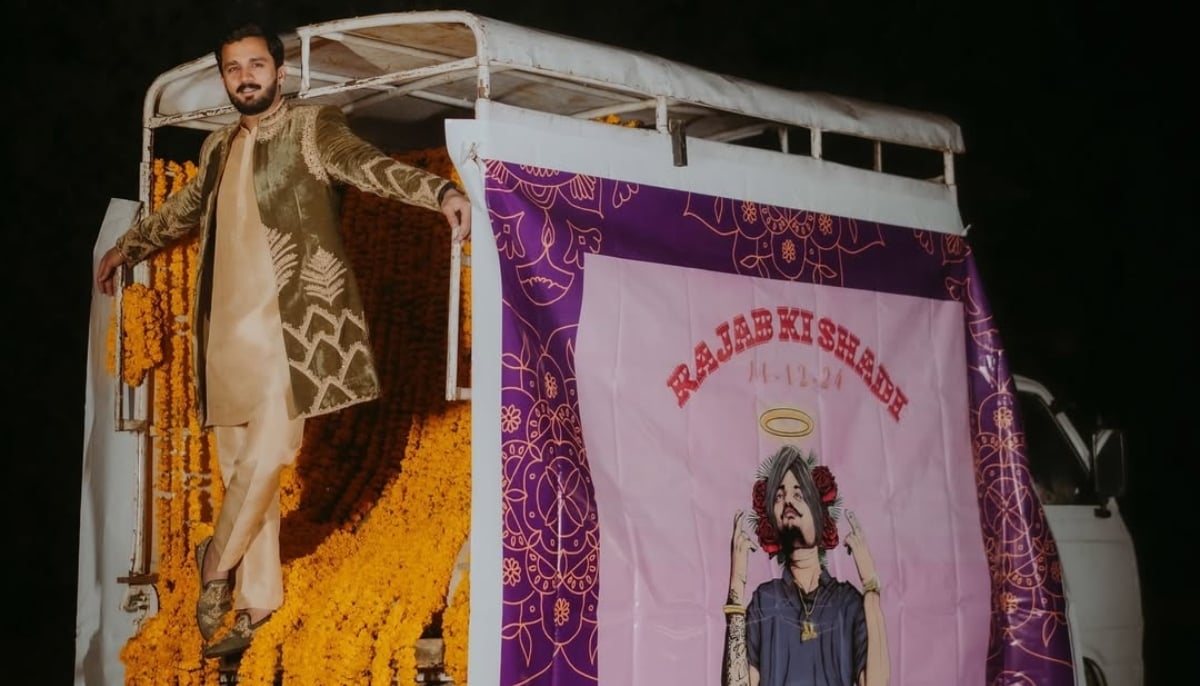
These big weddings push the limit of what we imagine a wedding could do and achieve. They are large, either because of family wealth or size of following online, but these weddings flood our feeds and capture our immediate imagination each season. Yes, each one of these categories of weddings draws its fair share of ire and ridicule online, but their impact on taste and demand in the wedding industry is undeniable.
I wish I could tell you that things were settling, but it seems that Decemberistan is yet to reach a critical mass. The monster of shaadi season is still hungry for more sequins and more excuses to dress up and party. One could find hope in the Gen-Z yearning for what they perceive as "old times", which is the Pakistan from the 70s to 90s, but even there, the inspiration extends only till the purview of aesthetics; the magnanimity of weddings still persists in the culture and industry.
A disgustingly interconnected world has created multiple pressures on what is already a stressful time; weddings in South Asia have always been financially burdensome for purely cultural reasons. The pervasive culture of dowries has meant that families have to take enormous financial strain for weddings, and now add to that the ever-growing shadow of Decemberistan. Understandably, culture evolves, and a big part of that is weddings. But at what point is Decemberistan an expression and function of culture, and at what point is it just emulation and regurgitation?
Arslan Athar is a writer based out of Lahore, Pakistan. He was a 2021 South Asia Speaks fellow, where he was under the mentorship of Fatima Bhutto. His debut novel, "Forty Days of Mourning" was published in 2025, in Pakistan. Arslan's fiction and non-fiction work has been published in numerous national and international publications. He posts on X @ArslanArsuArsi
Header and thumbnail illustration generated using AI