


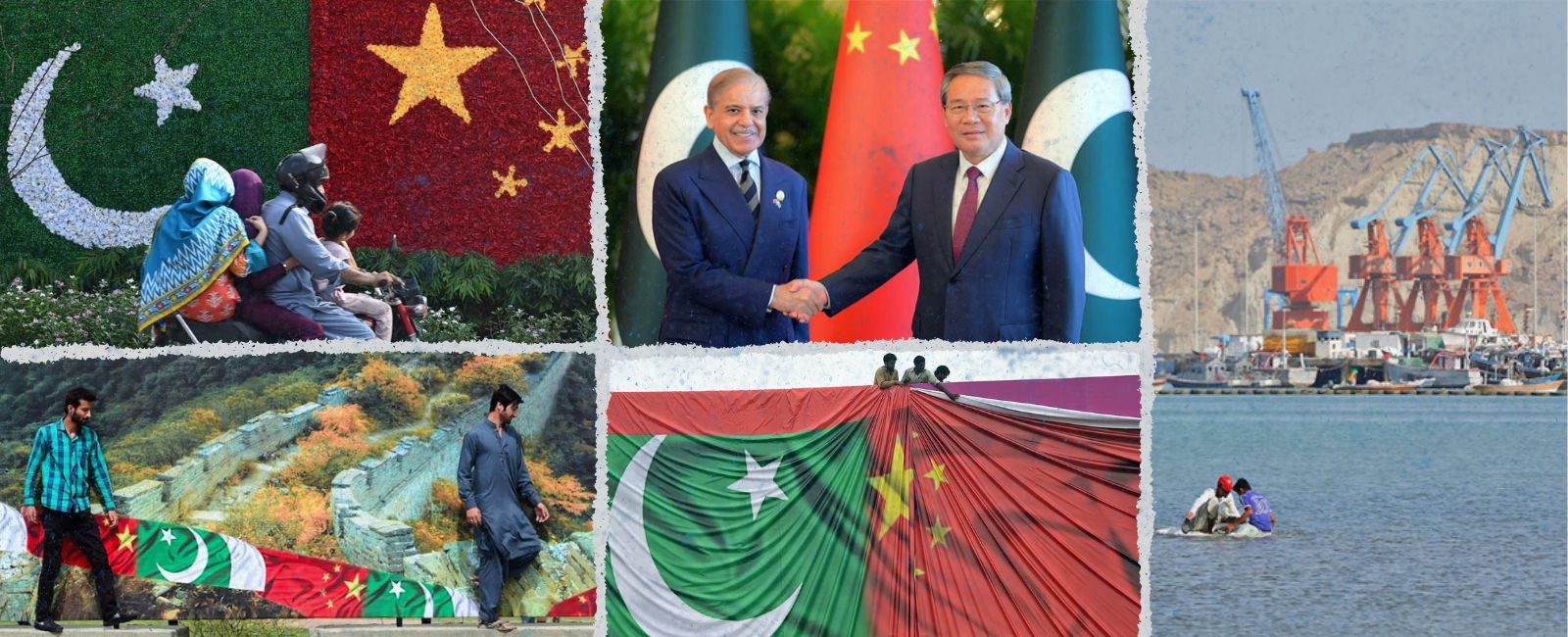
Can CPEC's promise endure amid Gwadar's quiet stalls and unfinished roads?
Pakistan's leadership and Chinese partners now bet on thriving industrial zones and ambitious digital economy pushes under CPEC 2.0




 Updated Tuesday Feb 10 2026
After facing a spate of headwinds over the last ten years, challenges are far from over for the China-Pakistan Economic Corridor (CPEC) in 2026. Over the last over ten years, this landmark initiative has been marred by a plethora of problems ranging from the fragile security situation, bureaucratic intricacies, unsteady ease of doing business, political instability, structural hiccups, and a volatile economic ecosystem.
Although the governments of Pakistan and China have worked hard to fix the spiralling issues, the CPEC — projected to revamp Pakistan’s road infrastructure, energy outlook, modern industrialisation, advanced transport, agriculture, IT, and various segments of development — is still grappling to gather pace.
Among many important CPEC projects, the ones that desperately need revitalisation include Gwadar port, Gwadar North Free Zone, New Gwadar International Airport, ML-1, nine Special Economic Zones (SEZs), and M-8 — the key CPEC route connecting Gwadar to the district of Sindh and onward to the Pak-China Khunjerab border, then to the Chinese city of Kashgar.
Despite a somewhat grim overall picture, it is encouraging to note that Gwadar port and both free zones (Gwadar South Free Zone covering 60 acres and Gwadar North Free Zone spanning over 2,240 acres) are at least functional, despite being underutilised.
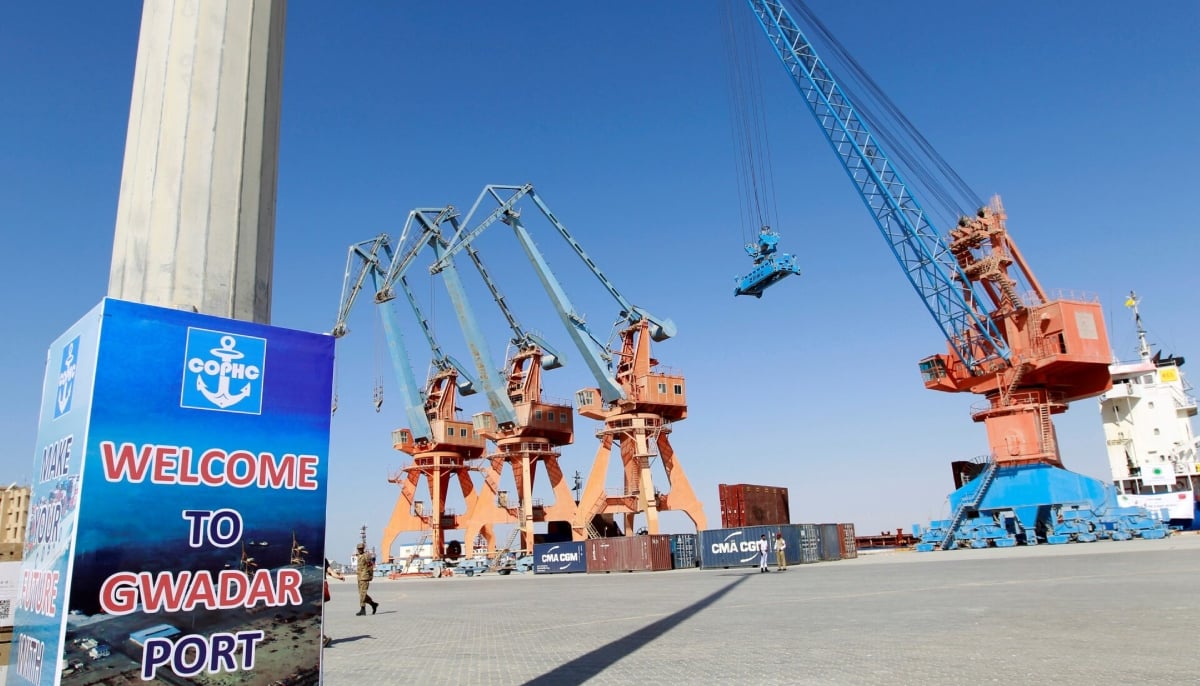
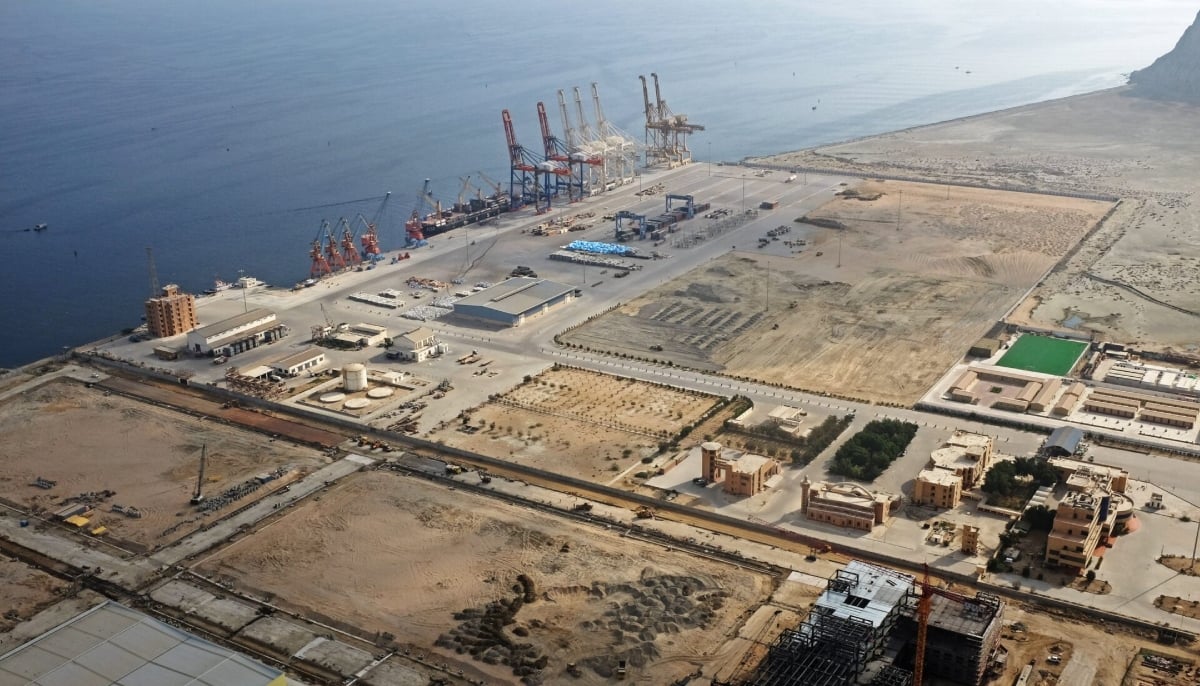
During the last 10 years, using four cranes, Gwadar port — run by the China Overseas Port Holding Company (COPHC) — handled 145 container vessels, 34 general cargo ships, 15 bulk vessels, 155 urea vessels, 35 wheat ships, and 15 LPG vessels. It’s also promising news that the $168 million Eastbay Expressway I, constructed in 2022 — an important CPEC road project connecting Gwadar port with the free zone and city area — is serving commercial traffic efficiently.
In order to equip Gwadar youth with a modern set of professional skills, Pak-China Technical and Vocational Institute (PCTVI), built with a Chinese grant of $10 million, has enrolled hundreds of male and female students in free diploma, short courses, and degree programmes.
PCTVI Executive Director Prof Dr Manzoor Syed told geo.tv that the institute’s operational agreement had already been inked between Shandong Institute of Commerce and Technology (SICT), Gwadar Port Authority (GPA), University of Gwadar (UoG), and China Overseas Ports Holding Company (COPHC) to provide free technical education to Gwadar’s youth.
The 150-bed Pak-China Friendship Hospital, constructed with Chinese funding of $100 million, is also operational. In 2025, it provided free medical treatment to around 43,000 patients from the poor segments of society in Gwadar. Since Gwadar residents desperately struggled for drinking water after reservoirs went dry in 2025, CPEC’s China-funded 1.2 MGD desalination plant ($13.97 million) provided eight million gallons of potable water to locals.
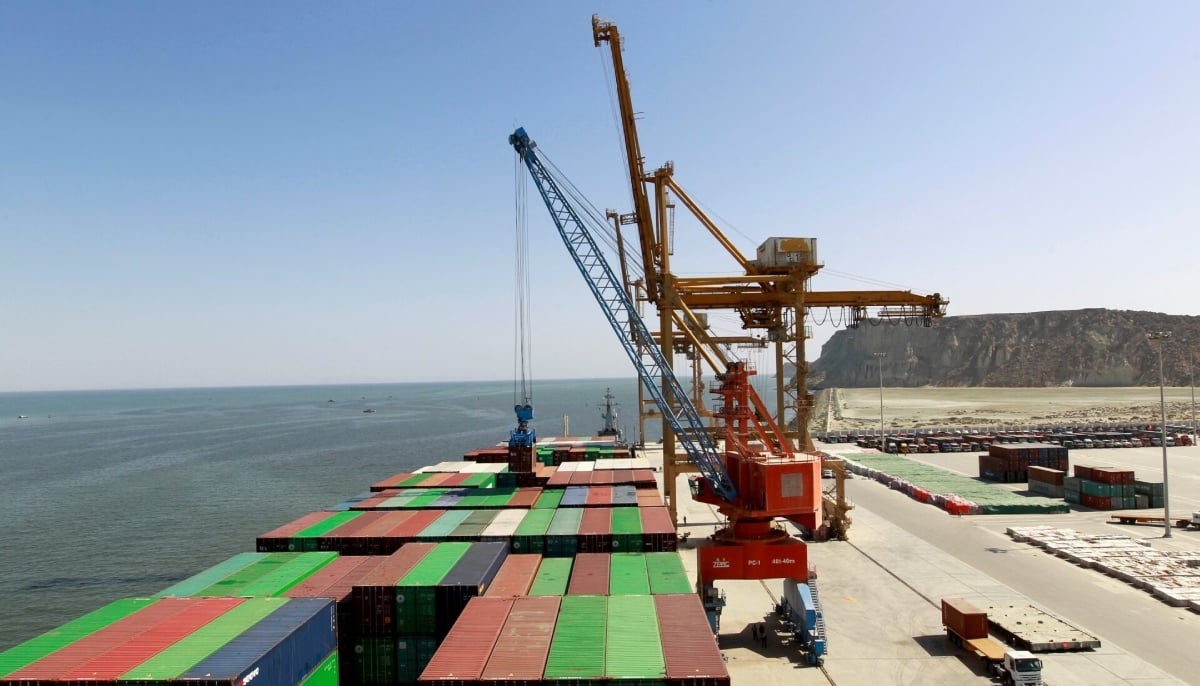
Meanwhile, it’s a matter of deep concern that despite all these projects becoming functional, Gwadar port, which links Balochistan’s coastal city with the Chinese city Kashgar through the Khunjerab border, is underperforming.
In an exclusive interview, COPHC chairman Yu Bo told Geo.tv, “We have three berths and four cranes at Gwadar Port, but we lack the proper international shipping lines required to operate the port at an optimum level.”
He added that given the situation, Gwadar port had failed to fetch handsome business so far.
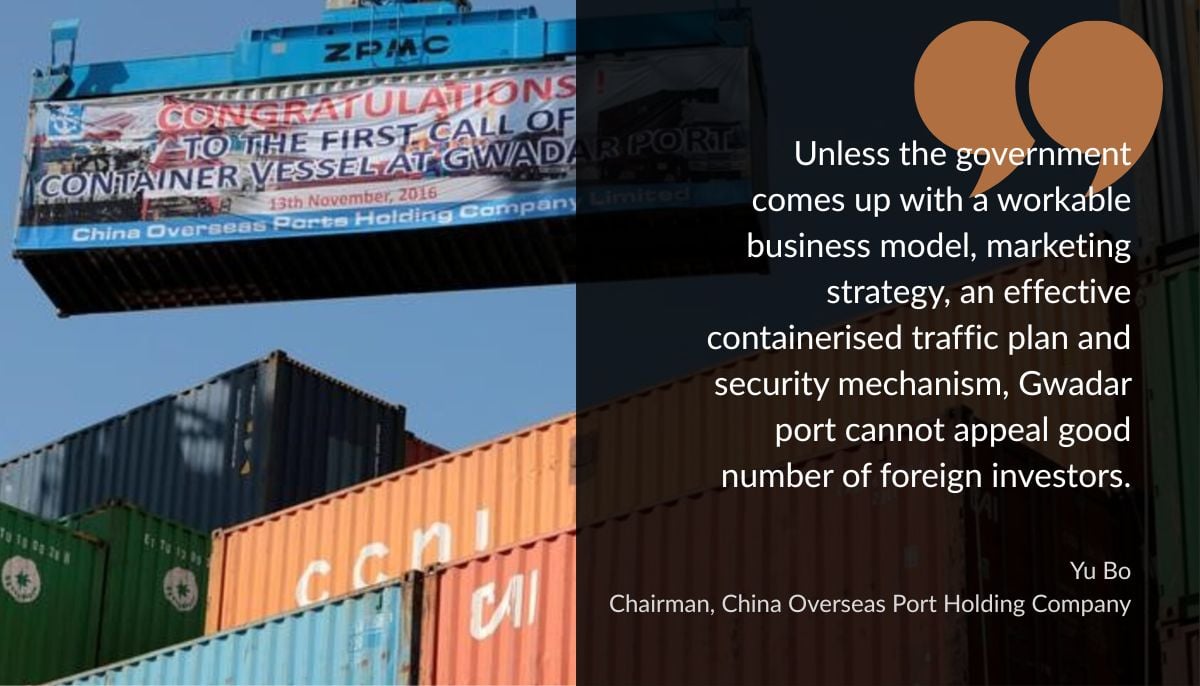
"Unless the government comes up with a workable business model, marketing strategy, an effective containerised traffic plan and security mechanism, Gwadar port cannot appeal good number of foreign investors," he explained.
He said that, among others, one of the challenges that they had to face in the past was the provision of electricity.
“Now Gwadar Port and free zones receive 30 megawatts of electricity seamlessly, and two Chinese companies, Agvon (a fertilisermaker) and Hangeng (a meat processer), are working in the north free zone.
“We expect more and more local and Chinese companies here to operate in 2026 and the future,” he hoped.
To a question, he termed a fragile security outlook as one of the major reasons behind the lack of foreign investors’ confidence.
Meanwhile, Gwadar Port’s financial situation remains bleak as it recently suffered a financial meltdown, due to which the port administration failed to give the two months' (November and December 2025) salaries to employees.
Another problem is that, over the last few years, Gwadar Port has only three berths with a combined quay length of 602 metres. Notably, plans to expand the port by adding more berths along approximately 4.2 km of shoreline — to allow more bulk cargo ships to dock — have reportedly stalled.
With the estimated cost of Rs3,325.6 million, the Gwadar Safe City Project (Phase I) is also still in limbo. Under the project, around 411 high-tech cameras were to be installed, but no progress has been made.
According to Gwadar Development Authority (GDA) Deputy Director Town Planning Abdul Razzaq, the project is long overdue for completion and implementation.
Even the Rs60.208 billion airport, opened on January 20, 2025 — expected to attract local and international airlines and serve thousands of passengers — has so far fallen short of its potential.
Meanwhile, construction of Gwadar Eastbay Expressway (Phase II) — starting from NGIA to Gwadar Port with an estimated cost of Rs 30.13 billion — is also in the doldrums.
When asked about CPEC 2.0 progress in 2026 and challenges ahead, Shi Yuanqiang, Deputy Chief of Mission at the Chinese Embassy in Islamabad, said, “CPEC has played an anchoring role in fostering Pakistan's economic and social development and regional integration, emerging as a ‘game changer’.”
In terms of CPEC 2.0, he said that China and Pakistan would continue to focus on four priority areas.
"One is to carry on comprehensive development of Gwadar port and keep working on Karakoram Highway (Phase II), the strategic alignment route of CPEC.
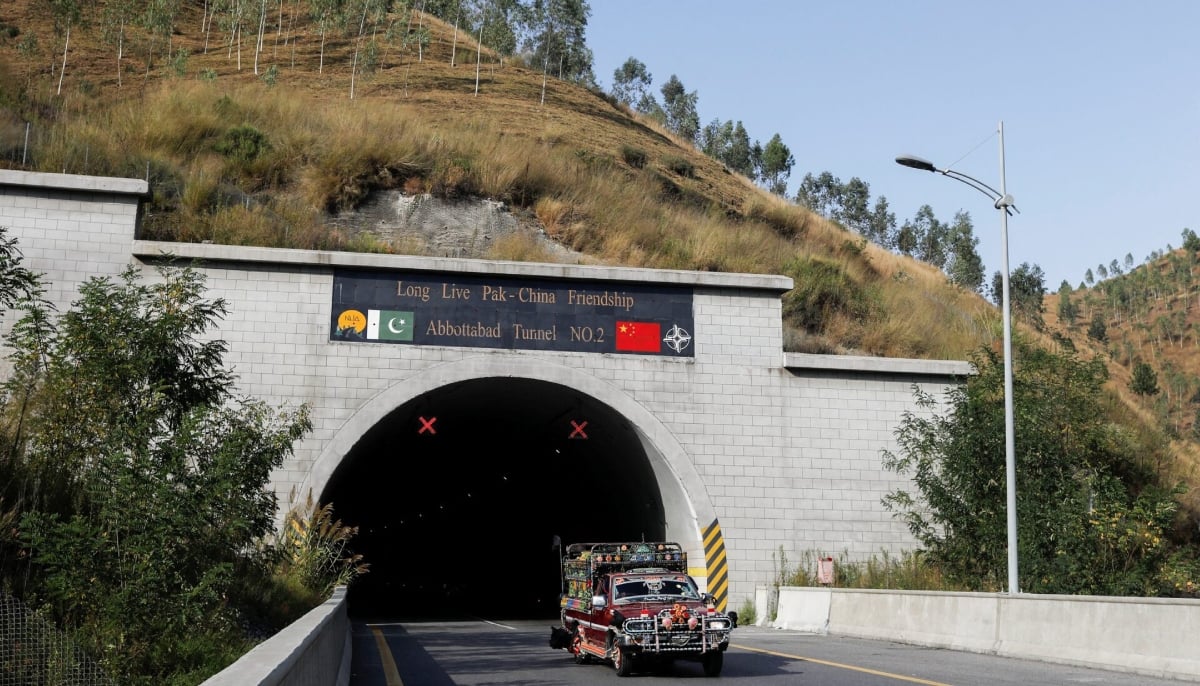
“Industrialisation, agriculture, mining, information technology, cyber security, digital economy, and artificial intelligence are other areas of focus, and industrialisation will help Pakistan enhance its export base," he added.
Meanwhile, Yuanqiang said that China would scale up its free trade agreement to help Pakistan ramp up its exports in the broad-based Chinese market.
According to him, under CPEC, many youth talent programmes have been initiated that are helping Pakistan foster its skilled human capital.
“CPEC is a success, but many doomsayers have launched a profuse smear campaign against it and demonised China, and to drive a wedge between the two countries, fake news was unleashed, through which negative propagandists fanned a fabricated narrative of China's debt trap.
“As a matter of fact, Chinese loans are never a source of debt issue for Pakistan,” he explained.
Maintaining that the CPEC remains the mainstay of China’s Belt and Road Initiative, the diplomat added that during the ten years main focus was on the development of Gwadar Port, energy, infrastructure, and industrial cooperation.
He stressed that the CPEC significantly enhanced Chinese foreign direct investment (FDI) in Pakistan.
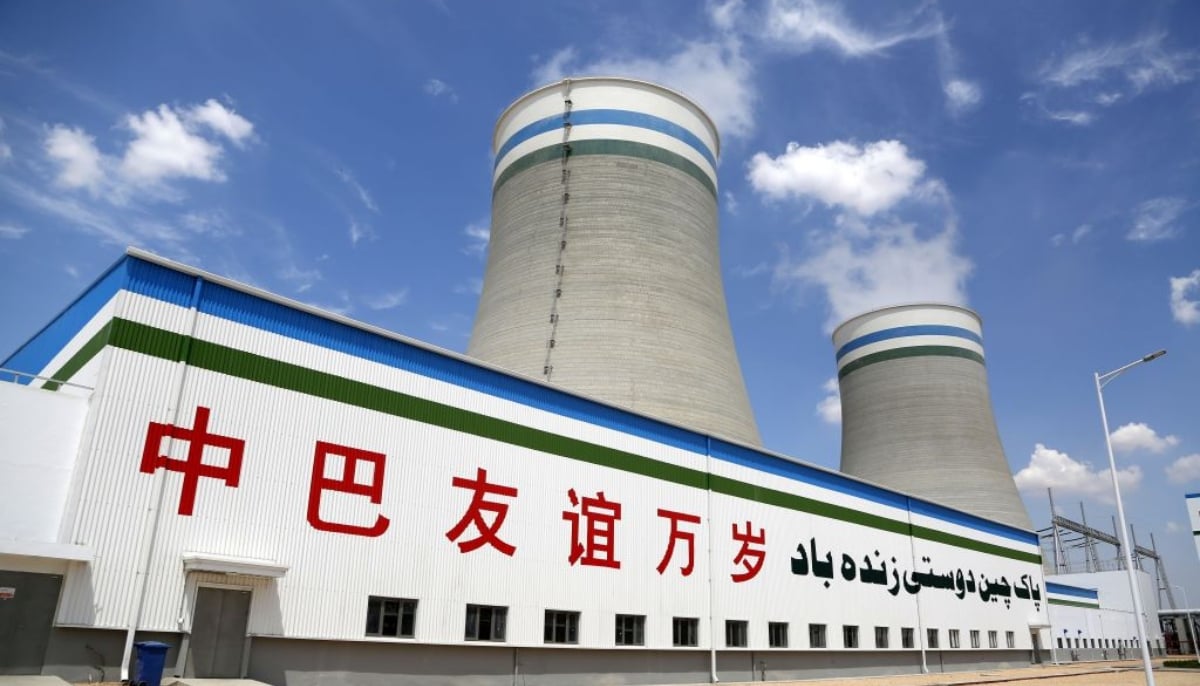
“In a decade during the CPEC (Phase 1), close to $26 billion of Chinese FDI came to Pakistan, while around 510 km of highways were constructed, 8000 MW of electricity entered into Pakistan’s national grid, 886 km power transmission lines were laid down, and 2,60,000 direct jobs were created through CPEC initiatives.
“Owing to tangible change during the 10 years of Phase I, Pakistan does not lack electricity now,” he further maintained.
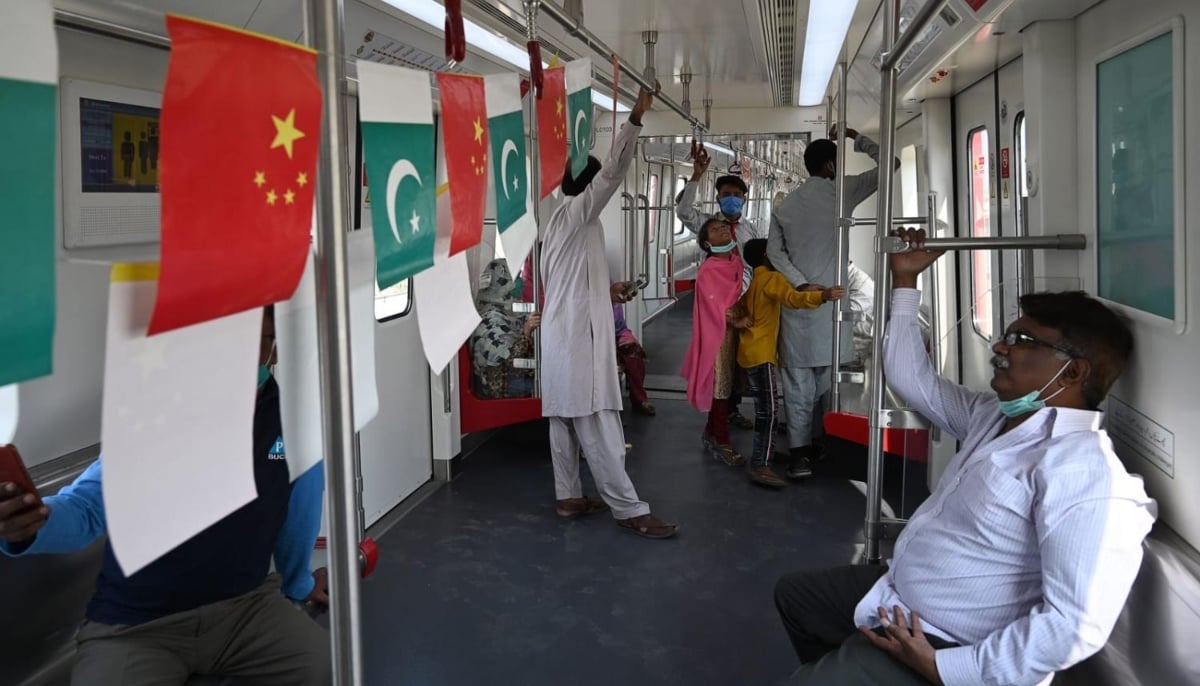
Due to CPEC, he said, Pakistan switched from energy deficit to energy surplus country. Regarding infrastructure, the China-aided Orange Line Metro Train Lahore has served 270 million passengers. “The most striking achievement is the development of Gwadar Port, transforming a small fishing village into a modern seaport with multipurpose terminals, which can accommodate two bulk cargo ships simultaneously,” the mission chief said.
Nevertheless, challenges for CPEC are rife, and projects like Main Line (ML)-1, a mega CPEC railway infrastructure project to connect Karachi-Multan, Multan-Lahore, Lahore-Lalamusa, and Lalamusa-Peshawar, are progressing at a snail’s pace.
To revamp the country’s decadent railway infrastructure, Pakistan and China plan ML-1, which is seen as boosting Pakistan’s economy by cutting travel time, facilitating faster cargo transport, and fostering regional connectivity, but it seems to be a non-starter on account of financial hiccups.
Under the CPEC framework, SEZs were planned across Pakistan and expected to play a crucial role in CPEC (Phase II), which focuses on industrialisation to attract FDI, develop joint ventures, and enhance Pakistan’s export-led manufacturing capacity. However, progress has been slower than anticipated, with only three of the nine SEZs having operational enterprises to date.
Moreover, progress on the M-8 project, CPEC’s main artery connecting Gwadar to Ratodero in Sindh and onward to the China-Pakistan Khunjerab border, remains in disarray.
The 893-km-long “motorway” — supposed to facilitate the movement of people and goods to and from the port city of Gwadar to the Chinese city of Kashgar through the Khunjerab border — has been under construction for more than 10 years. Many contractors tried to complete the project but left the work incomplete due to various reasons, especially security concerns.
The M-8’s first contractor was Xinjiang Beixin Road & Bridge Group Co Ltd, a Chinese company. It quit the project after the killing of three Chinese engineers in a car bomb blast in Gwadar. A local private company took the project later but met the fate of its predecessor. Finally, Frontier Works Organisation (FWO) was contracted to complete only a 200-km stretch of the road; however, its construction is still underway.
Talking to Geo.tv, Lahore Overseas Chinese Association President Luo Jianxue expressed his view about CPEC’s challenges, saying a poor business environment characterised by unstable power supply, low administrative efficiency, cumbersome licensing procedures, weak institutional capacity and a shortage of professional talent is causing an abysmal situation.
“Terrorist organisations such as the Tehreek-e-Taliban Pakistan (TTP) also pose a threat to Chinese interests. From 2021 to 2024, 14 attacks targeting the CPEC corridor occurred,” Jianxue added.
He further said that significant delays in the progress of some major projects (eg, the ML-1 railway) compared to the planned schedule were alarming, and overall, the actual operational scale of Gwadar Port was far below expectations.
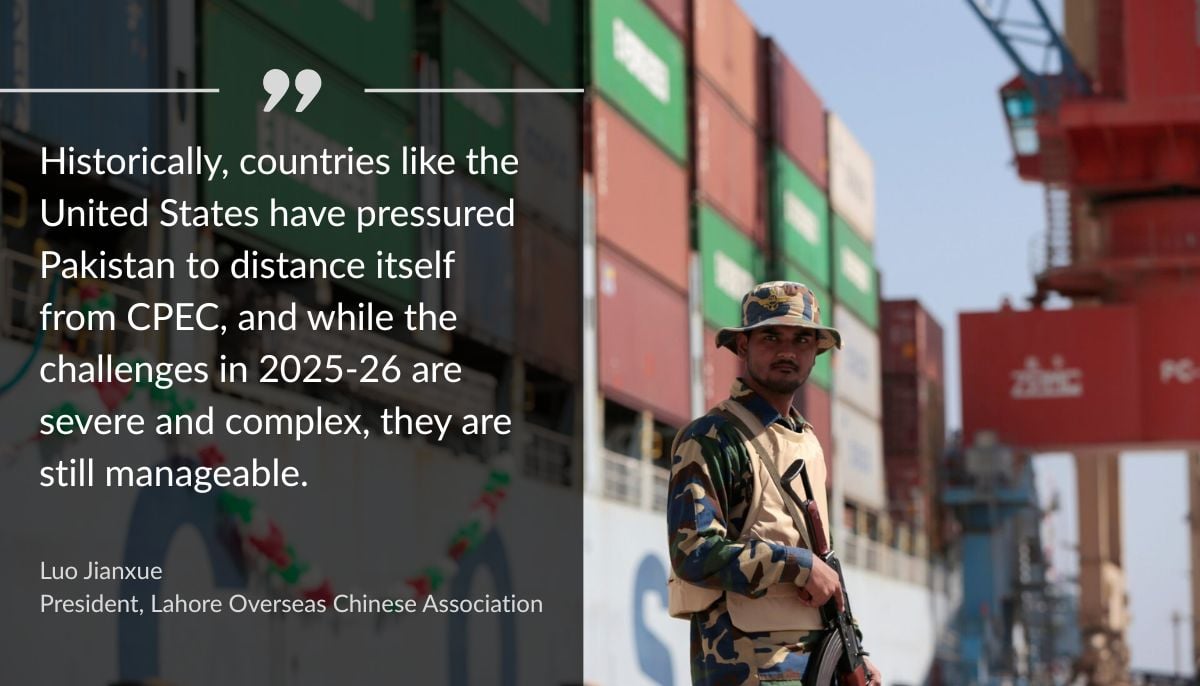
“Historically, countries like the United States have pressured Pakistan to distance itself from CPEC, and while the challenges in 2025-26 are severe and complex, they are still manageable.
“The key lies in the reforming of the governance system, ensuring security, and balancing finances that will help both China and Pakistan to effectively translate the new blueprint for "CPEC 2.0" into concrete, sustainable, and locally beneficial outcomes,” he concluded.
Meanwhile, Chinese Consulate Lahore Consul General Zhao Shiren paid rich tribute to the sacrifices rendered by the Pakistani government, people, and military in fighting against terrorism and beefing up the safety of foreign nationals working on CPEC projects.
However, he emphasised that permanent vigilance and heightened security were indispensable to safeguard both Chinese nationals and the ongoing CPEC projects, particularly the development plans for CPEC 2.0.
Zhao also dismissed nefarious narratives and misinformation inflicting harm to the China-Pakistan relationship, particularly claims that CPEC was stumbling or becoming a “white elephant.”
He binned these calls, reasserting that China stands fully committed to the success of CPEC.
Pakistan's leadership and Chinese partners now bet on thriving industrial zones and ambitious digital economy pushes under CPEC 2.0. However, as Chinese mission official Yuanqiang notes, it is all about execution, so without clearing the security and financial fog, Gwadar’s promise risks staying just that — a distant glimmer on the horizon.
Yasir Habib Khan is a freelance journalist based in Pakistan.
Header and thumbnail image by Geo.tv