


Global peace advocates and their fight against injustice in Gaza
Important causes survive because empathetic people refuse to look away from injustice and keep raising their voices




 Updated Tuesday Feb 17 2026
It has been over four months since Donald Trump, the president of the United States, declared an end to continued Israeli offensive in Gaza when he co-chaired a “peace summit” in Egypt on October 10 last year. Following an agreement at the event, which saw leaders of over 20 nations gathered in Sharm el-Sheikh, Hamas released the remaining 20 living Israeli hostages, while Israel let go of nearly 2,000 Palestinians detained in its prisons. Almost a month later, in November, the UN Security Council, in a major development for the Trump administration’s 20-point peace plan, approved the US-drafted resolution.
This historic event, despite its on-ground ineffectiveness following Israel’s continued aggression even after a ceasefire, was rejoiced among Palestinians in Gaza as well as people around the world who yearned for peace to resume in the Strip stricken by bloodshed. The citizens of Gaza endured, and still continue to brave, what the United Nations’ special committee, the Commission of Inquiry on the Occupied Palestinian Territory, declared a “genocide” on their land since October 7, 2023, killing at least 71,662 people as of January 27, as per Gaza Health Ministry estimates, which also includes at least 488 people who have been killed since the ceasefire declaration and thousands are being considered missing and buried under the rubble. While the siege and displacement in the Strip also continue to impact the everyday life of its residents.
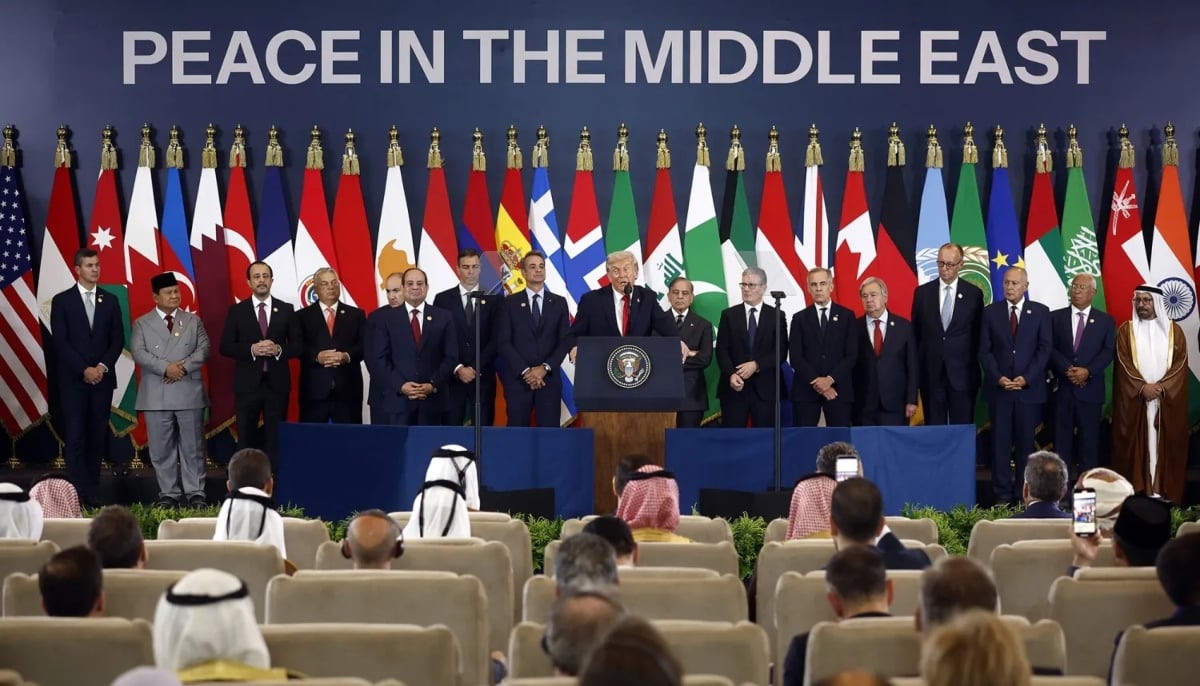
Last month, the peace agreement witnessed progress, as President Trump officially ratified the Charter of the Board of Peace and established it as an official international organisation during a ceremony in Davos, Switzerland. Trump, who serves as the Board’s chair, is joined by founding members of several countries, including Pakistan, extending their commitment towards “building a secure and prosperous future for Gaza that delivers lasting peace, stability, and opportunity for its people”.
President Trump now gets to relish a self-proclaimed title of “peacemaker” in his bid to forge “peace” on a land whose residents continue to face persecution and injustice, even after a ceasefire. In such circumstances, the question of who deserves to be called a peacemaker, or who must be lauded for their efforts to advocate for peace despite resistance, arises. It makes us look back at the many people around the world who, in their own ways, spoke for the people of Gaza. People advocated for peace in Gaza using the internet, while others took to the streets to demand justice for Palestinians, and many also boarded the Gaza Freedom Flotilla vessels and joined the convoys heading towards the Strip carrying food, baby formula and aid.
As the world’s focus shifts away from Gaza and those who advocated for peace on its war-stricken land, Geo.tv remembers those who played an unconditional role in their own unique ways.
Prof VK Tripathi: An emblematic peacemaker from India
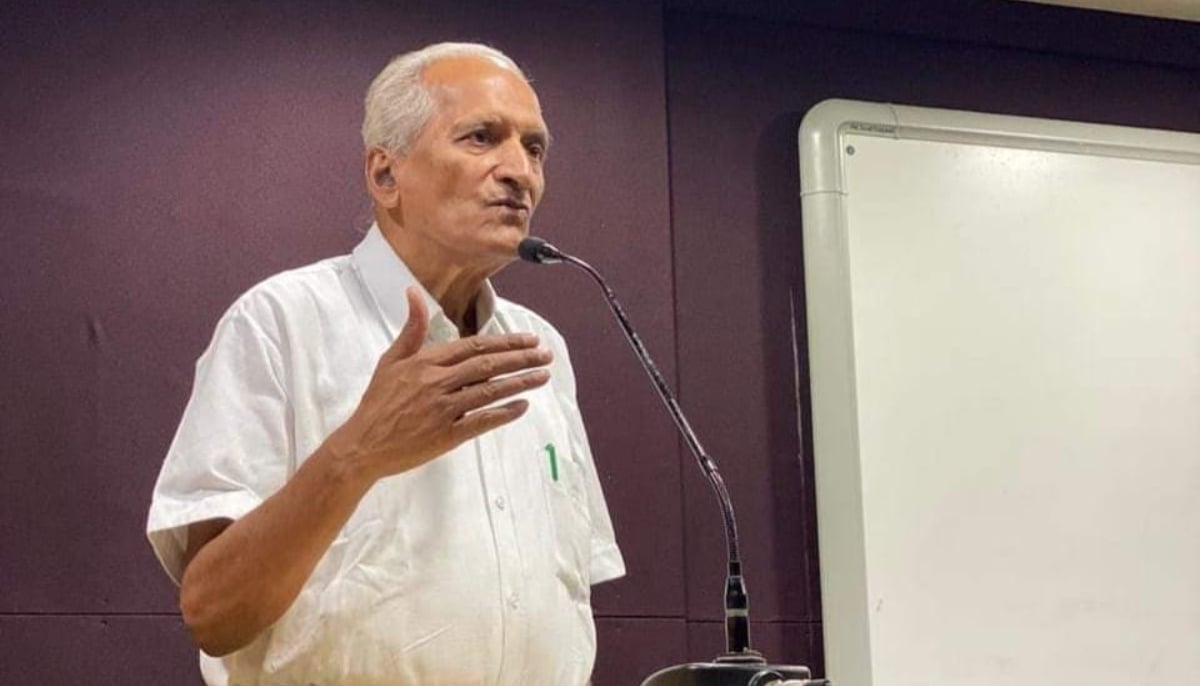
Residing in New Delhi, India, a 77-year-old retired professor and peace activist, Vipin Kumar Tripathi, is no ordinary man. The septuagenarian is a Plasma Physicist whose mission in life is to forge communal harmony, speak for those unable to voice their pain and move people through his empathy for the marginalised under Sadbhav Mission, an organisation he established to develop nonviolent resistance against sectarianism at the grassroots level in India, following his return from the United States, where he worked as a scientist at the University of Maryland from 1976 till the nineties.
The efforts of Tripathi, who is a professor emeritus at the Indian Institute of Technology, Delhi, towards peace and harmony go beyond borders. As Israel rained bombs and missiles on Gaza, the elderly professor’s daughter, Rakhi Tripathi, began sharing her father’s mission on the social media platform X in July 2025. In the posts, he was seen distributing pamphlets on the streets of India’s capital city. The pages contained literature about the atrocities in Gaza and raising awareness among citizens about the injustices borne by Palestinians.
One wondered why a man in Delhi cared so much about the lives of Palestinians. The professor shared how a couple of instances in his life changed his perspective towards the need for peace in the world: His acquaintance with a “staunchly non-violent” Chinese professor while working in the US during Israel’s invasion of Lebanon in June 1982, and the time when he learned about sectarian violence in the Indian city of Bhagalpur.
“I was deeply pained,” Prof Tripathi, in a Zoom interview, told Geo.tv, describing his feelings about the injustices reported during the “one-sided war” that claimed the lives of about 20,000 unarmed Palestinians in Beirut and other places.
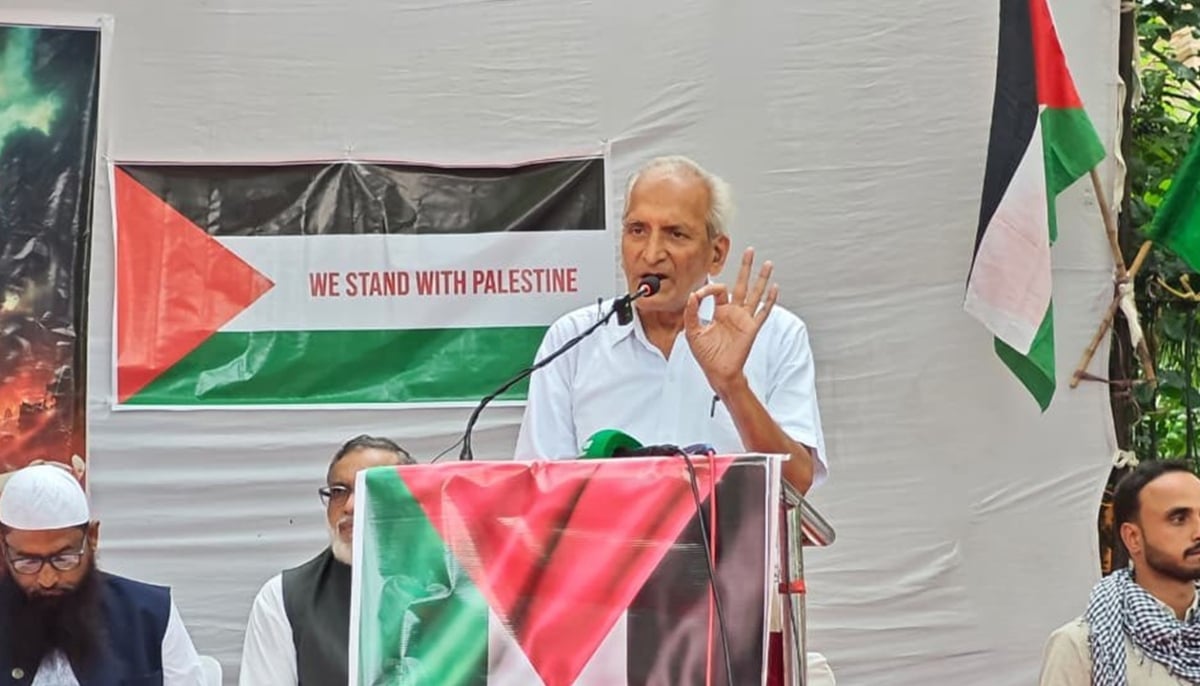
During his time in the US, Prof Tripathi observed that the country was largely indiscriminate with regard to gender and nationalities, but when the subject was to speak about unjust war, Americans remained tight-lipped, which led him to ascertain that the US was “not a free nation”. Prof Tripathi then returned to India and began teaching at a university in Delhi as well as his crusade towards grassroots resistance against sectarianism, religious hatred and war, and spoke with students about non-violence.
He added that his father was a Gandhian, a term used for followers of India’s founding father, Mohandas Karamchand Gandhi. “He had participated in the freedom fight and possessed Gandhian values that taught me not to discriminate.”
“The Israeli aggression on Gaza has always distressed me, but the ‘genocide’ that began in October 2023 is totally disproportionate,” the professor said.
“This was going on for over two years in Gaza. In July 2025, I started campaigning on this issue. I also campaigned about it in 2023 for about two months. Since then, I have distributed 4,000 flyers in different places in India, largely in Delhi and also at other places,” he said, adding that he didn’t see any solution in sight. Nevertheless, reading about the hunger and mass starvation in Gaza being “used as a weapon of war” hurt him very deeply and drove him to resume his campaign.
While collective activism is more impactful, individual actions are also effective in raising awareness about a particular issue. Prof Tripathi’s efforts towards educating fellow Indians were also one such initiative towards making the world empathetic for those suffering.
“I did not know rather whether I will be able to stop war or massive starvation in Gaza, but I felt compelled and millions of people felt compelled all over the world about how this was the extreme form of repression and injustice and demanded to speak it out,” said the lifelong teacher of peace, who launched his campaign and observed a fast on August 15, India’s Independence Day, to show solidarity with the starving residents of Gaza.
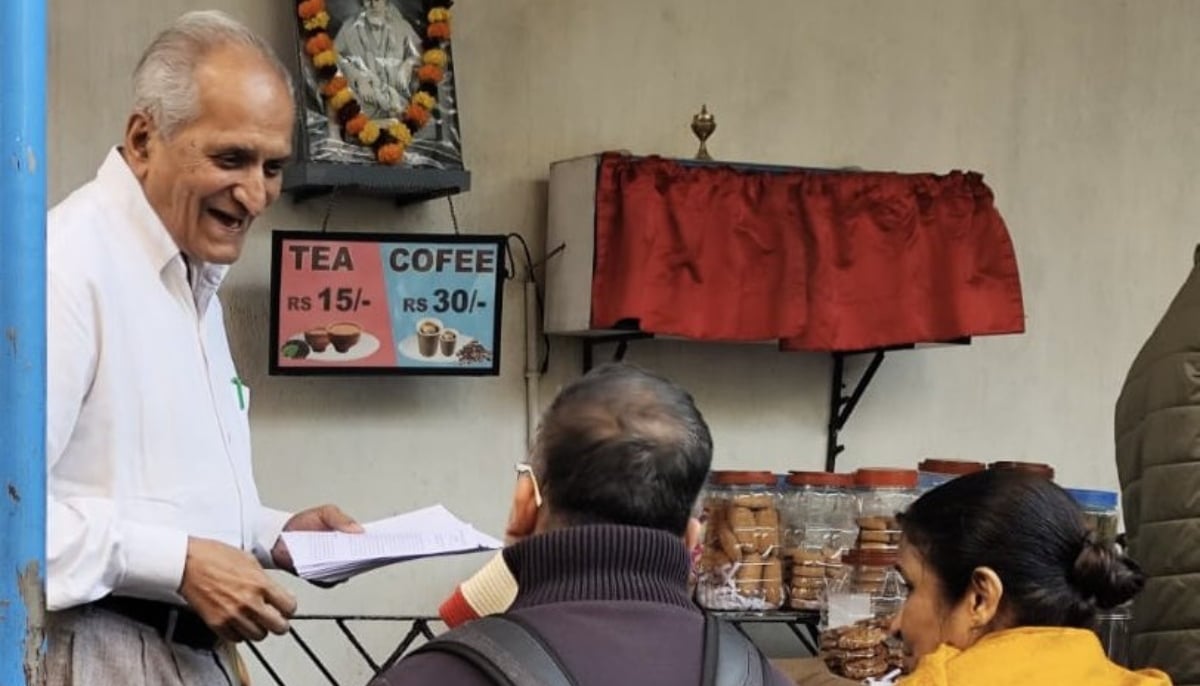
“Freedom implies that whosoever you see around, they should also be free. Freedom is not in ‘freedom of mine’. Mine means the entire society, and society means the entire world, especially those whose freedom has been completely repressed. If you don't care about them, then your celebration of independence is meaningless.”
According to Prof Tripathi, mass opinion made a difference in Gaza’s situation because the American people were agitated about it. “All the states, all the people who are peace activists, must ask their governments, or demand that they refrain from supporting genocide. That is the way.”
Prof Tripathi also revisited the painful days of May 2025 when a brief war broke out between India and Pakistan, emphasising how the governments of both countries need to “get over war euphoria”.
“War cannot solve any problem between India and Pakistan or India and Bangladesh, or any neighbouring countries. We have to learn how to talk. We have to tell our governments to talk with truth and decency.”
He stresses that public sentiment should not be inflamed with the madness of war and that it is harmful for poor countries to fight each other. “No issue can truly be resolved through war,” said the 77-year-old peace activist.
Yusuke Furusawa: Japanese activist advocating for a Free Palestine
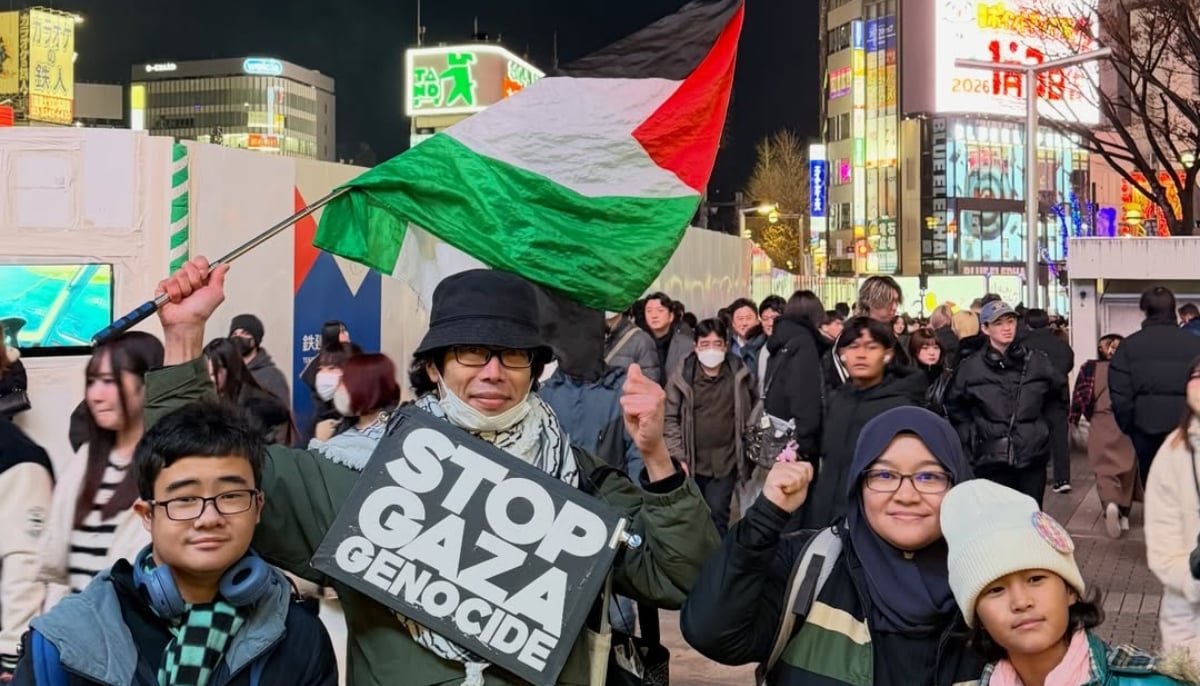
Despite the announcement of a ceasefire in Gaza a few months ago, Japanese peace activist Yusuke Furusawa continues to protest on the streets of Tokyo, demanding a boycott of Israel, its products and all global corporations running their businesses in the country, as seen in one of his recent Instagram posts. Furusawa is one of many peace advocates in Japan who long to see a free Palestine and continue raising their voices against the apartheid led by Israeli Prime Minister Benjamin Netanyahu.
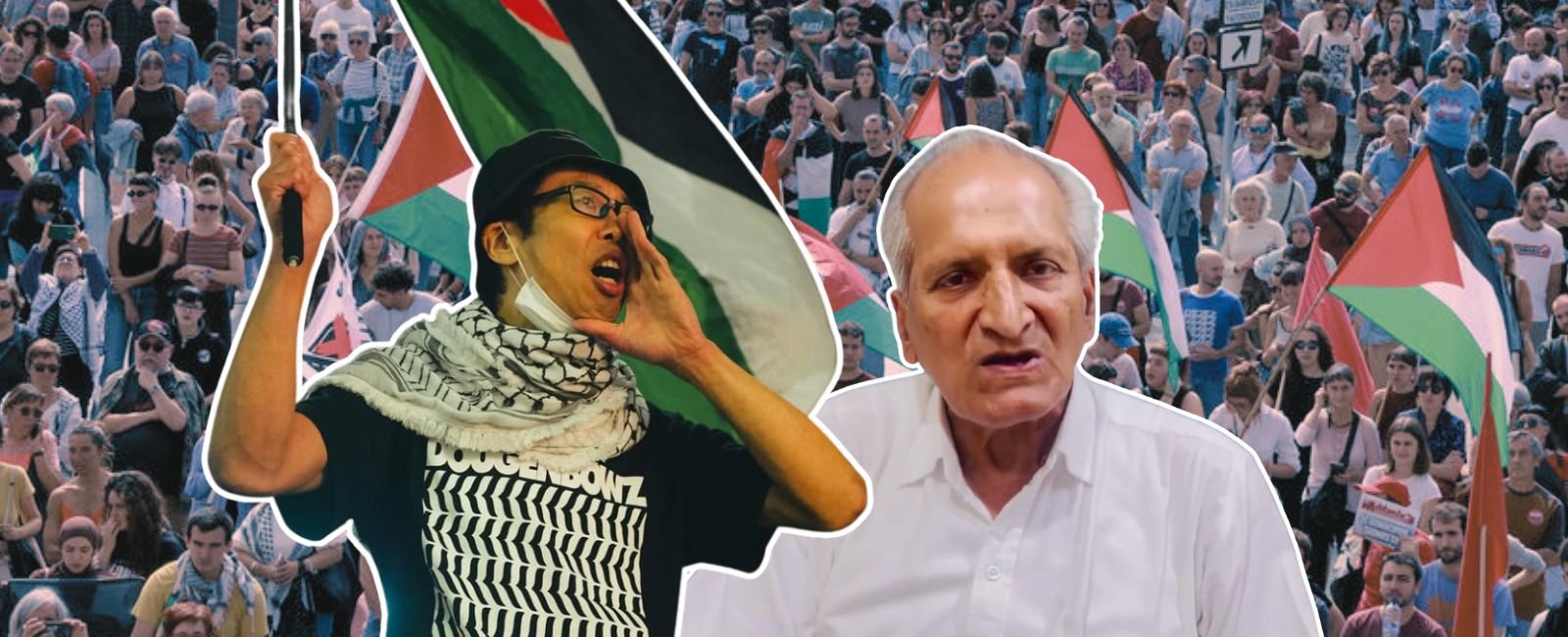
While the world moves on from the Gaza debate after the establishment of the Board of Peace, the Japanese activist can still be seen wearing a keffiyeh, holding a Palestinian flag, and carrying a ‘STOP GAZA GENOCIDE’ placard. What drives him to keep using protest as a tool for peace and justice in Gaza?
Furusawa says he sees it as his role “to imprint the existence of Palestine on the minds of indifferent Japanese people.”
“I will remain anonymous and use the information I get from the daily newspapers to continue speaking out about the current situation in Palestine on the streets,” he says, in an email response to Geo.tv.
The 49-year-old Japanese began his solo street protest in October 2023, when Gaza faced continuous airstrikes under Israeli Prime Minister Benjamin Netanyahu. It was the devastation of the Strip that pushed him to take action, albeit by himself. Ever since his first attempt to take to the streets in the Japanese capital, Furusawa has not missed a day raising his voice to speak for the distraught citizens of Gaza. It was a video that brought the world’s attention to his sincere efforts, which he began recording after being harassed and facing violence from people for his protests. As of today, his Instagram following stands at 211,000, and his feed is filled with advocacy against the aggression faced by the people of Gaza.
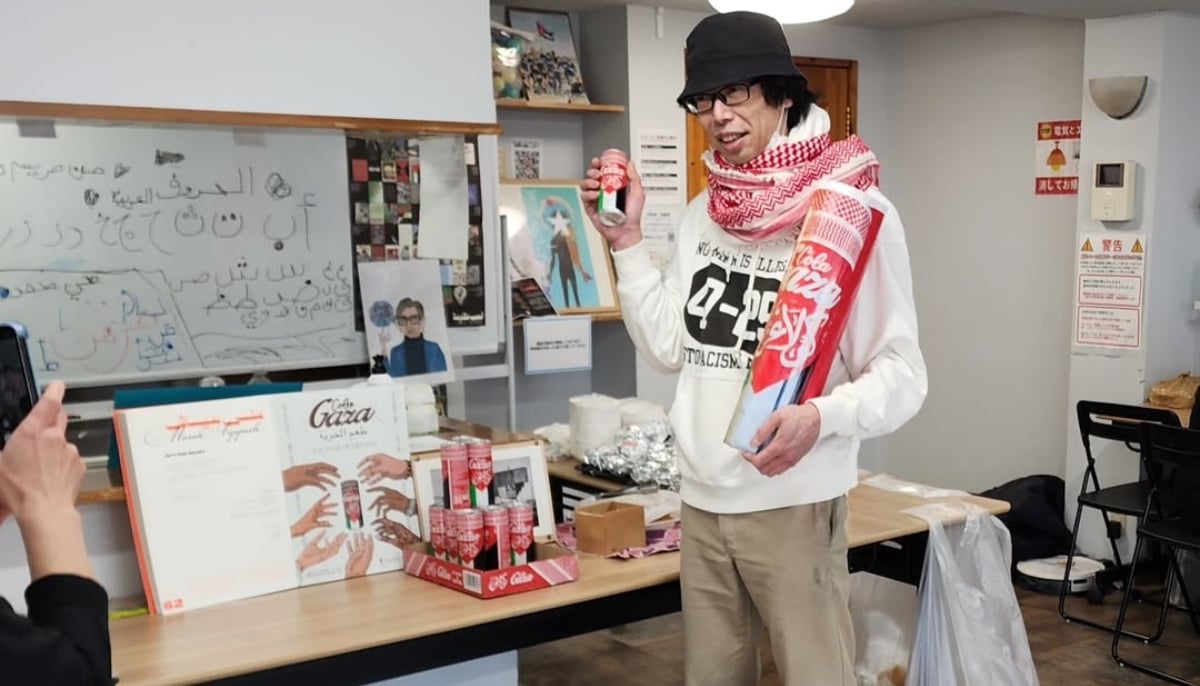
When asked how he thinks peaceful protests and global anti-war movements change decisions made by governments around the world regarding Gaza, Furusawa says he would rather work towards initiating change within his own country on the matter. He added that Japanese people believe continuing to raise their voices is pointless if results are not produced, so “they don't care.” He said several large-scale demonstrations have been held over the past two years, with the largest attracting 4,000 participants. However, this number is overwhelmingly small compared to other countries. Japanese media also ignores them, he added.
“Paradoxically, the reason I started this solo action was to emphasise the powerlessness, meaninglessness, and inconspicuousness of acting alone, thereby questioning the silent and indifferent majority in Japan regarding the merits of street protests. Most Japanese people ignored it, expressed disgust, and made it a target of ridicule. The only thing that continued was further resistance in the face of this public rejection,” he says, mentioning his persistence, which, according to him, is the only way to change public opinion.
He added that actions need to continue for five or ten years at a time. “I will take action every day, as long as I have the energy and time. No matter how small your voice may be, if you don't speak up, it won't be heard. And if you don't continue, people will forget.”
Talking about the lessons of solidarity learnt through activism, the Japanese activist says he has received “very little success over the past two years” for his protest. However, international tourists have supported his actions, protested, and responded in large numbers every day.
“My actions are insignificant, but by continuing, I believe my strange, solitary behaviour has been somewhat successful in leaving a lasting impression of discomfort on international visitors. No one in Japan is paying me any attention. However, there is a constant stream of foreign visitors to Japan who take the time to come and greet me in response to my daily actions.”
A Greek student protestor chants #FreePalestine in Germany
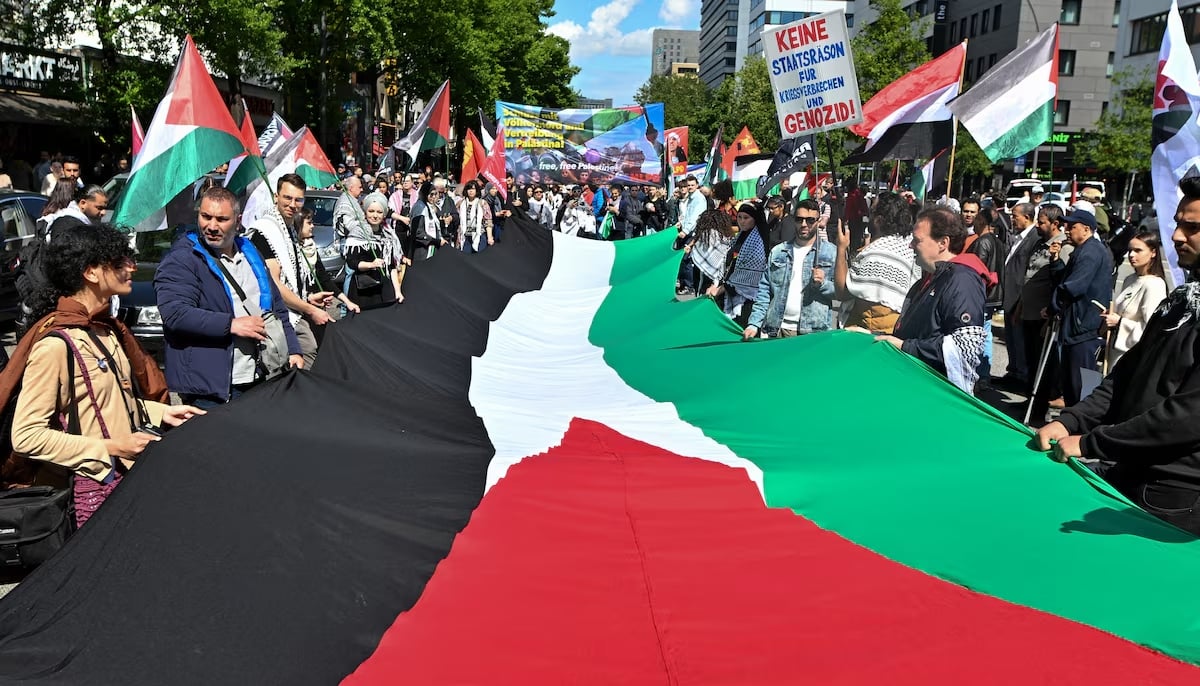
Andrea*, a Greek citizen pursuing education in Germany, began protesting against the “genocide” in December 2023, just two months after Israel accelerated the annihilation of Palestinians in Gaza. However, she felt her protest was already too late, and in Burg bei Magdeburg, a town where she resided, nothing had been organised.
The student and her sister were the first people to initiate the protests in the German town, alongside some like-minded people who also wanted to advocate for a ceasefire.
“None of us had the experience (of protesting) in this area before. None of us had done anything like that before… One would be labelled an antisemite immediately or a supporter of terrorism. There were a lot of cases where people were doxxed, where people's houses were raided by the police, just due to hearsay about them supporting Palestine, seeing a Palestinian flag (on their homes) or being seen wearing a keffiyeh scarf in the streets,” she says in an audio interview with Geo.tv.
Andrea was one of the few people who were aware of the history of atrocities that Gaza had endured in the past and, therefore, realised the severity of the situation, which is why she wasn’t able to function in her everyday life without feeling the pain of those suffering. But despite the hostilities she and her fellow peace advocates had to face, Andrea continued to be the flagbearer of the protests seeking justice for Palestinians.
“A lot of people wanted to protest, but didn’t dare to do so. They didn’t know where to turn to or who to talk to because it could potentially be damaging to someone's life in one way or another,” she adds.
Andrea knew that progress in the results of protests worldwide was slow, but continuing it had the potential to initiate action. She also criticised European governments for being complicit in the genocide.
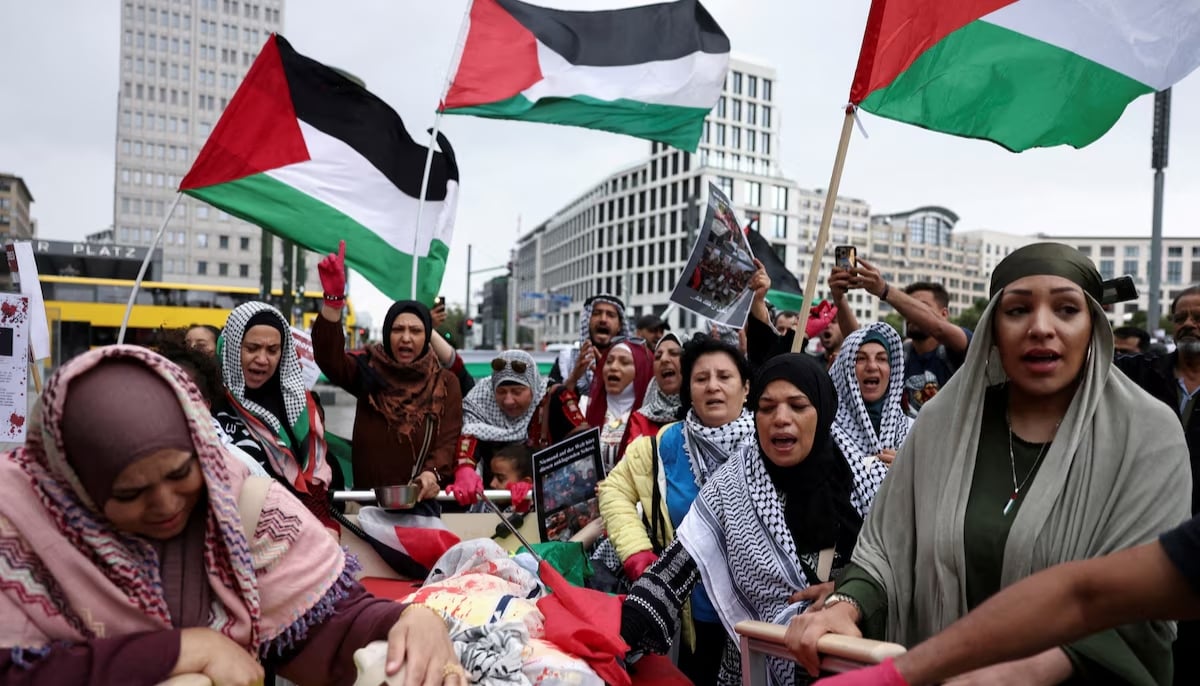
“There is a personal responsibility to react and to demand [a ceasefire] as a citizen of a country that such a stance cannot be allowed and also to demand that your government abides by international law and upholds the principles and values that keep the international community together,” she says.
Andrea maintains that a very large number of people in Germany belong to minority communities that are marginalised and, therefore, face the harshest consequences for standing in solidarity with Palestine. Therefore, Europeans like her stand up on their own behalf as well, according to her.
“It is important to keep protesting for these people, because they also need to have these kinds of spaces and outlets to voice their concerns, their outrage, and to also be supported in doing so,” says the Greek student.
She believes that activists and people who care for peace possess the power to stop injustice, but also laments how even peaceful protests were termed a danger to German society, stressing that despite such propaganda, the efforts of activists helped highlight the atrocities.
“The change in public opinion occurred slowly because of the brutality and cruelty of Israel's crimes. While I don't think (protests) help shift public opinion, they do make a difference in pressuring the government.”
Andrea, who continued her advocacy since October 2023, says the eventual ceasefire in October 2025 is a good example of how international pressure comes from “collective actions”.
“It has an impact from the growth of the movement itself, from spreading awareness about the cause and what Palestinian liberation means for Palestinians and for the world.”
Showing solidarity with the people of Gaza, or any activism for that matter, does not always have to be loud or dramatic. Often, it is the quiet, unadvertised, consistent efforts that keep a cause breathing. Sometimes it is just people showing up, day after day, refusing to look away.
Rabia Mushtaq is a staffer at Geo.tv. She posts on X @rabiamush
Header and thumbnail image by Geo.tv