



Pakistan's women are entering stock market — but is the system ready?
It will take institutions to do the heavy lifting, if we want women becoming investors as a structural shift




 Updated Sunday Mar 08 2026
Every year on March 8, women’s empowerment is celebrated more loudly than the rest of the year. Banners with chants praising women go up, campaigns trend, and organisations share their achievements in breaking barriers.
This Women’s Day, however, a new space is being claimed by women in Pakistan. Something quieter, more tangible is unfolding in the spreadsheets, mobile applications and investment statements across the country, which doesn’t necessarily need a hashtag to prove its significance.
Women in Pakistan are investing. Not necessarily in the theoretical, aspirational way that empowerment campaigns might promise, but in the very transactional way of making choices and seeing their money grow.
Nadia Farooq, 42, who runs a home-based baking business in Karachi, did not grow up thinking money was something she was supposed to invest someday. She saved quietly, spent carefully and kept what little she set aside in a bank account.
“It was inflation that drew my attention towards investments. Alongside my husband, I was also managing all household expenses. I thought, ‘I am actually losing money if I keep it in a savings account.’ That’s when I thought about making investments,” Nadia told Geo.tv.
Hira Siddiqui, a 25-year-old working woman from Karachi, said she has always been focused on managing her salary, covering rent, supporting her parents, and saving whatever she could.
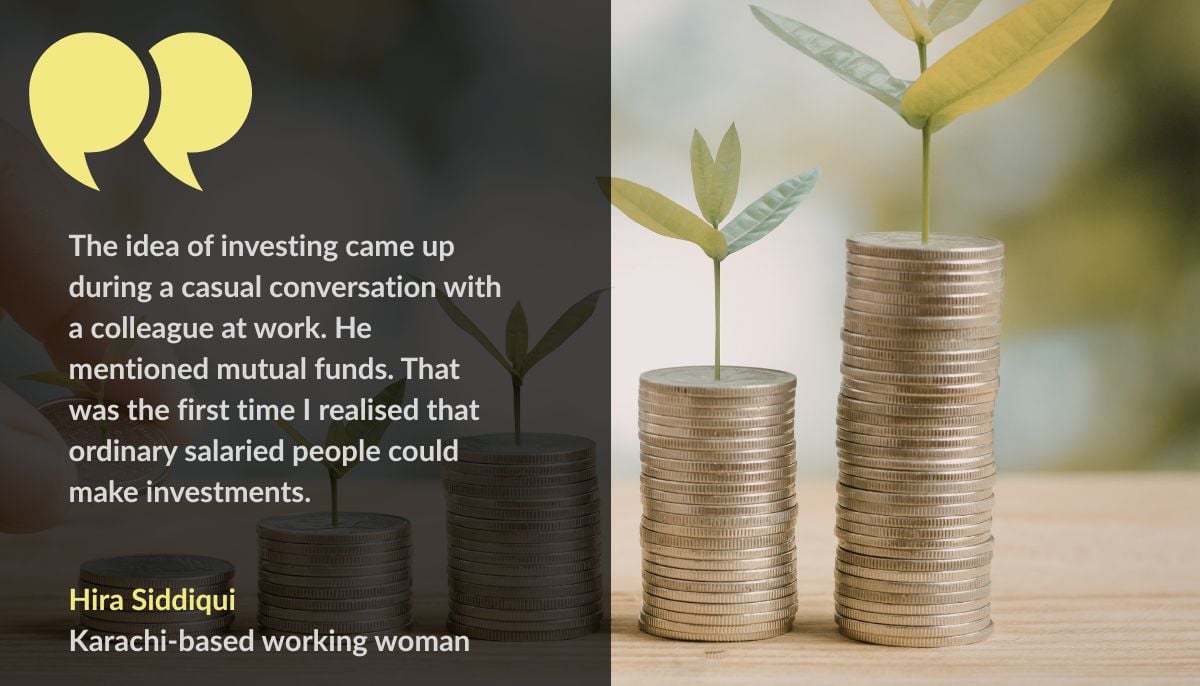
“The idea of investing came up during a casual conversation with a colleague at work. He mentioned mutual funds. That was the first time I realised that ordinary salaried people could make investments," she added.
Two women. Two cities. Two different life stages. And the same realisation arriving through entirely different doors.
To understand why this moment matters, you have to understand what came before it.
The relationship between women, money and Pakistan has never been easy. For decades, cultural conditioning has positioned men as the default money handlers, inheritors and decision-makers.
Meanwhile, whether they worked or not, women were rarely included in discussions about money, how it should be spent, or how it should grow. Financial knowledge was not usually seen as something women were expected to lead, and this gap has affected economic opportunities for many generations.
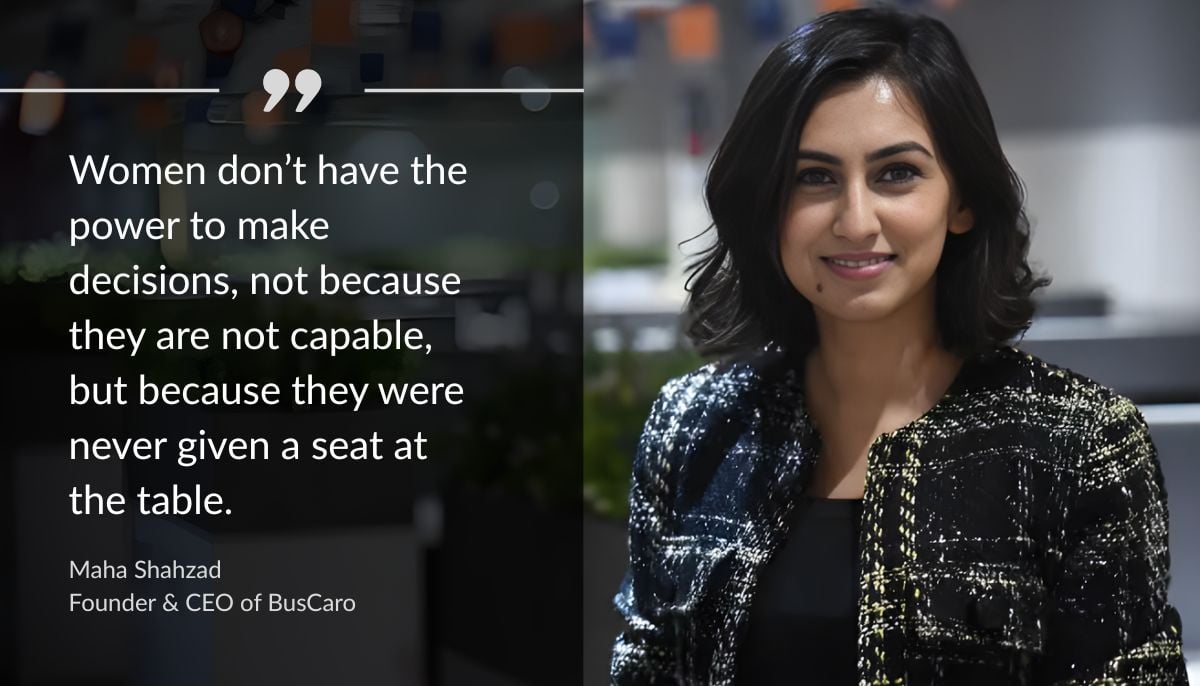
“There is a huge imbalance at every level of our society and socio-economic class. Women don’t have the power to make decisions, not because they are not capable, but because they were never given a seat at the table,” Maha Shahzad, founder and chief executive officer of BusCaro, told Geo.tv.
Shahzad, who built a mobility company from scratch without a university degree, has seen this reality first-hand, not only as an entrepreneur navigating investor spaces but also as a woman observing how many women around her were denied the chance to make decisions that directly affect their financial lives.
That exclusion starts early, she argues.
“We don't even teach boys how to handle money when they are kids, and we teach girls even less. Every child, whether they have a rupee or a thousand, must be taught to make decisions with money. That level of comfort is not created overnight; it must be created when they are kids."
Ramsha Aslam, senior investment advisor at Habib Bank Limited (HBL) Asset Management Company, points to a myth stating that “No matter how modern our societal norms become, women are still understood and overlooked by society as having a lack of financial knowledge and the art of handling money stability.”
Numbers tell the story of change and of distance yet to be covered.
That is beginning to change, and the numbers, for the first time, are starting to reflect it.
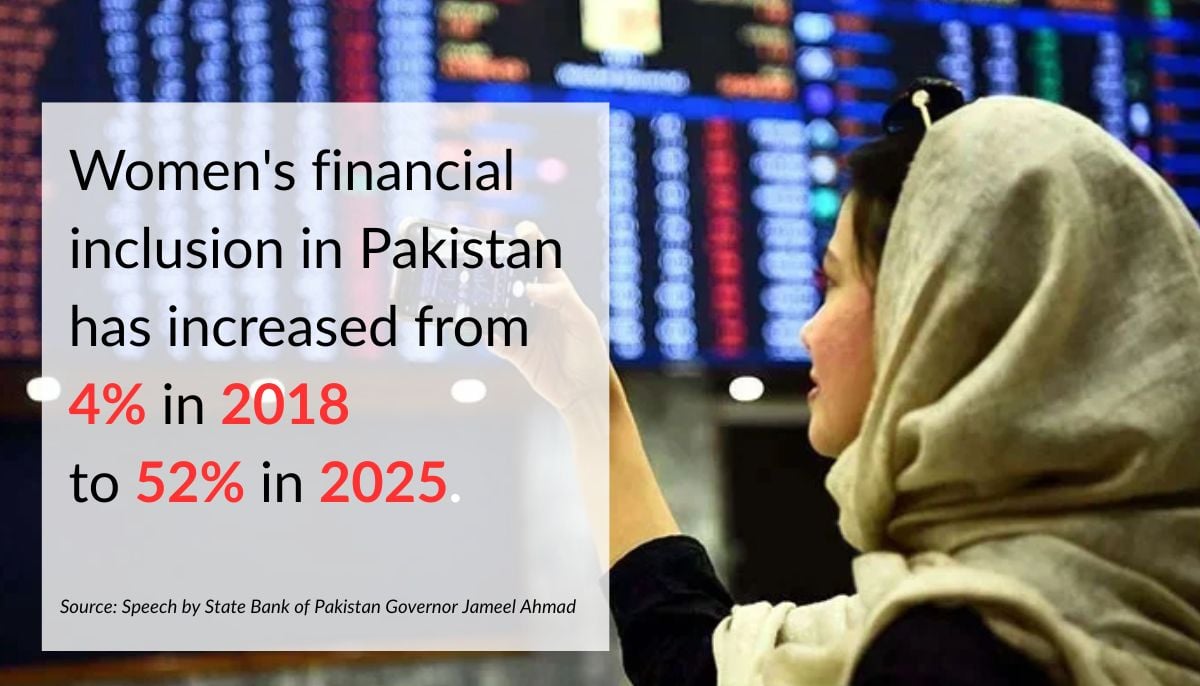
The headline figure is striking. A recent report issued by Mettis Global, citing State Bank of Pakistan Governor Jameel Ahmad, revealed that in Pakistan, the percentage of women's financial inclusion has jumped to 52% at the end of 2025 from merely 4% in 2018.
The gender gap in financial access has also reduced from 47% to 30%.
These numbers are not increasing; they are a fundamental transformation in the nature of Pakistan's formal financial system that is now starting to serve.
The investment scenes, on the other hand, reveal an even more disheartening story. Pakistan Stock Exchange’s (PSX) FY2025 Annual Newsletter highlighted that women’s participation in the mutual fund market is meagre at 17%, holding only 12% of the assets under management, despite the fact that they constitute 49.2% of the population.
Even of the 43% of the assets under management held by individuals, only 27% belong to women. Women’s participation in the gender equality initiative at the PSX was only 10% in terms of the number of unique investor identification numbers.
The disparity between the two figures is not contradictory but rather illustrative of the distance that still needs to be bridged. While the bank account is the first step, the investment is several steps ahead. And the distance between the two steps is where the women of Pakistan are right now.
Generally, the PSX recorded an increase in market capitalisation by 38.5%, reaching Rs14,374 billion, with the Karachi Stock Exchange (KSE)-100 Index rising by 50.2% year to date, as per the Economic Survey by the Ministry of Finance.
Raising an investment for a business is not an easy job for women. “When I go to raise investment, people ask me if I’m married or if I have kids, as if those things disqualify you or something. Nobody asks men those questions, but the fact is, the numbers show women-led funds and women-founded startups perform incredibly well; it’s basic maths, it’s not emotion,” Shahzad told Geo.tv, talking about the double standard women founders face.
As the cost of living has risen sharply over the past few years, the idea that a household can survive on a single income has become increasingly difficult to sustain.
"Inflation has become a woman's best friend in Pakistan. A household can no longer run on one income, and that economic pressure has quietly solved a lot of the permission problem that held women back for decades," Shahzad said.
Nadia, sharing her story, mentioned, “The biggest challenge was confidence and the fear of risk with money because playing with money under these initiatives is not for people like us.”
Along with this economic pressure, access to technology has quietly removed one of the oldest barriers to financial literacy: gatekeeping information.
"Social media is what you make of it. Resources are available; they're in Urdu, they're in English, they're on AI tools. But are women being made aware that these tools are available and that they are accessible to them?" Shahzad asked, pointing out the gap in the information.
Highlighting her journey, Hira shared, "I remember feeling nervous the first time I actually invested. Even clicking that final button felt like a big step because it was real money."
“I moved on to stocks after spending some time understanding how the markets work. I think that stocks are not for someone who cannot tolerate any risk,” she added.
Advising how a woman can start, Aslam echoes: "For women exploring stocks and mutual funds for the first time, start with the basics: YouTube, social media, and Google. Then combine that with advice from people with real experience. "
The behavioural data emerging from investment platforms is already a story that challenges long-held assumptions about women and risk.
"A few years ago, the market was dominated by male investors, with very few female investors. However, with increasing financial literacy, women are becoming more aware of investment avenues. The ratio of female investors is now almost equal to that of male investors," Fizra Jawed, investment adviser at the Al Meezan Investment Management Ltd, told Geo.tv.
The firm has launched the InvestHer Club, an initiative designed to educate and onboard women investors in a space built specifically for them rather than adapted as an afterthought.
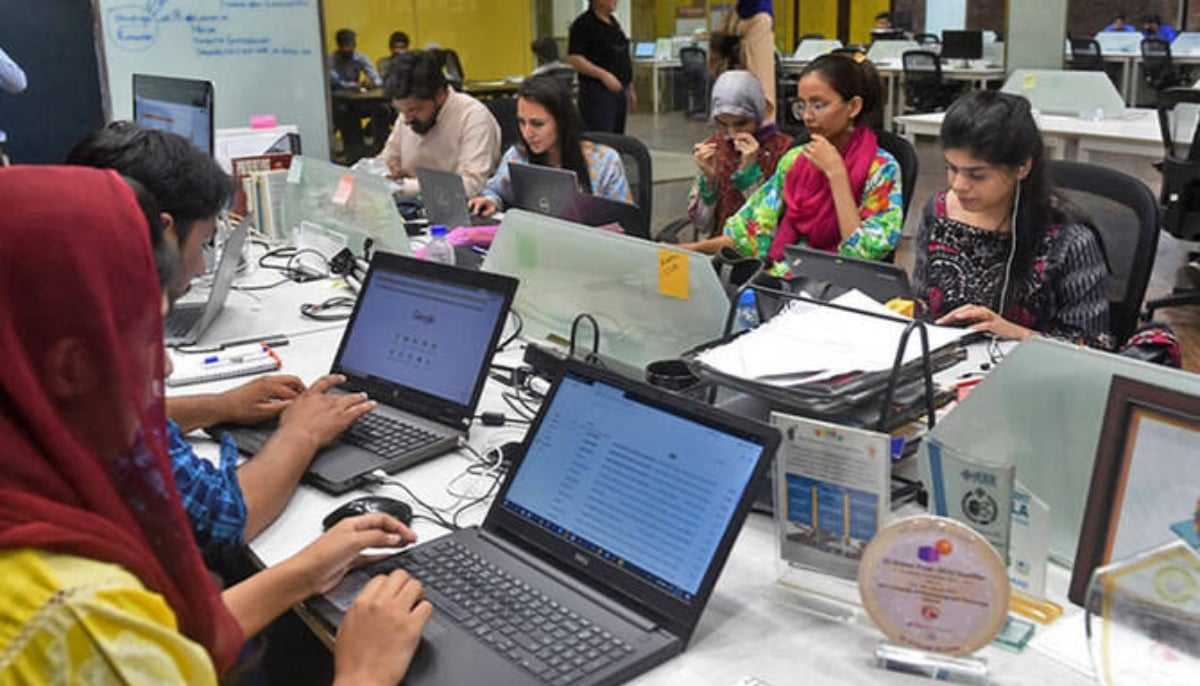
Experts claim that women now understand different risk levels and different investment avenues.
According to Javed, market approaches have undergone a fundamental shift because investors now use better methods to evaluate risk.
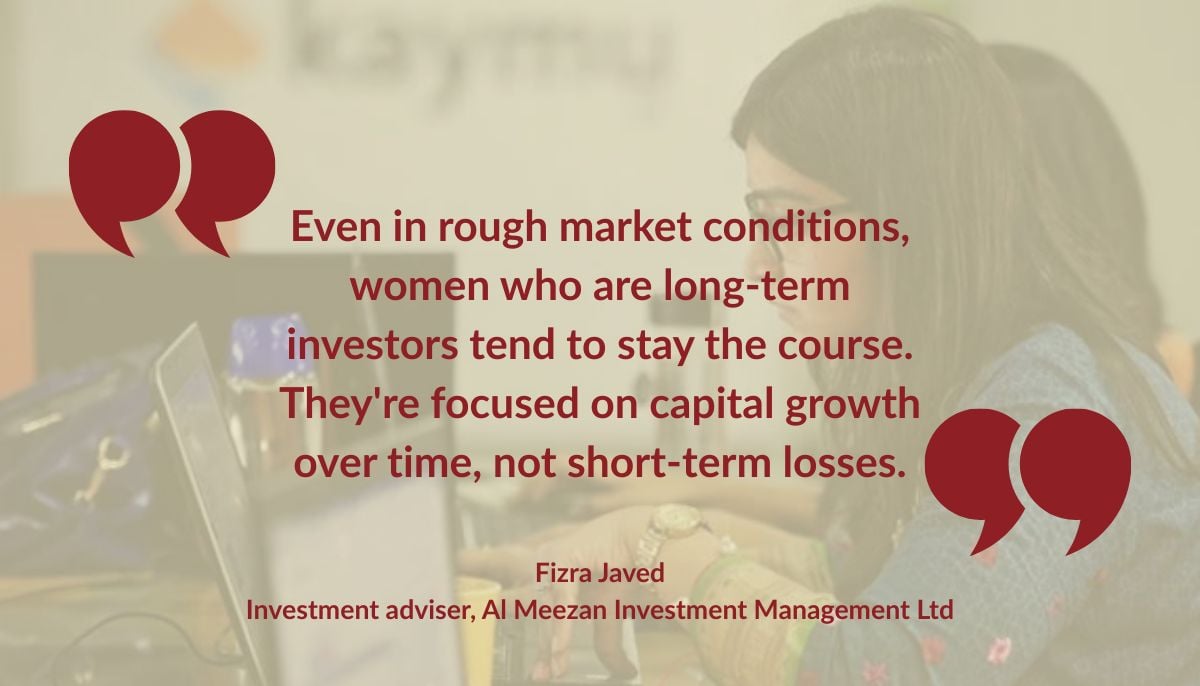
"Even in rough market conditions, women who are long-term investors tend to stay the course. They're focused on capital growth over time, not short-term losses. That's not a small thing; that's discipline," Javed added.
The regulatory environment, traditionally a slow responder to gender gaps in financial participation, is also beginning to stir.
Pakistan became the 19th global signatory to the Women Entrepreneurs Finance Initiative (WE-FI) Code in February 2025, with 22 banks agreeing to enhance the quality of data collection and access for women.
Implementation started in January 2026, as per a report issued by the State Bank of Pakistan.
Aslam believes the institutional effort needs to go further and deeper. "Banks and investment platforms should actively provide seminars in different organisations and educational institutions so that women from a young age can also actively understand and participate in the need for savings and create sustainable wealth creation."
But data at the platform level only tells part of the story. On the ground, the picture is more complicated.
In Nadia's circle in Karachi, the awareness gap is still stark.
"In my family, the only options anyone knows are gold, cash, or a basic bank account. When you mention anything beyond that, the first reaction is, is this a scam? The awareness simply isn't there yet, and that gap is very real," she told Geo.tv.
Shahzad is direct about the limits of the current conversation.
"Before we get into the investing part, the question is, does she get to go to school? Does she get to keep the money she makes? Investment literacy comes after that; we're skipping a hundred steps. Women are uncomfortable using cash because they've never really been allowed to. This is not a skill gap; it is a gap in experience," she added.
If the current trend in the increasing number of women entering the investment markets is to become a structural shift and not just a statistical aberration, it will not be achieved by marketing campaigns and superficial celebrations of Women's Day. It will take institutions to do the heavy lifting.
“Whether you're a working woman or a stay-at-home wife, financial freedom is not optional; it is the difference between a life with choices and a life without choices. Even if all you can do is put your savings into gold, do it. Be prepared. Be secure," Shahzad said.
This Women’s Day, the one thing that can be said with absolute honesty is this: the movement is for real, and it is still in its early stages.
Pareesa Afreen is a staffer at Geo.tv
Header and thumbnail illustration by Geo.tv