In pictures: Artemis II crew share glimpses of moon, Earth

Artemis II astronauts report their spacecraft crossed two-thirds mark on their journey to lunar flyby


By
AFP

The Artemis II astronauts have taken in sights of the moon never before seen by human eyes, crew members reported on Sunday as their spacecraft crossed the two-thirds mark on their journey to a long-anticipated lunar flyby.

As the astronauts went to bed in the early hours of Sunday, closing out the fourth day of their 10-day mission, they were nearly 200,000 miles (321,869 kilometers) from Earth and 82,000 miles from the moon, according to Nasa´s online dashboard.

The US space agency published on Sunday an image taken by the Artemis crew, showing a distant moon with the Orientale basin visible.

"This mission marks the first time the entire basin has been seen with human eyes," Nasa said. The massive crater, which resembles a bullseye, had been photographed before by orbiting cameras.

Speaking to Canadian children live from space, astronaut Christina Koch said the crew was most excited to see the basin — sometimes known as the moon's "Grand Canyon."
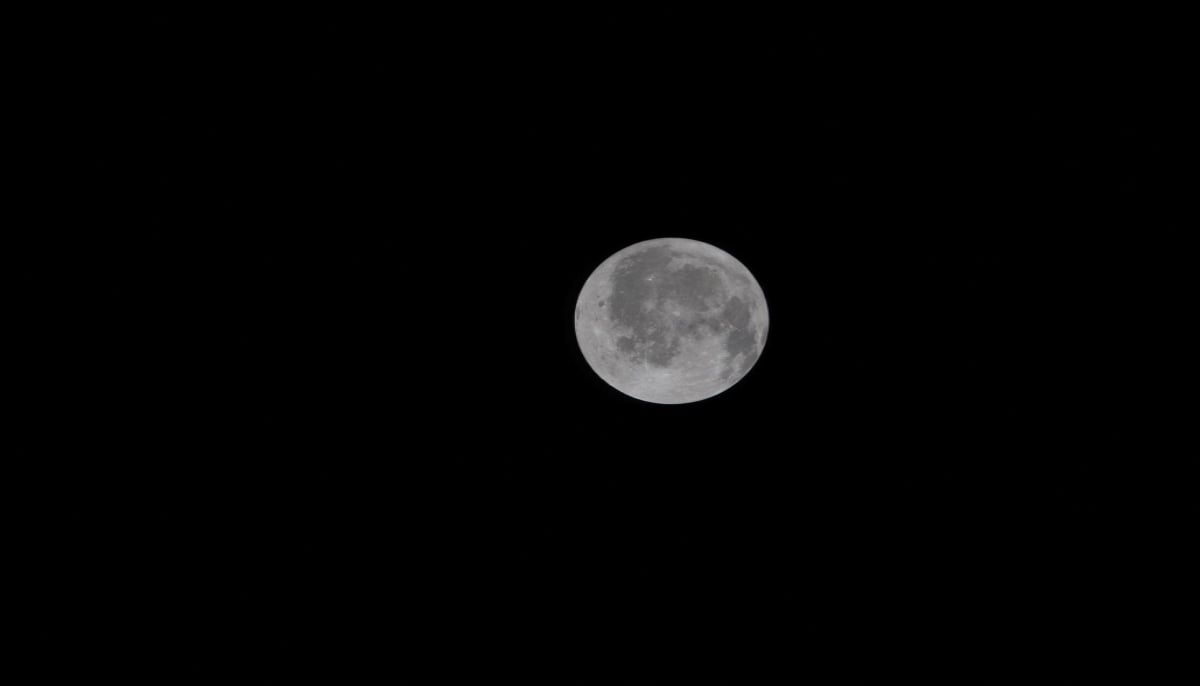
A view of the moon taken by an Artemis II crew member through the window of the Orion spacecraft on the third day of the Nasa mission April 3, 2024. — Reuters

"It's very distinctive and no human eyes previously had seen this crater until today, really, when we were privileged enough to see it," Koch said during the question-and-answer session hosted by the Canadian Space Agency.

The next major milestone is expected overnight Sunday into Monday, at which point the astronauts will enter the "lunar sphere of influence," where the moon's gravity will have a stronger pull on the spacecraft than Earth's.
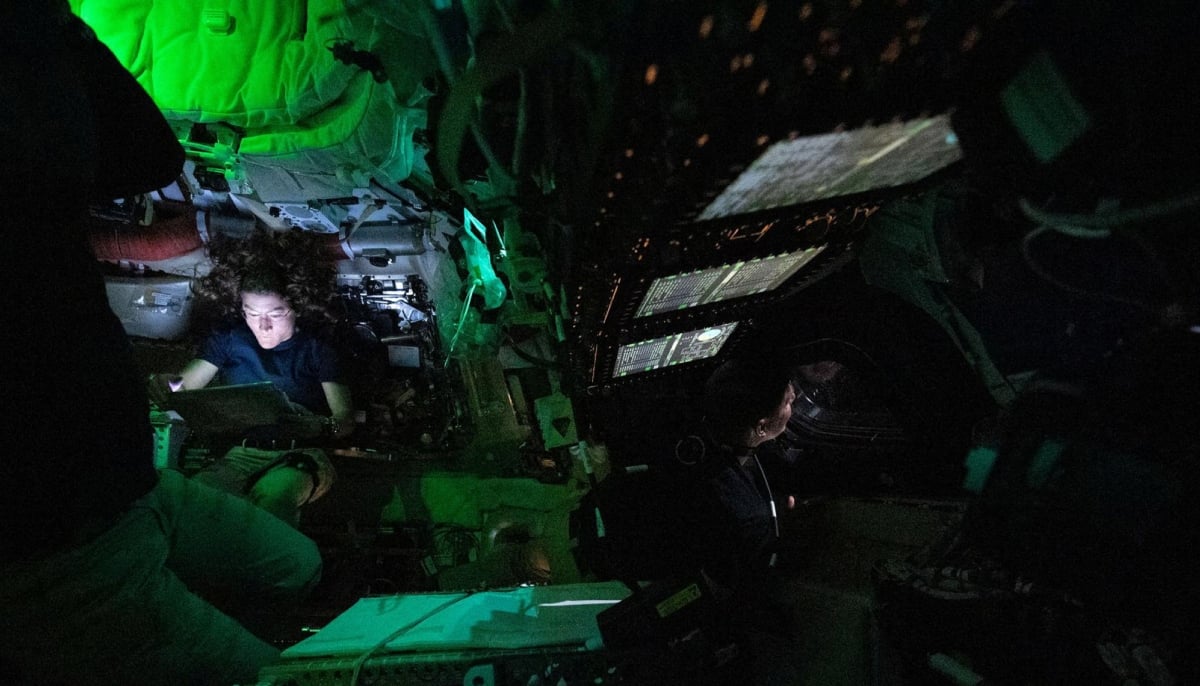
Nasa astronaut Christina Koch is illuminated by a screen inside the darkened Orion spacecraft on the third day of the agencys Artemis II mission as the crew travels towards the moon April 3, 2024. — Reuters
Nasa astronaut Christina Koch is illuminated by a screen inside the darkened Orion spacecraft on the third day of the agency's Artemis II mission as the crew travels towards the moon April 3, 2024. — Reuters

If all proceeds smoothly, as the Orion spacecraft whips around the moon, the astronauts — Americans Koch, Reid Wiseman and Victor Glover, along with Canadian Jeremy Hansen — could set a record by venturing farther from Earth than any human before.

The mission is the first crewed lunar voyage in more than half a century, a 10-day flight around the moon and back that will mark the second mission of Artemis, successor to the Apollo programme of the Cold War era.

The massive rocket blasted off on April 1, after repeated setbacks stalled it and even necessitated rolling the rocket back to its hangar for analysis and repairs.
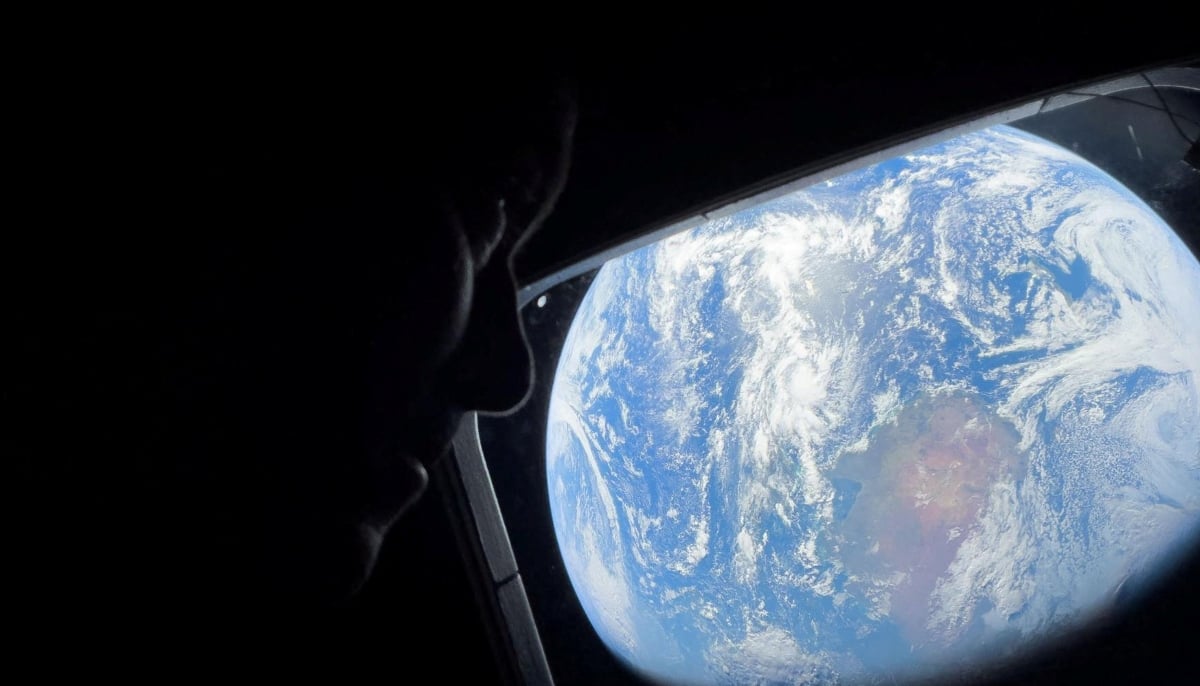
Nasa astronaut and Artemis II Commander Reid Wiseman peers out of one of the Orion spacecrafts main cabin windows, looking back at Earth, as the crew travels towards the moon April 2, 2024. — Reuters
Nasa astronaut and Artemis II Commander Reid Wiseman peers out of one of the Orion spacecraft's main cabin windows, looking back at Earth, as the crew travels towards the moon April 2, 2024. — Reuters

The Artemis astronauts' mission is to study certain lunar sites and phenomena as part of 10 objectives chosen by Nasa and ranked in priority order based on scientific interest.

During the moon flyby, which will last for several hours, the crew will have to observe the celestial body with their naked eyes, along with the cameras they have on board.
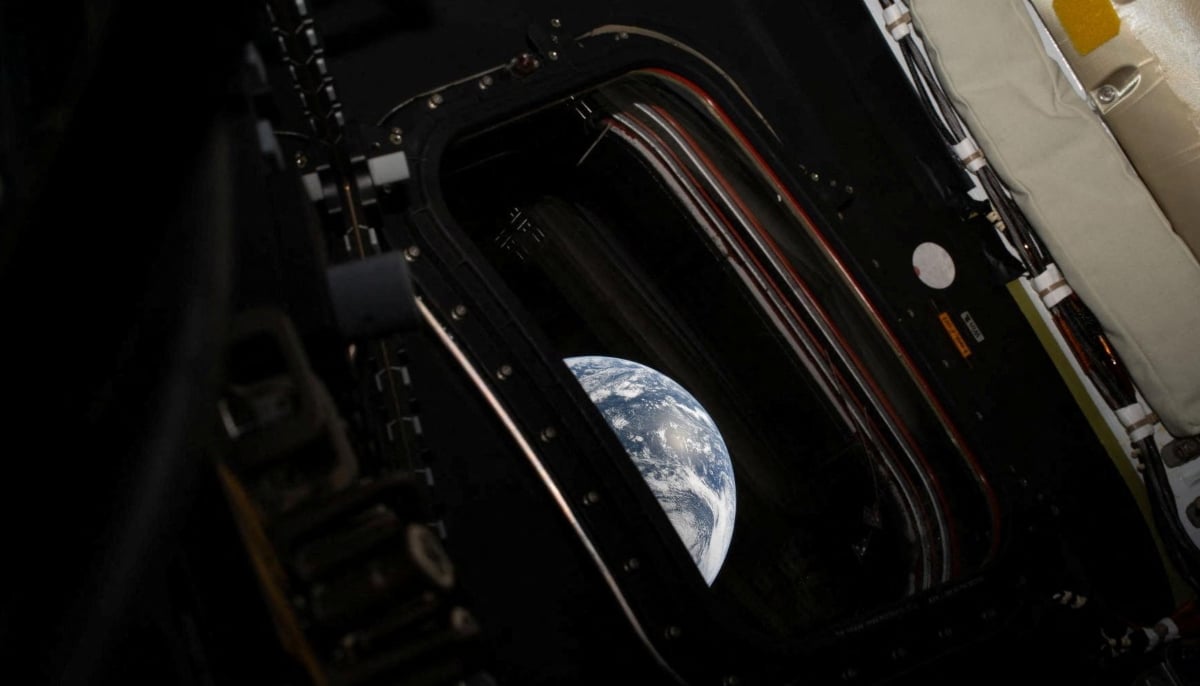
A view of Earth taken by Nasa astronaut and Artemis II commander Reid Wiseman from one of the Orion spacecrafts four main windows after completing the translunar injection burn as the crew makes its way towards the moon, April 2, 2026. — Reuters
A view of Earth taken by Nasa astronaut and Artemis II commander Reid Wiseman from one of the Orion spacecraft's four main windows after completing the translunar injection burn as the crew makes its way towards the moon, April 2, 2026. — Reuters
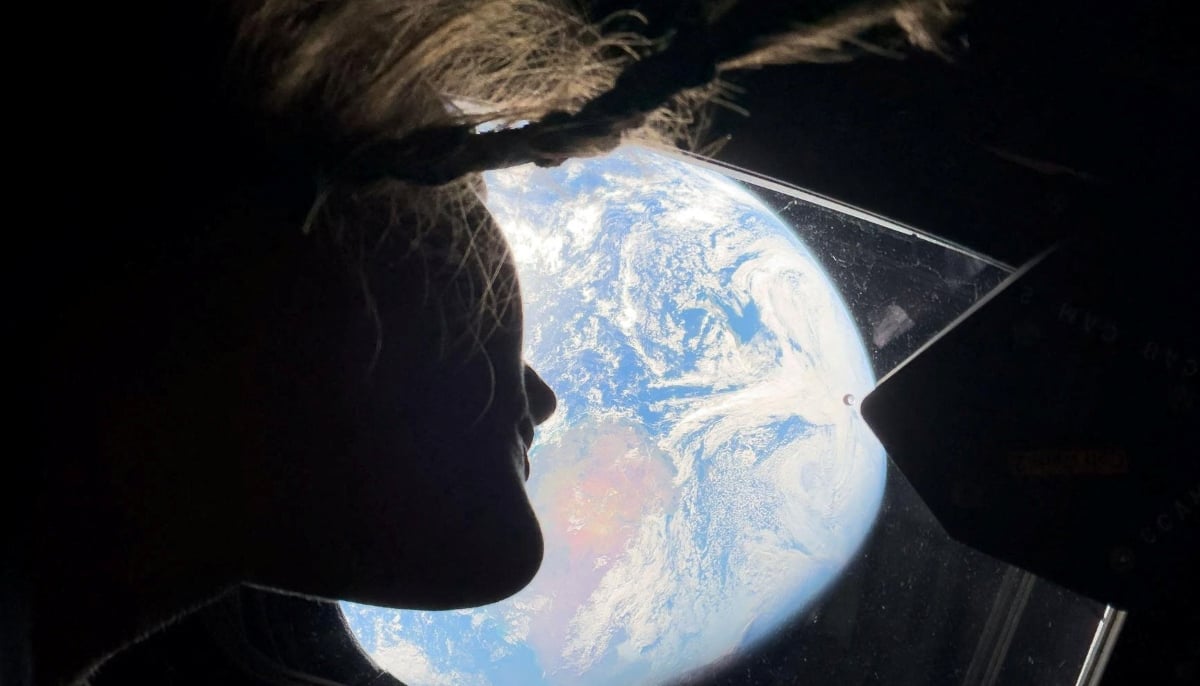
Nasa astronaut and Artemis II mission specialist Christina Koch peers out of one of the Orion spacecrafts main cabin windows, looking back at Earth, as the crew travels towards the moon April 2, 2024. — Reuters
Nasa astronaut and Artemis II mission specialist Christina Koch peers out of one of the Orion spacecraft's main cabin windows, looking back at Earth, as the crew travels towards the moon April 2, 2024. — Reuters
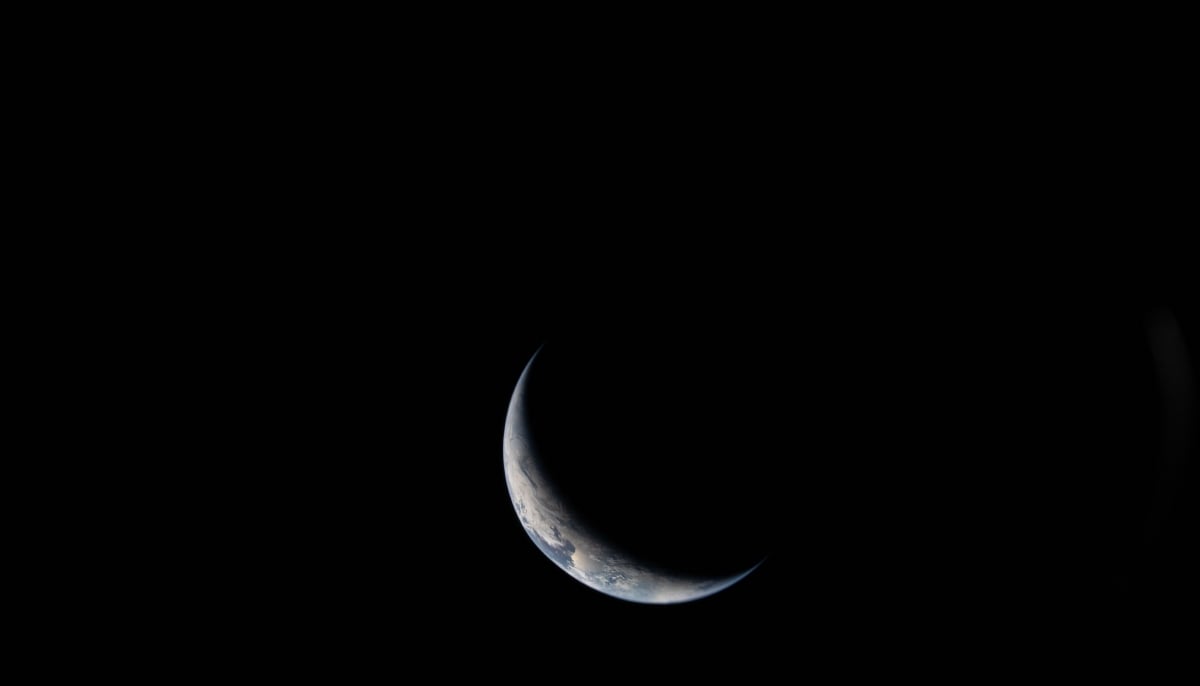
This handout picture provided by Nasa shows a sliver of Earth illuminated against the blackness of space taken by an Artemis II crew member through an Orion spacecraft window on April 3, 2026. — AFP
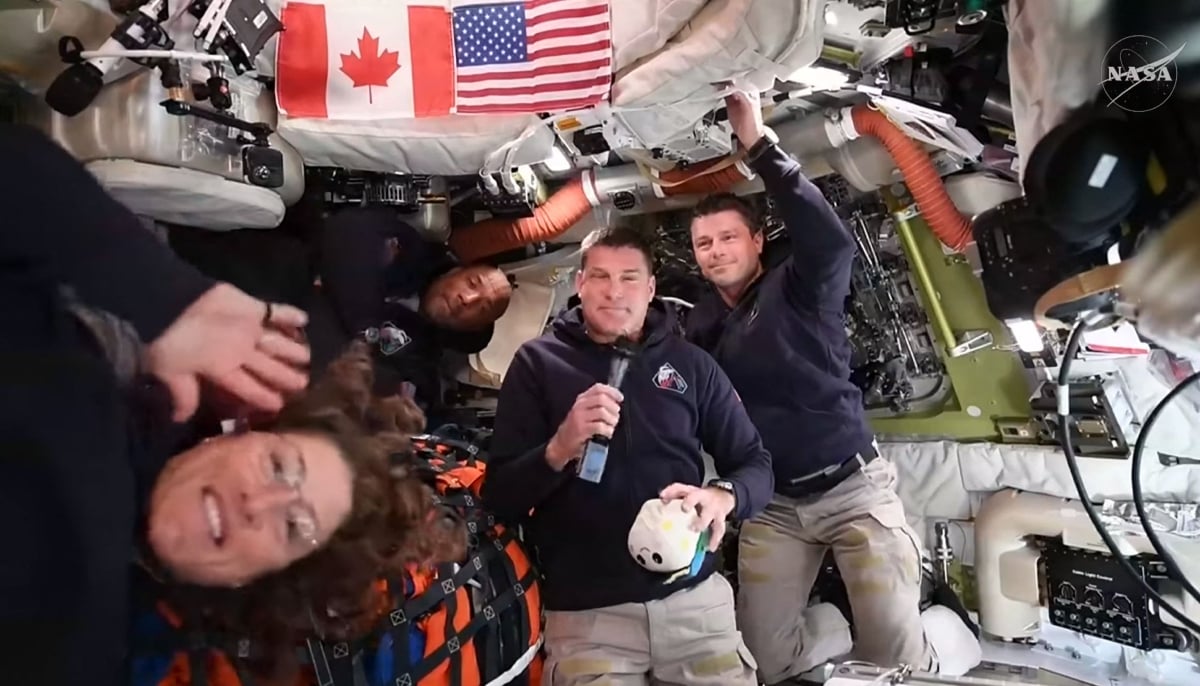
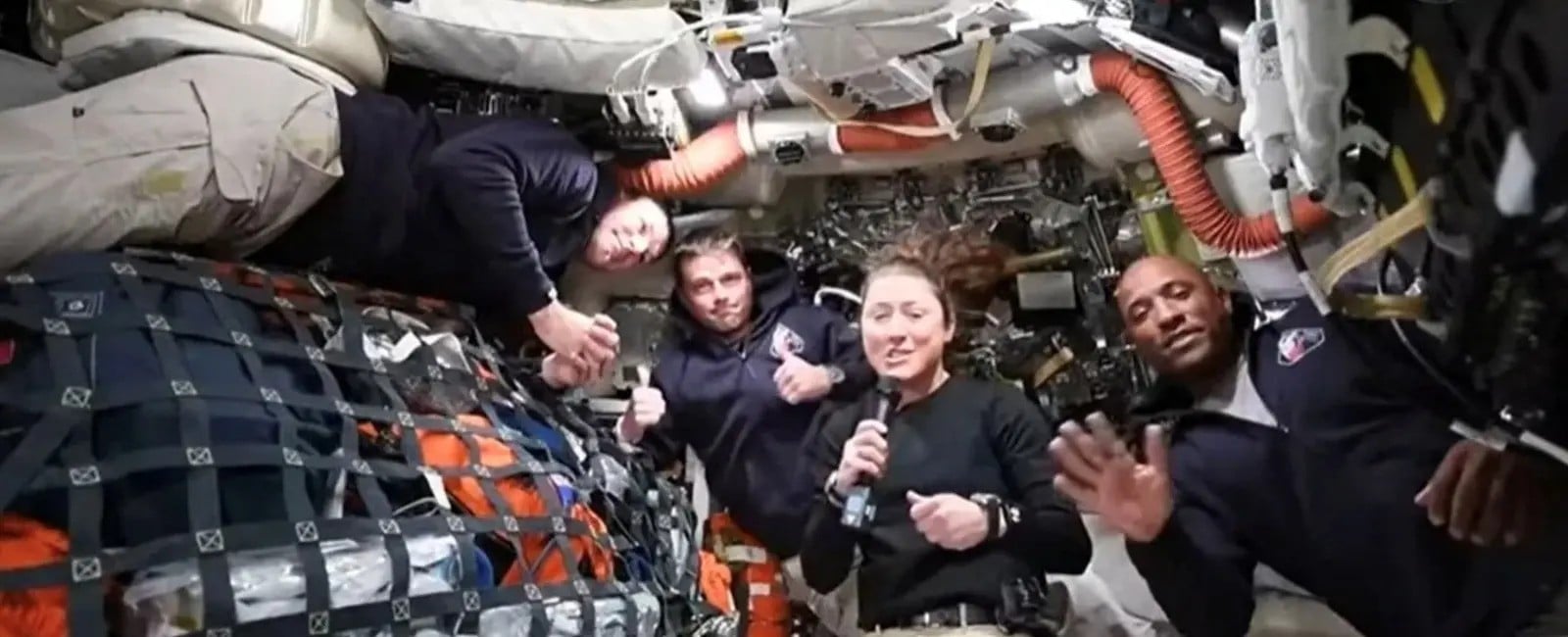
This screengrab taken from a NASA livestream shows Artemis II mission astronauts (L-R) Nasa´s pilot Victor Glover, Nasa commander Reid Wiseman, Canadian Space Agency´s mission specialist Jeremy Hansen and Nasa´s mission specialist Christina Koch as they attend a VIP call with Canadian children from inside the Orion spacecraft while on his way to the moon on April 4, 2026. — AFP
This screengrab taken from a NASA livestream shows Artemis II mission astronauts (L-R) Nasa´s pilot Victor Glover, Nasa commander Reid Wiseman, Canadian Space Agency´s mission specialist Jeremy Hansen and Nasa´s mission specialist Christina Koch as they attend a "VIP call" with Canadian children from inside the Orion spacecraft while on his way to the moon on April 4, 2026. — AFP
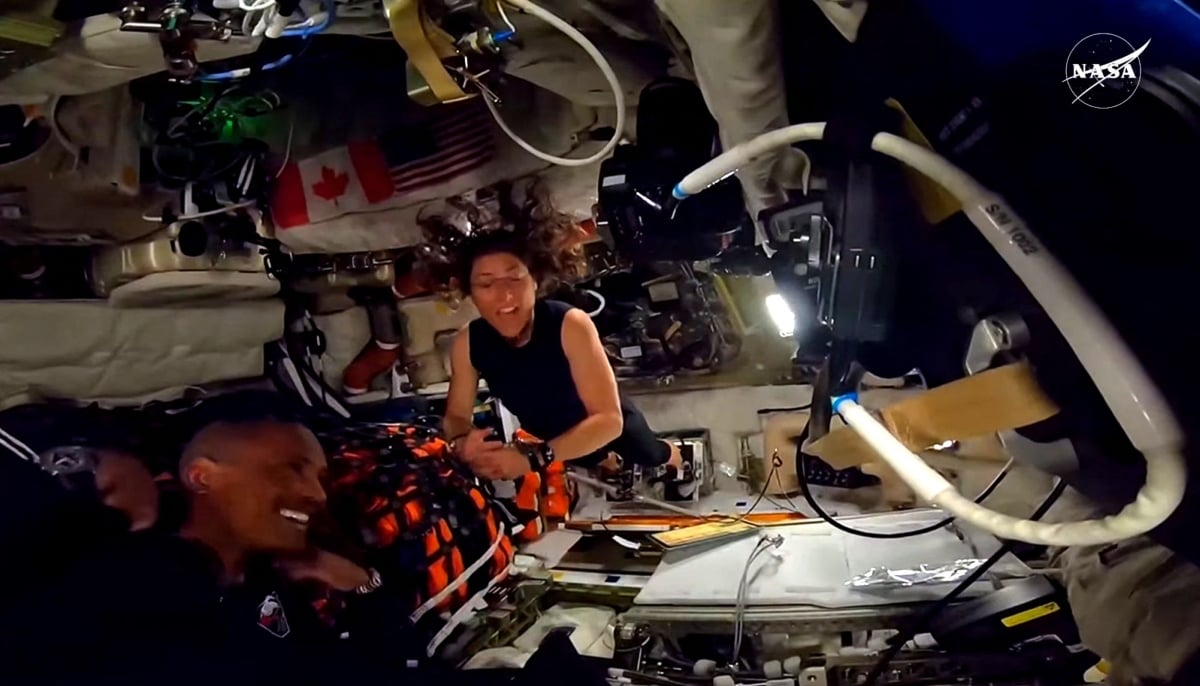
This screengrab from a Nasa live broadcast video footage shows Nasa astronaut and Artemis II Mission Specialist Christina Koch (R) and Nasa astronaut and Artemis II pilot Victor Glover working indside the Orion spacecraft as they pass the halfway point between Earth and the moon on the way to their planned lunar flyby in the Orion spacecraft, on April 3, 2026. — AFP
This screengrab from a Nasa live broadcast video footage shows Nasa astronaut and Artemis II Mission Specialist Christina Koch (R) and Nasa astronaut and Artemis II pilot Victor Glover working indside the Orion spacecraft as they pass the halfway point between Earth and the moon on the way to their planned lunar flyby in the Orion spacecraft, on April 3, 2026. — AFP 
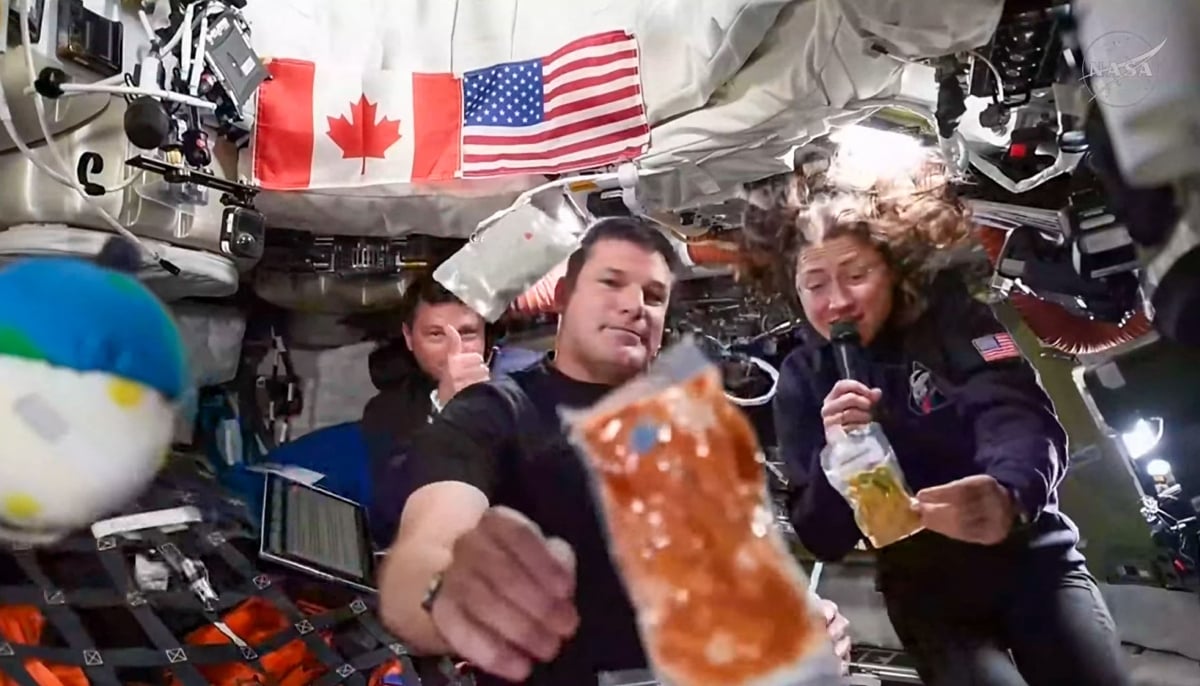
This screengrab taken from a Nasa livestream shows Artemis II mission astronauts (left to right Nasa´s commander Reid Wiseman, Canadian Space Agency´s mission specialist Jeremy Hansen and Nasa´s mission specialist Christina Koch during a brief demonstration of the food they eat in space to respond a question during a VIP call with Canadian children inside the Orion spacecraft while on their way to the moon on April 4, 2026. — AFP
This screengrab taken from a Nasa livestream shows Artemis II mission astronauts (left to right Nasa´s commander Reid Wiseman, Canadian Space Agency´s mission specialist Jeremy Hansen and Nasa´s mission specialist Christina Koch during a brief demonstration of the food they eat in space to respond a question during a "VIP call" with Canadian children inside the Orion spacecraft while on their way to the moon on April 4, 2026. — AFP
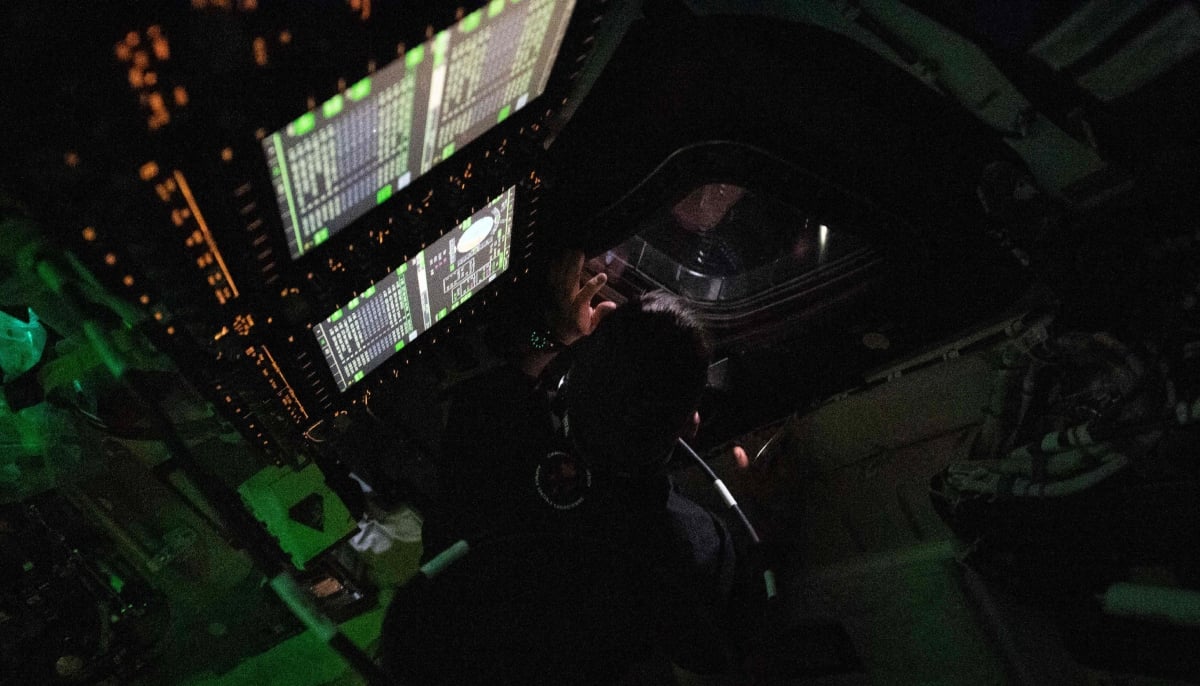
This handout picture by an Artemis II crew member provided by Nasa shows Canadian Space Agency (CSA) astronaut Jeremy Hansen peering out the window of the Orion spacecraft on April 3, 2026. — AFP