



Invisible victims: How domestic violence leaves lifelong scars on children
Childrens' trauma is often dismissed due to invisible marks, yet it lingers for many decades




 Updated Tuesday Apr 07 2026
When Fatima, a 21-year-old student from Karachi, recalls her childhood, painful memories of a home, where anger could turn to violence in an instant, haunt her, teaching her early that staying quiet did not mean staying safe and still keeping her on edge today.
“I saw my mother endure things no one should,” Fatima said, adding, “There were days when the house felt smaller, like the walls were closing in, the world felt silent, and it felt like my heart was coming into my mouth.”
Even though Fatima wasn’t herself a victim of violence, she was watching it all take place before her eyes. And one day, she finally decided to step in between a heated argument among her parents that turned physical. That day, something changed Fatima. “I couldn’t stay quiet anymore,” she recalled, adding that it was after that day she became defensive, blunt, and even sometimes behaved rudely with her father. “I didn’t choose it to happen; it just did."
In Pakistan, conversations regarding domestic violence remain exclusive to women, often ignoring the children bearing the trauma in these households, even though a study, published in the Journal of Interpersonal Violence, reveals that they are among the highly affected ones, who eventually take these traumas into adolescence.
Moreover, the country lacks national data tracking how many children live in violent homes. Without appropriate registries, screening, or school-based reporting systems, the damage remains undocumented.
As for Fatima, she struggles with guilt over her tone, anger, and the inability to “stay calm” around her father. “Sometimes, I am just unable to hold on to frayed nerves and control my tongue,” she said.
Several studies from the World Health Organisation (WHO) discovered that witnessing violence poses a serious impact on a child's stress response system, which affects emotional regulation, and they start bringing these traumas out.
As per UNICEF, children exposed to domestic violence are at significantly higher risks of mental disorders, as it poses a life-long impact, with very brutal aspects of being raised in an abusive environment.
Children who are never counted
Batool, 40, has watched this trauma unfold through her two nieces and two nephews, who are currently struggling with its effects. Their mother endured years of pain and abuse, remaining in the relationship mostly for her kids, with no safe shelter available, while they would freeze in fear whenever scolded.
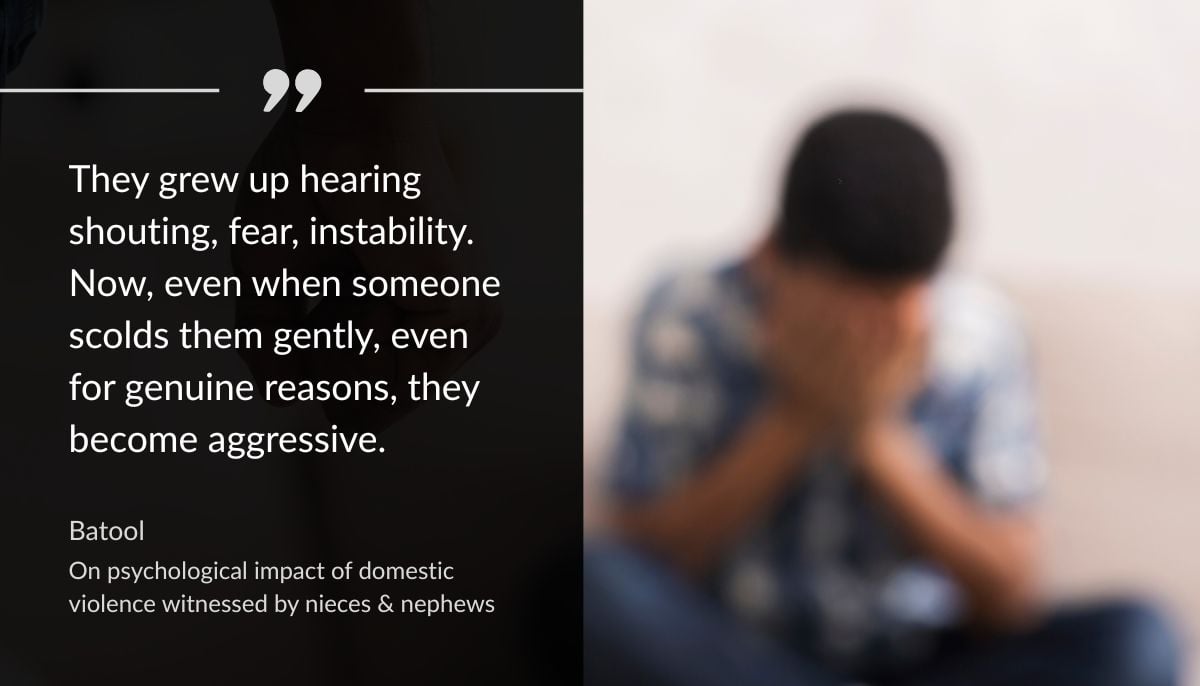
"They grew up hearing shouting, fear, instability," Batool says. "Now, even when someone scolds them gently, even for genuine reasons, they become aggressive."
While highlighting a very serious health impact, she explained that those kids suffer socially, as they are hesitant to speak, avoid gathering, and appear confused even in normal situations. “Sometimes they don’t even realise who is around them. It’s like their minds shut down.”
Batool said, “People say they’re ill-mannered or arrogant. But no one asks why they react like this.”
Research supports her concern. Children exposed to domestic violence often develop hypervigilance, a state of constant alertness, which causes constant irritation and defiance.
The silence that protects abuse
Rida Rehman, a social worker, highlighted that “fear is the biggest barrier”.
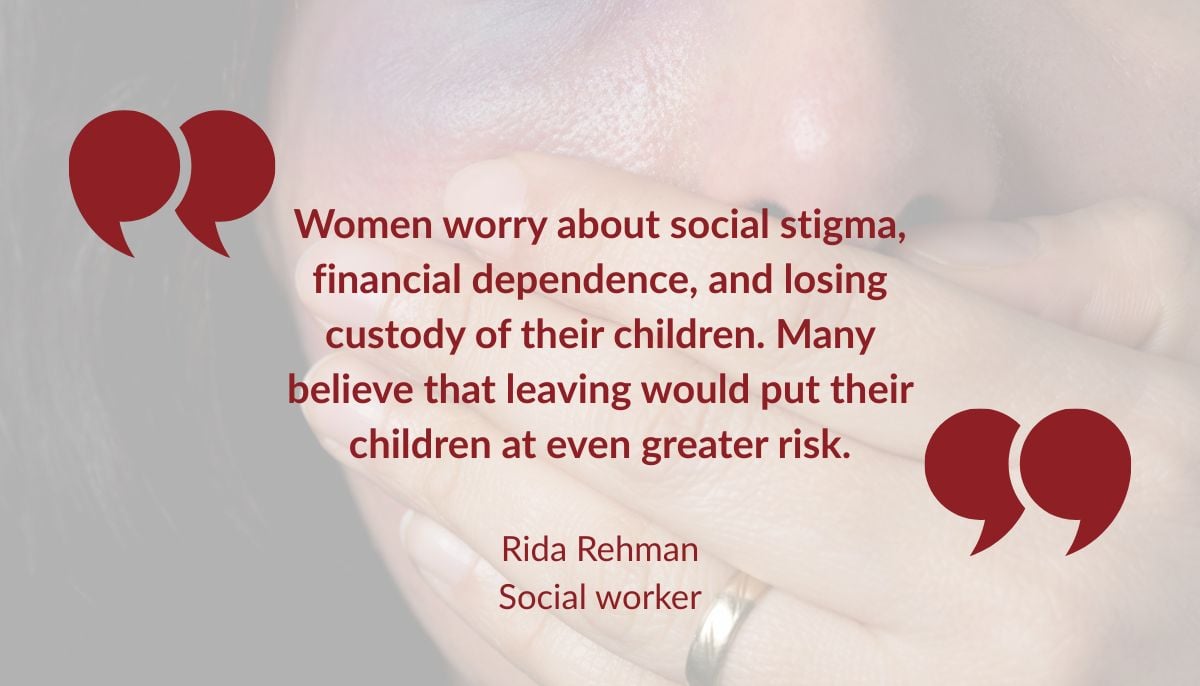
"Women worry about social stigma, financial dependence, and losing custody of their children. Many believe that leaving would put their children at even greater risk," said Rehman.
She says there are limited spaces in Pakistan to address children’s trauma specifically. “Organisations like Dar-ul-Sukoon, Sahil, Edhi Foundation, Rozan Counselling Helpline, and UNICEF [United Nations Children's Fund] Pakistan offer support, but access is uneven, especially outside major cities.”
"Silence is not protection," she stressed when commenting about the need for speaking out.
“Staying quiet may seem easier at first, but in the long run, it harms. Raising your voice is not shameful; it is protection, not only for you but for your children as well, as it opens the door to safety, healing, and a better future for children who silently carry the weight of abuse,” added Rehman.
How violence reshapes childhood?
According to research conducted by the Centres for Disease Control and Prevention (CDC) and Kaiser Permanente on Adverse Childhood Experiences (ACEs), children exposed to domestic violence often struggle with substance abuse, chronic illness, and mental health disorders as adults.
This research unravelled the reason behind the survivor’s mindset, such as difficulty in trusting others and feeling unsafe even in non-threatening environments.
Fatima recognised these patterns within her behaviour. “I’m always on edge,” she said, adding, “Loud voices make me anxious. Conflict feels dangerous, even when it’s not even there.”
Batool also noticed similar conditions in her nieces and nephews, too. For example, the way they expressed hesitation and aggression.
Clinical psychologist Hareem Naqvi, founder of Cup of Hope, explained that children who witness domestic violence typically develop anxiety, hypervigilance, aggression, emotional withdrawal, and difficulty regulating emotions.
From a trauma and attachment perspective, she added, a child’s nervous system adapts to survive an unpredictable and threatening environment.
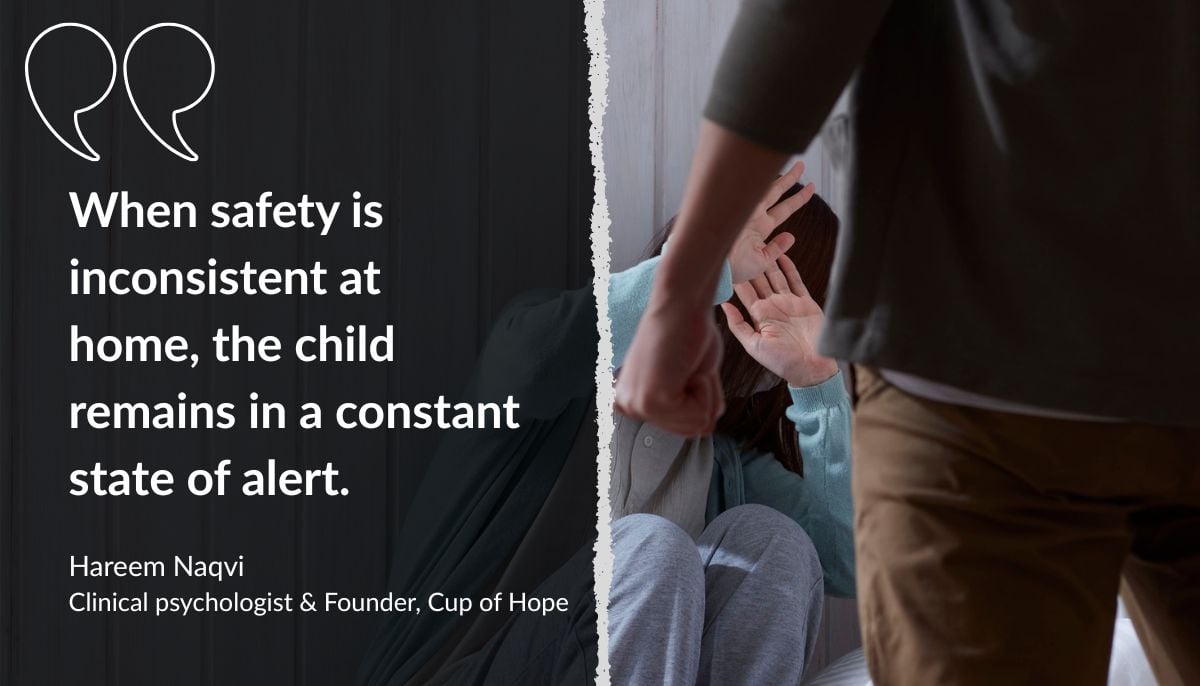
“When safety is inconsistent at home, the child remains in a constant state of alert,” she explained, drawing on attachment theory.
Naqvi states that prolonged exposure, rather than occasional incidents, causes more serious and lasting damage. According to developmental trauma theory, repeated violence can alter emotional development, stress regulation, and core beliefs about relationships, leading to complex trauma that often persists into adolescence and adulthood.
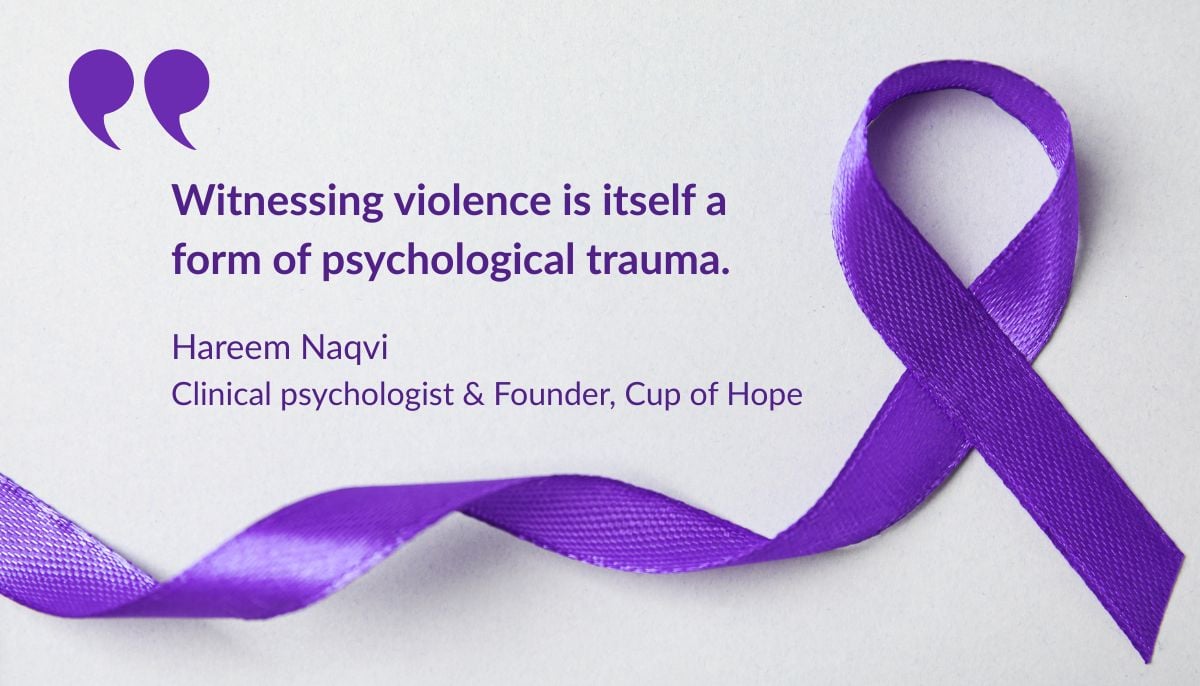
She also challenged a widespread myth in Pakistani society, which reinforces the idea that children are unaffected if they are not directly abused. “Witnessing violence is itself a form of psychological trauma,” she stressed, referencing social learning theory. “Children learn how relationships work by observation. These responses are not chosen. They are learned survival patterns.”
Early, trauma-informed interventions such as Cognitive Behavioural Therapy (CBT), Rational Emotive Behaviour Therapy (REBT), and family-based therapy, Naqvi notes, are crucial to prevent long-term psychological harm and to break the cycle of abuse. The cost of neglect.
Regardless of how widespread the issue is, Pakistan’s mental health infrastructure suffers from limited resources, insufficiently trained professionals, and a lack of child-focused trauma services. According to WHO estimates, the country has fewer than 500 trained psychiatrists for a population of over 240 million. Child-focused trauma services are even scarcer.
Schools, often the first place where behavioural changes surface, lack trained professionals to identify trauma responses that shape children’s personalities.
Teachers report declining academic performance, aggression or withdrawal, but without the implementation of appropriate systems, these minor victims go unnoticed.
“By the time they reach adulthood,” Rida noted, “the trauma is deeply rooted”.
Breaking the cycle
Ending domestic violence is more than protecting women; it’s about breaking the chain. Children who grow up in violent households are more likely to perpetrate abuse later in their lives. Rida highlighted a few steps to be taken to lessen the negative consequences and impact of domestic violence on both women and children:
- Trauma-informed schooling
- Accessible counselling for children
- Legal protection for women who leave
- Social acceptance that abuse is never a private matter
Acknowledging children’s pain, Fatima believes, is the first step. “We’re taught to be grateful we weren’t hit. But no one tells you that watching can hurt just as much.”
Batool also agreed. "Children always remember what they grow up seeing. They carry it into who they become," she stated.
Until Pakistan learns to see these children not as passive witnesses, but as victims in their own right, the life-long scars of domestic violence will unfortunately continue to pass quietly from one generation to the next.
Domestic violence does not end when the bruises fade. For children who spend their entire childhood witnessing abuse, the harm settles quietly into their nervous system, impacting their thoughts and feelings.
Their trauma is often dismissed due to invisible marks, yet it lingers for many decades. To confront domestic violence, Pakistan needs to broaden the lens beyond adult victims and recognise children as survivors in their own right.
Stigma, silence, and denial only widen the damage. Securing children means creating safe exits for mothers, trauma-informed schools, providing accessible mental health care facilities, and a society willing to listen.
Syeda Fazeelat Fatima is a staffer at Geo.tv
Header and thumbnail image by Canva