


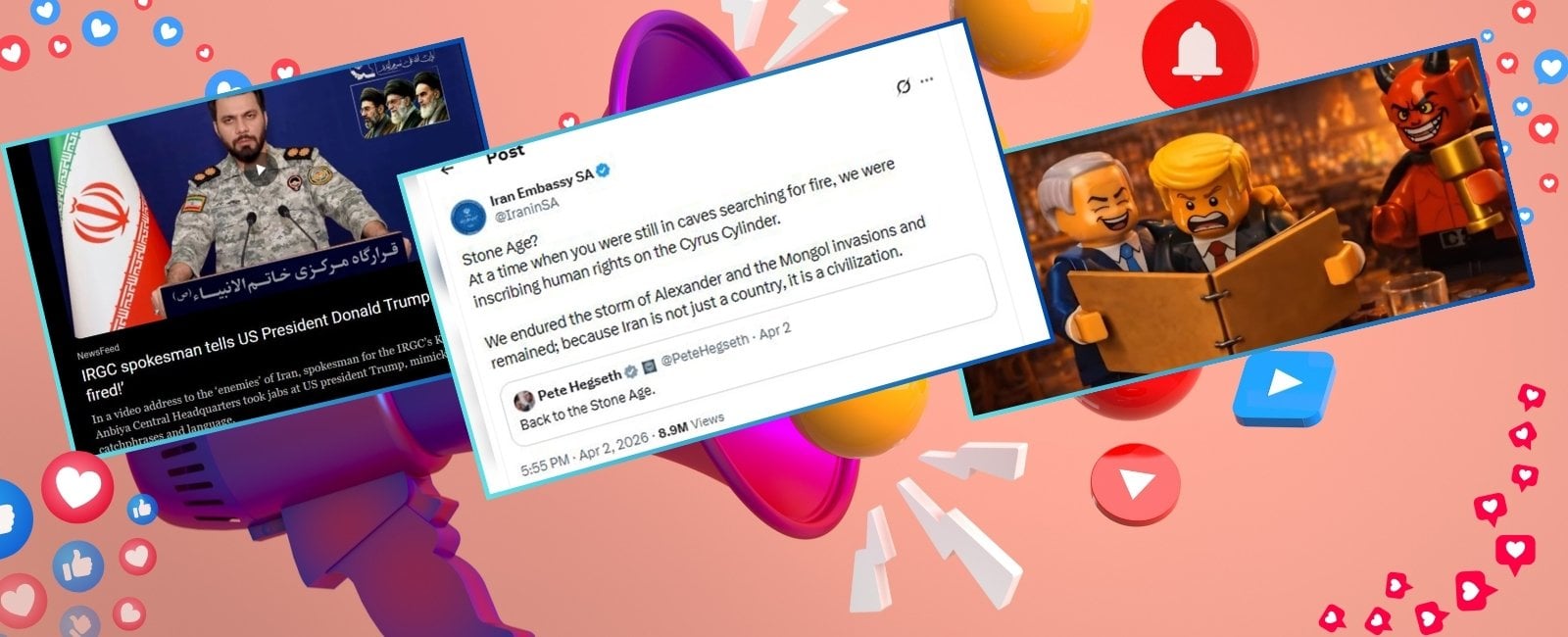
Memes = new missiles? How Iran turned timelines into battlegrounds
As the tensions between the US, Israel, and Iran escalate, so does the level of sarcasm, particularly from Iran




 Updated Monday Apr 20 2026
“Thank you for your attention to this matter.” Once a closing statement, it has now become a start of viral expression that tickles the funny bone of our social media users. In this new world order, the weapons have evolved from traditional ammunition into satirical grenades. Trolls, humour, memes, hilarity, and irony are now emerging as new global powers. In addition, that is what we are currently witnessing on an international scale. Social media’s comical coverage is not a side effect of war anymore; it is a crucial instrument of the war itself.
As the tensions between the US, Israel, and Iran escalate, so does the level of sarcasm, particularly from Iran. Iran pushed its narrative on social media and used X majorly as its weapon to counter Trump’s profanities. Soon, the political jabs directed at America started getting viral and served as an amusement for the masses all across the globe. In no time, scattered online trolling evolved into a coordinated strategy, with Iran projecting a “chill” and “cool” image to Western audiences.
Incorporation of trolls in a full-fledged war is not something new to us. The world had previously witnessed how sarcasm can be a powerful tool, hitting the sore points of your opponent, when Pakistan bombarded India with humour-laced bullets in May 2025. Last year, when Pakistan and India came face-to-face in a heated military conflict, people experienced the meme culture in its full entirety, first by the social media users and then by high-ranking Pakistani personnel. This time, however, the officials and the representatives of Iran are at the forefront of the online battlefield.
Iran had the most unexpected card up its sleeve: their irony-fuelled, pop culture memes targeting Trump’s statements and actions. Iran’s humour was precise, meticulous, mature, and sharp, gaining global popularity as intended. Trump’s administration, on the other hand, had no idea that its defence system lacked the equipment to deal with AI war propaganda videos. Although Trump tried to stay relevant with his own handful of insults, he was taking digs at Iran in an impulsive and obscene genre of trolling, which immediately repulsed the public and officials alike. While Trump was using absurd and rash street lingo, Iran maintained its digital posture in an unbothered and composed manner.
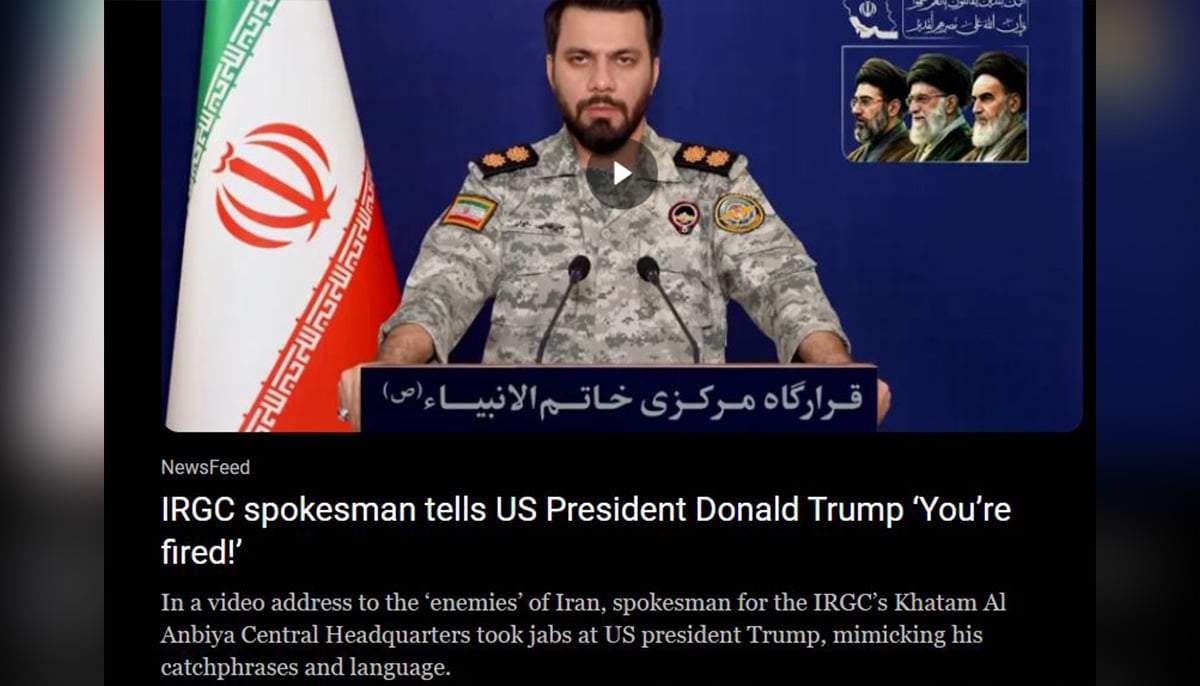
What brings the spotlight to this matter is not just the humour, but also the source itself. In Iran, state actors are not confined to geopolitics only; they are now getting involved in officially unofficial trolling. Whether it is the Islamic Revolutionary Guard Corps (IRGC) or the foreign ministry of Iran, everyone is bringing into play their razor-sharp wits in exposing the hypocrisy and flawed decisions of the West. IRGC spokesperson Ebrahim Zolfaghari continuously dismissed America’s and Israel’s threats and settlement approaches with impactful and sturdy replies. When Trump suggested that the talks were in motion with Iran, the IRGC spokesperson cleared the air by saying, “Do not call your defeat an agreement.” Followed by “Has the level of your internal conflicts reached the point where you are negotiating with yourselves?” in another address, he called out the ‘enemies’ of Iran and concluded by uttering the words many longed to hear in their lives, “Hey, Trump, you are fired! You are familiar with this sentence. Thank you for your attention to this matter!”
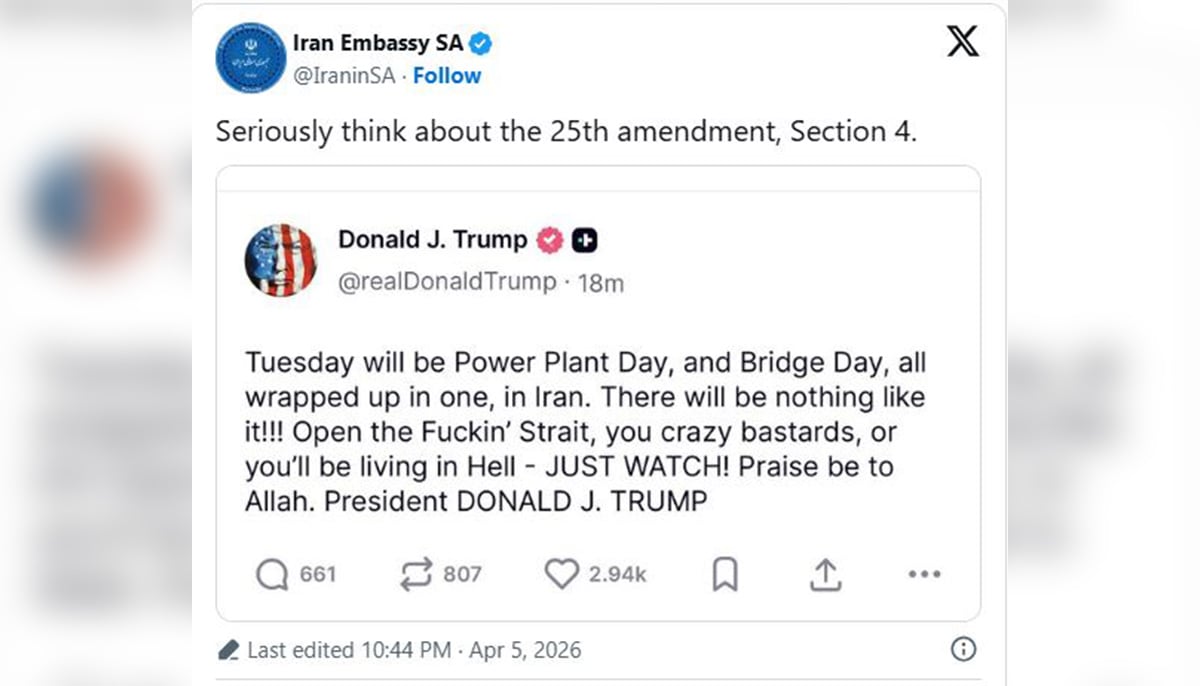
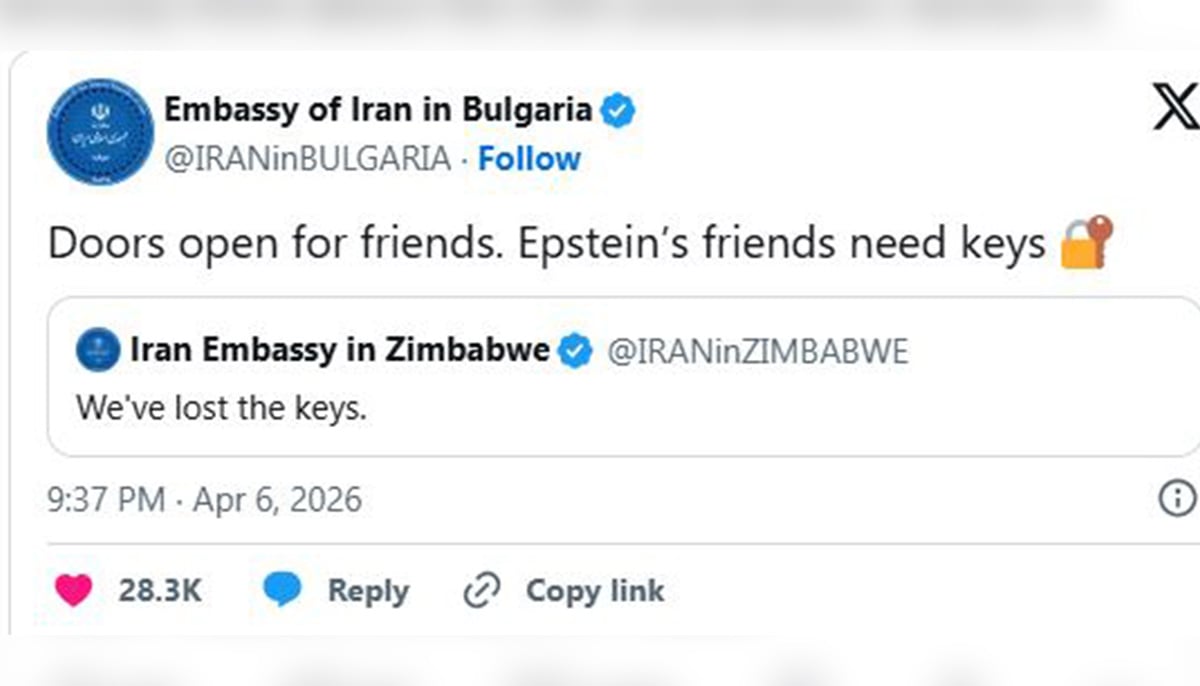
Another hero that emerged during the conflict was Iran’s foreign minister, Abbas Araghchi, whose responses were dignified and to-the-point in decimating the reputation of Israel and America. When asked by a reporter if Iran is afraid of US invasion, Abbas Aragchi responded swiftly with a smirk, “No, we are waiting for them.” A statement that reflected Iran’s steadfast approach towards the potential war. Again, on another platform, when he was questioned about the safety of American prisoners in Iran, Aragchi replied with “If the US and Israel do not attack our prisons, I guess they are safe.” His answers are followed by a brief smile and a pause that sends the opponent into a spiral of infuriation. Not only the spokespersons, but later the Iranian embassies worldwide jumped on the trend of roasting Trump and his administration, especially after the Stone Age comments and his threat to reopen the Strait of Hormuz. From replies like “We’ve lost the keys” to “Stone Age? At a time when you were still in caves searching for fire, we were inscribing human rights on the Cyrus Cylinder”, they made people realise the lunacy and idiocy of Trump’s proposed action.
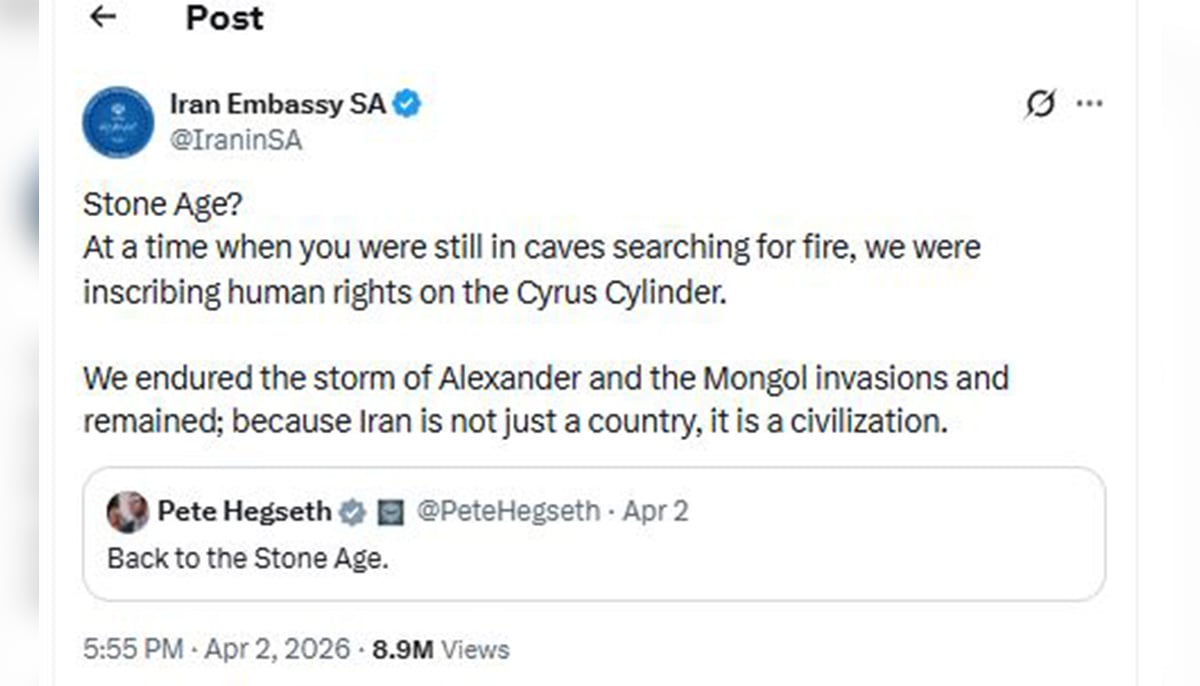
Azfer Hussain, a socio-political analyst and a digital journalist, states that in this era, the meme industry is just as essential as weaponry. Stressing the influence of humour, he said, “Today’s world is a hyper-connected global village, and here the actual game is of perception building. Humour and digital wit can create a perception of any state and any global event, and this in turn constructs a narrative that can shape future policies.” According to Hussain, whoever operates the tools of humour and satire effectively can shift the whole narrative in their favour. “In the past, specifically in the case of the India-Pakistan conflict, we saw that meme wars not only had an impact on public sentiments, but also on Pakistan’s international positioning. Pakistan’s narrative was dominating, just like Iran’s currently, because the whole perception curated by the medium of social media shifted the power dynamics.” Building on this statement, he said, “In today’s day and age, wars are no longer fought with just missiles; they demand meaningful publicity, aided by memes and sarcasm. Taking India’s example, which is now somewhat diplomatically isolated, we can identify the reasons, of which the most subtle and critical is failure in narrative and perception building.” Another significant point that Hussain highlighted was Israel's and America’s inability to understand Iran as a nation.
“Many analysts are on board with this viewpoint that the West miscalculated their understanding of the socio-political psyche of Iran.”The world needed to grasp the cultural and psychological standpoint of Iran to build foreign policies, because that nation is firm in its ancestral legacy and roots.
"Failure in understanding the psycho-social aspects and architecture of Iran’s policy making proved to be a strategic blind spot for Israel and America,” he said.
Hence, it has proven that the war on the ground now relies on the war on online battlefields. Similarly, now that Pakistan has acted as a mediator between Iran and the US, digital warriors have once again flooded the social media platforms with quick-witted reactions from all across the globe, praising Pakistan’s intervention and how it cornered and shadowed India through its mighty foreign image. Images that only social media can help sculpt. Thus, the perception-building point highlighted earlier by Hussain.
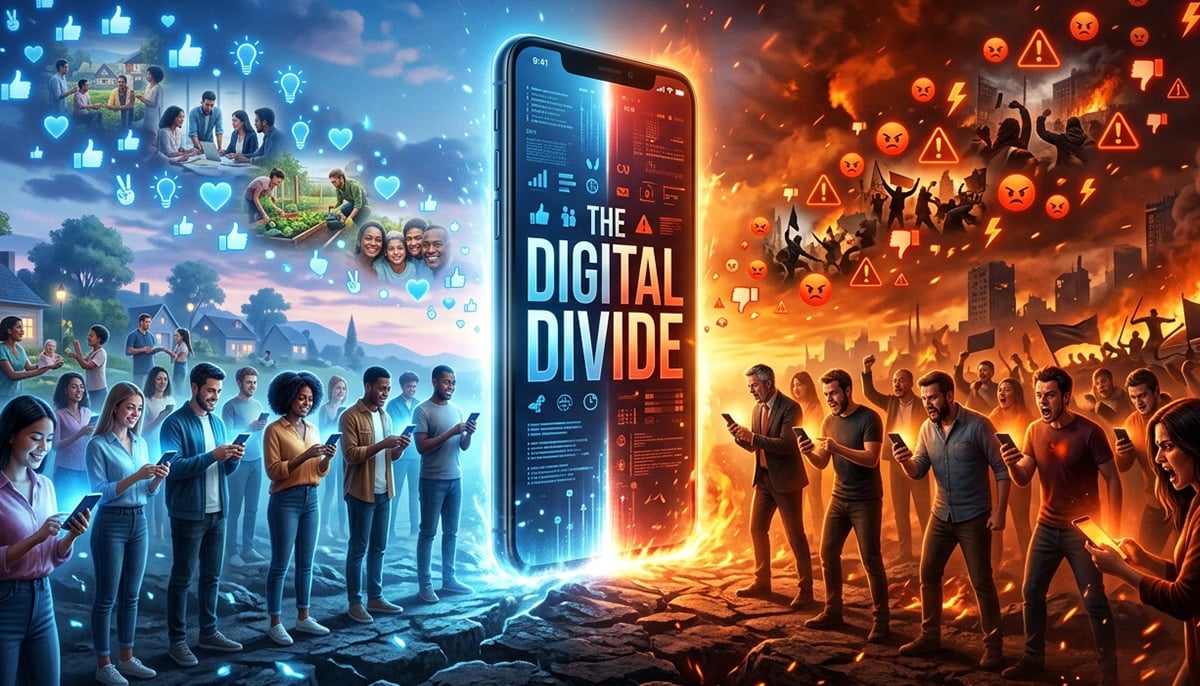
Battles today have no physical boundaries; they extend beyond comment sections, stories, and tweets. That is what Iran realised timely, standing tall in the face of enemies, defending their land, religion, people, ideology, and political structure by shattering the opponents’ image globally through comical and witty strikes. Iran’s officials used Lego videos to mock Trump and Pete Hegseth, a universally accessible way of luring global audiences. AI-generated Lego videos touched upon many themes, some referenced Epstein files, some displayed Trump as Netanyahu’s puppet. Iran fed the world various controversial pieces of information/facts in a manner that people could digest. Psychology describes this phenomenon as cognitive ease. Where our brain thrives on simple, recognisable, and clear pieces of information. Our brain doesn’t want to make any effort; it finds comfort in familiarity and easy-to-digest visuals, so when provided with memes, pop culture references, or, in this case, Lego videos, the news and Iran’s befitting replies are easily comprehended. Representatives of Iran understood the strategic importance of conducting psychological warfare against the US and Israel. Caricatures or mimicry coming from Iran highlighted the shared frustration of people against Trump and Netanyahu, hence making them relatable. Furthermore, when Iran shared memes regarding this tense situation, it made others, who are victims of America and Israel’s aggression, feel seen and validated; a group identity was formed. This whole act of conquering the digital world created a socio-digital bond between the masses and Iran, strengthening their global position and cause. The martyrdom of Ayatollah Ali Khamenei and other top officials, including Ali Larijani, had already created a lot of sympathy in people’s hearts for Iran. That sympathy, topped with diplomatic humour, made the world cheer for Iran, and it emerged victorious both online and offline, regardless of what Trump claims.
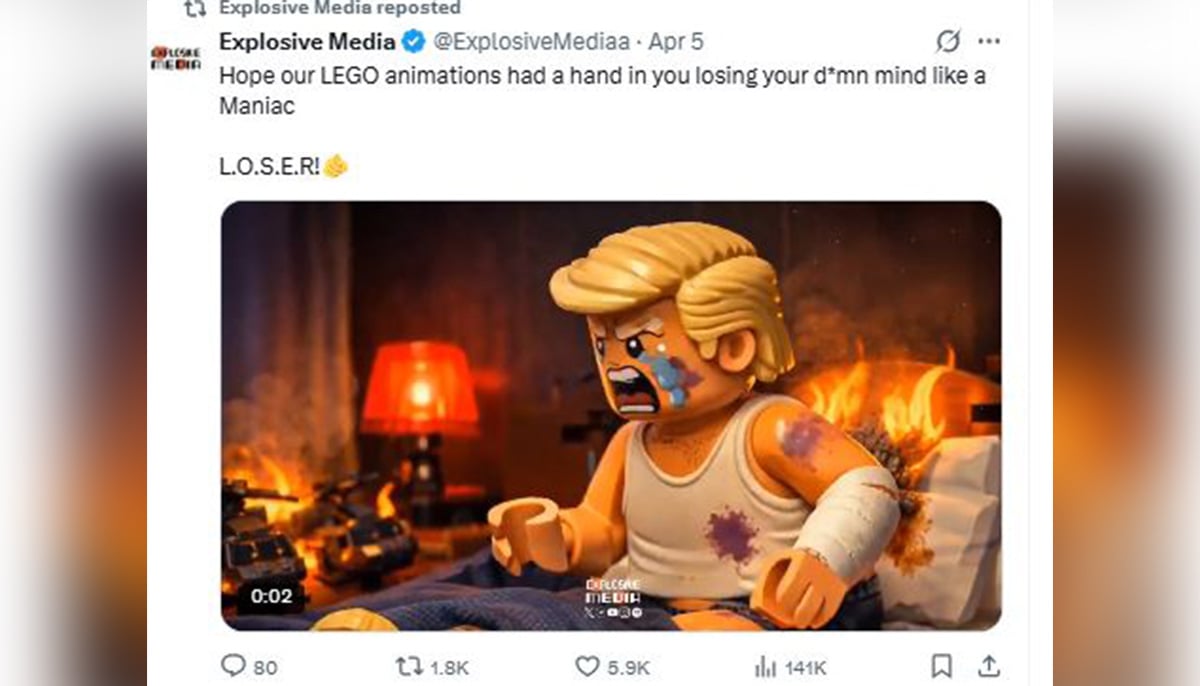
Just as the pen is mightier than the sword, according to current affairs, it’s safe to say that the memes are mightier than the missiles.
Now, all eyes are on Islamabad after Pakistan achieved a breakthrough in the ongoing conflicts. The keyboard warriors are waiting impatiently to report on the gist of the Islamabad talks, once again ready to shape a political narrative that, in turn, shapes public perception.
Fakeha Batool is a psychology graduate and content writer