


Monetising creativity, Pakistan's young content creators are redefining careers
Content creation is increasingly being credited as a real occupation, where consistency and creativity can lead to success





 Updated Wednesday Apr 29 2026
She never dreamed of becoming an influencer, as she wanted to be a singer, but as she grew up and watched YouTube videos and content creators, she was inspired by their creativity. Over time, she realised that this was the path she connected with the most, as she loved adding fun and creativity to her mundane life.
With the love of making content and the support of her family, Hijab Iqbal started her journey in content creation. The attraction of an influencer career is that it gives creative liberty, popularity, and recognition as an influencer, and has flexible working hours, independence, and monetisation.
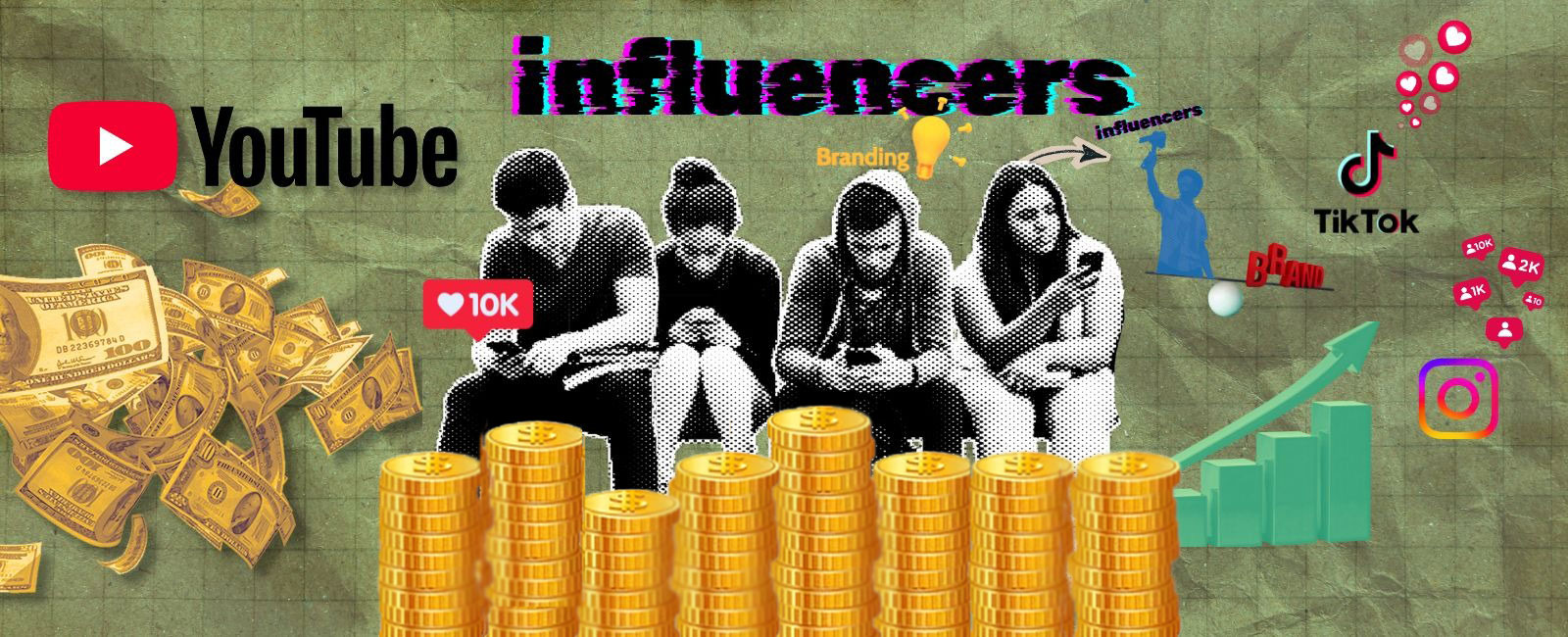
Over the past years, there has been a significant increase in influencer careers in Pakistan due to the accessibility of digital platforms such as Instagram, TikTok, and YouTube. Youth used to consider it a hobby-based activity, but now it is taken as a serious career pathway. At a time when unemployment has increased and competition is high, young people choose influencing as an alternative career and showcase their originality, as it is not a competition with others but a marathon to prove themselves to the world. Initially, celebrities and media personalities were the influencers; however, nowadays, students, graduates, and freelancers take influencing seriously, using it to present content that showcases creative autonomy and professional opportunities.

The people who started this journey a decade ago have now become celebrities. They meet the prime minister, are invited to official events, featured in award shows, given roles in TV dramas and films, taken on trips by multinational companies or even social media platforms, and treated as celebrities by the public. Recently, there has been a shift in dynamics, as micro-influencers who focus more on their niche can capture audiences’ attention and create a strongly engaged follower community.
Relatability enhances the audience’s experience, as they prefer authenticity over a facade. Numerous influencers showcase an aspirational lifestyle, but micro-influencers focus on relatable content such as student life, humour, food exploration, fashion, get ready with me (GRWM), and local travel. Lower entry barriers have encouraged many young creators to experiment in the digital space. With smartphones, internet connections, basic editing skills, consistency, and hard work, they generate content without industry connections or expensive equipment.
For young influencers, consistency is less about frequency and more about discipline, identity, and long-term growth.
Sameed Gillani, a content creator from Kashmir, said his journey began as a creative outlet rooted in cinematography and editing. Over time, however, he realised that growth depends on structure rather than spontaneity. “Once your content has a clear identity, growth becomes more predictable,” he says, highlighting how consistency helps define that identity.
He stresses that content creation involves continuous effort behind the scenes. “Ideation, shooting, editing, consistency,” he explains, are all part of a process that many people overlook. According to him, the difference between those who grow and those who do not often comes down to discipline. “Most people fail because they chase virality instead of building skill,” he says, adding that “it’s a real career if you treat it like a business, not a hobby.”
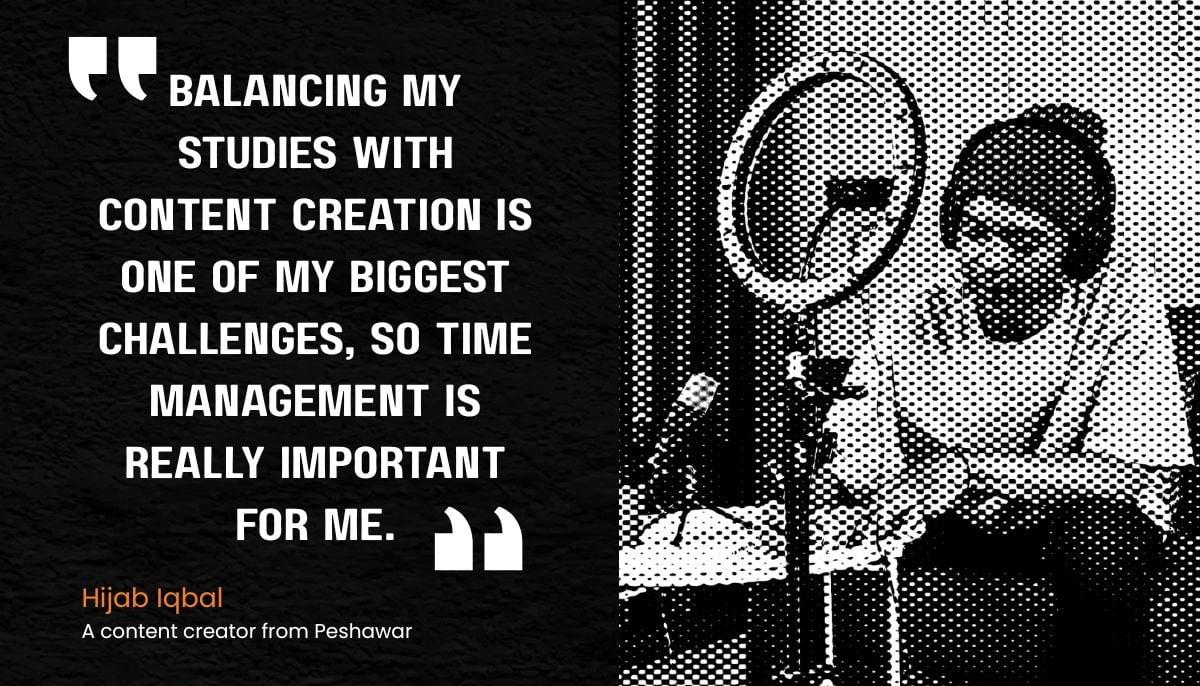
For Hijab Iqbal, a Peshawar-based content creator, maintaining that consistency comes with its own challenges. “Balancing my studies with content creation is one of my biggest challenges, so time management is really important for me,” she says.
She adds that staying consistent while “coming up with creative ideas” can be demanding, especially in the early stages of growth. Both creators point out that consistency is not only about posting regularly, but also about maintaining quality and a clear sense of direction, factors that gradually build credibility and trust.
Social media platforms give limited monetisation options in Pakistan.
YouTube is the main platform where the monetisation programme is clear. For the 2025–26 fiscal year, the Federal Board of Revenue (FBR) has introduced a new tax framework targeting influencers, bloggers, and YouTubers with over 50,000 subscribers. The proposed rules include a benchmark tax of Rs195 per 1,000 views (RPM) to estimate earnings, or a flat 3.5% tax on gross income for freelancers and digital creators. To calculate taxable income, creators can deduct expenses up to 30% of their total revenue, but they must now file quarterly advance tax and annual returns to remain compliant.
Asad Baig, Founder and CEO of Media Matters for Democracy, highlighted the structural challenges faced by emerging digital creators in Pakistan.
“One of the biggest challenges for influencers today is the constant change in platform algorithms and monetisation policies, which directly affects content reach and career stability.
“Many influencers often find that their content does not receive consistent traction due to these shifting platform rules, and another important challenge is the transition currently taking place in Pakistan’s advertising industry.
“While traditional media such as television and newspapers still hold strong value as mainstream platforms, many major advertisers remain somewhat cautious about fully shifting toward influencer-based promotions.
“This slow transition makes it more difficult for influencers to access stable advertising opportunities,” Baig said.
While brand collaborations remain the major source of earnings, creators are increasingly diversifying their revenue streams through partnerships, freelancing, and event-based opportunities.
For Iqbal, early exposure has opened unexpected doors, including a marketing job opportunity through her content. “My content helped me land a job in marketing after someone noticed my work,” she says, referring to projects where she creates reels for brands’ social media platforms.
However, both influencers stress that considering content creation as a business is important. Without a clear strategy, consistency, and understanding of one’s worth, the career can instantly become unstable, as Gillani puts it: “it's a real career if you treat it like a business, not a hobby.” Many students are turning to content creation, as they can easily manage it with their studies. They don't have to go to an office; they run their own channels and make content when they want, so it doesn’t feel like an actual job.
Another reason for the decline is that most global revenue streams on platforms like YouTube and Instagram in Pakistan, such as creator funds, subscription-based services, and ad sharing, are currently inactive. As a result, most local influencers rely heavily on brand collaborations, which don’t happen unless the influencer has a substantial following and consistent audience engagement, and even then, usually, barter collaboration takes place, and no monetary benefits are received by the influencers.
As influencers grow, visibility brings both opportunity and scrutiny, particularly on platforms like Instagram, where audience engagement is immediate and constant. For Iqbal, Instagram serves as the primary platform because it aligns with its target audience. With Gen Z users dominating short-form content consumption, she found the platform most effective for reaching viewers. “Instagram has been the platform that helped me grow the most so far,” she says, adding, “Reels definitely get the most reach and engagement.”
Iqbal’s move toward content creation also reflects a shift in personal direction. “At first, I wanted to be a singer, but as I grew up and started watching YouTube, I became really inspired to become a content creator instead,” she explains, choosing a path that allowed her creative expression while offering more control over her public presence.
Similarly, Gillani identifies Instagram as central to his growth due to its visual format. “Instagram played the biggest role in my growth, especially through Reels,” he says. His content strategy focuses on “clean visuals, strong hooks in the first two seconds, and content that feels natural but intentional,” rather than relying solely on trends.
However, increased visibility also brings exposure to criticism and online pressure. Reflecting on controversies in the influencer space, Gillani says, “These situations highlight the risk that comes with visibility… one mistake can escalate quickly.” He adds that influencing requires “responsibility, awareness, and how you carry yourself publicly.”Trolling and hate further to complicate this visibility. “At the start, it affects you,” Gillani admits, but says his response has become more selective: “Constructive criticism: I consider it. Baseless hate: I ignore it.” He believes that if you react to everything, you lose control of your narrative.
Iqbal approaches it similarly. “I try not to take negativity personally and instead focus on the audience that genuinely supports my work,” she says. While constructive feedback helps her improve, she avoids engaging with comments “intended to bring me down,” adding that maintaining “a strong mindset” and “setting boundaries” is essential. Together, their experiences show that while platforms like Instagram offer growth and opportunity, they also demand resilience, awareness, and careful self-management in the face of constant public scrutiny.
In today’s world, influencing signifies more than just a job for many young people; it serves as a platform to express individuality and become self-made in a saturated job market. With rising unemployment and limited traditional opportunities, digital platforms offer a substitute route where consistency and creativity can lead to success.

According to Baig, influencer careers are increasingly becoming a sustainable profession in Pakistan, not just among youth but across the wider population.
“What makes this field especially important is that it cuts across cultural and socioeconomic boundaries, allowing people from diverse and even working-class backgrounds to build viable careers through digital platforms,” he adds.
Success requires consistent effort, strategic thinking, and resilience to face uncertainty. As the stigma around becoming an “influencer” gradually evolves, content creation is increasingly being credited as a real occupation. Yet, as both Gillani and Iqbal indicate, its viability depends on how seriously individuals pursue it. Conclusively, the expansion of influencer culture among Pakistani youth reflects a broader revolution in how careers are categorised. It escalates into digital spaces where imagination and entrepreneurship meet. For those persuaded to adapt and learn, influencing is not just a trend but an indication of changing ambitions in a contemporary, more connected world.
Rijaab Hussain and Syeda Anam Ali are students pursuing mass communication degree at the National University of Sciences and Technology (NUST), Islamabad
Header and thumbnail image by Geo.tv