


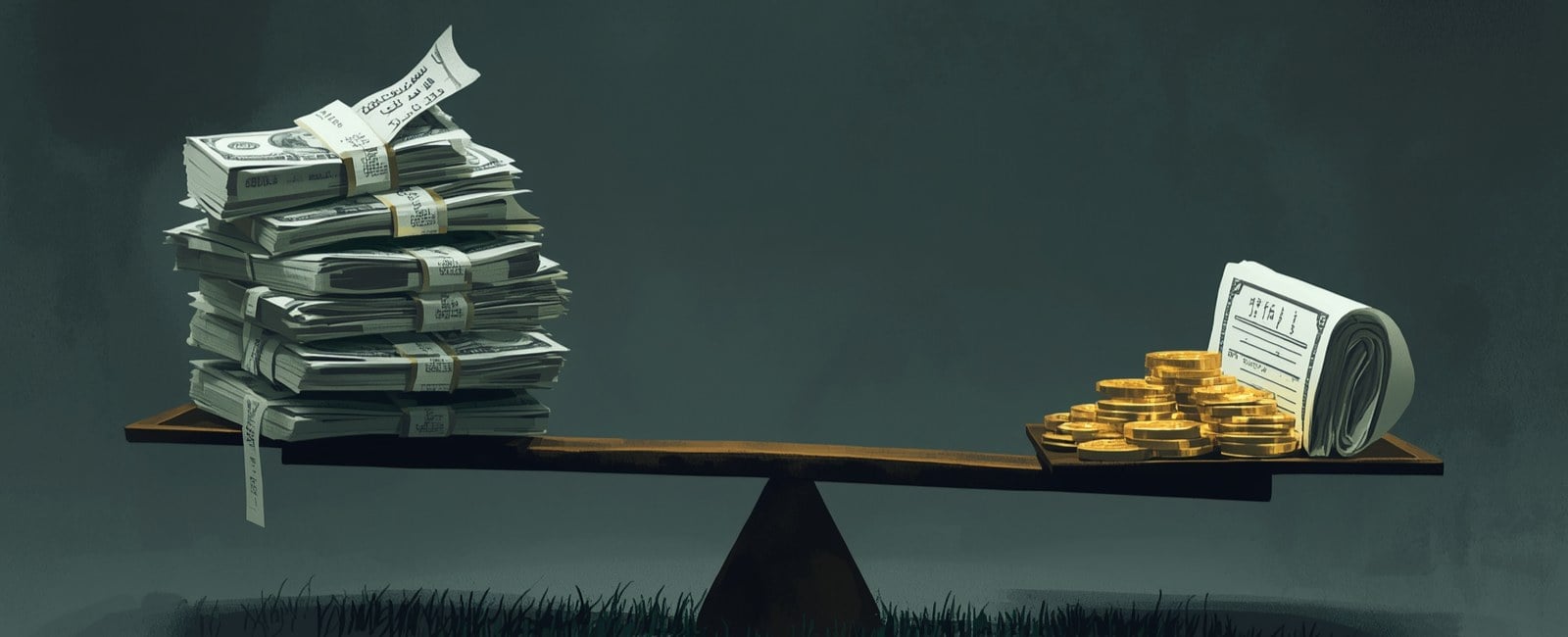
Budget 2026-27: Will we ever have a people's budget?
Pakistan’s budgets increasingly resemble instruments of fiscal colonialism




 Updated Saturday May 23 2026
Every year, when June approaches, the country’s ruling elites begin rehearsing a familiar ritual. International Monetary Fund (IMF) teams descend on Islamabad, the Ministry of Finance starts speaking the language of “stabilisation”, the Federal Board of Revenue (FBR) sharpens its extraction machinery, and television studios become crowded with official claims of a “balanced” and “growth-oriented” budget.
However, despite these numbers, ordinary citizens already know what follows: higher indirect taxes, inflated utility bills, shrinking purchasing power, and another transfer of wealth from the working classes to entrenched elites.
The coming Budget 2026–27 appears destined to follow the same path unless the state fundamentally changes its fiscal philosophy. Pakistan does not merely suffer from a shortage of revenue. It suffers from a crisis of distributive justice, institutional credibility, and constitutional political economy. Budgets in Pakistan are not instruments of social transformation; they have become annual ritualistic exercises in protecting privilege while extracting survival money from the poor.
In bona fide democratic countries, a truly pro-people budget ensures growth with equality, widens economic opportunities, and reduces structural disparities instead of intensifying them. The tragedy in our case is that successive governments alike have moved in the opposite direction.
Pakistan today has one of the most regressive tax systems in the region. The overwhelming burden of taxation falls upon salaried classes, small businesses, consumers, and low-income households through indirect taxes, petroleum levies, electricity surcharges, withholding taxes, and inflationary borrowing.
Wealth, meanwhile, remains largely undertaxed. Agricultural incomes of large absentee landlords continue to enjoy constitutional and administrative protection. Real estate speculation remains lightly taxed compared to productive industry. Untaxed or concessionary perks enjoyed by political elites, civil bureaucracy, military establishments, and privileged sectors continue draining public resources.
The consequence is visible everywhere. Economic growth has collapsed into a debt-driven illusion. Human development indicators continue to deteriorate. Millions remain deprived of quality education, healthcare, housing, clean water, and dignified employment.
Article 25A of the Constitution, inserted in 2010, guarantees the right to education, yet millions of children remain outside schools. Public hospitals resemble overcrowded shelters rather than healthcare institutions. Youth unemployment continues to explode while policymakers remain obsessed with short-term revenue targets dictated by external lenders.
The real debate, therefore, is not about taxation alone. The issue is the philosophical character of the Pakistani state itself. Is the state meant to protect a tiny rent-seeking elite or to serve the collective welfare of citizens?
Pakistan’s budgets increasingly resemble instruments of fiscal colonialism. Under successive IMF programmes, taxation policy has been reduced to a narrow arithmetic exercise: collect more, spend less, and ensure debt repayments. Whether economic activity survives becomes secondary. The obsession with achieving primary surplus has transformed the economy into a permanent austerity laboratory.
The Pakistan Institute of Development Economics (PIDE), while analysing earlier budgets, correctly warned that austerity without growth destroys productive capacity and suppresses investment.
A developing economy cannot achieve stability merely through taxation and expenditure compression. It requires industrial expansion, technological modernisation, agricultural productivity, export competitiveness, and broad-based employment generation. Instead, Pakistan’s fiscal managers continue to suffocate productive sectors while rewarding speculative and non-productive wealth accumulation.
The irony is painful. Pakistan taxes documented businesses more heavily than undocumented wealth. Productive exporters face multiple layers of taxation, including advance taxes, minimum taxes, super taxes, withholding taxes, and indirect levies, while speculative sectors continue receiving preferential treatment. Those creating jobs are punished; those accumulating rent without productivity are rewarded.
The petroleum levy has become perhaps the most brutal symbol of anti-people fiscal policy. It functions as an invisible extraction mechanism imposed equally upon rich and poor. The labourer travelling on a motorcycle and the billionaire travelling in luxury vehicles both pay the same levy per litre. Such taxation deepens inequality because indirect taxes consume a far greater proportion of poor households’ income.
Successive governments justify this exploitation in the name of “fiscal necessity”. The truth is simpler: politically weak citizens are easier to tax than politically powerful elites.
Pakistan’s tax-to-GDP ratio debate is also deeply misleading. The state constantly claims that citizens do not pay enough taxes. In reality, ordinary Pakistanis are heavily taxed through consumption-based levies, utility charges, customs duties, embedded taxation, inflation, and withholding regimes. The issue is not low taxation of the poor; it is insufficient taxation of accumulated wealth, speculative capital, and privileged incomes.
An equitable budget for 2026–27 would therefore require reversing the entire fiscal logic presently governing Pakistan.
First, the burden on salaried classes and low-income consumers must be reduced substantially. Inflation-adjusted exemptions and lower tax rates for middle-income earners are essential. A society cannot sustain itself when educated professionals increasingly contemplate emigration merely to survive financially.
Second, wealth taxation must replace extraction from consumption. Large landholdings, speculative urban real estate, untaxed capital gains, luxury consumption, and non-productive assets must contribute proportionately. Taxation should discourage idle wealth accumulation and encourage productive investment.
Third, development expenditure must prioritise human beings rather than bureaucratic expansion and elite privileges. Education, public health, housing, water security, climate resilience, and scientific research should become central pillars of fiscal policy. No country can escape underdevelopment while underinvesting in human capital.
Fourth, local governments must receive genuine fiscal empowerment under Article 140A of the Constitution. Pakistan’s hyper-centralised fiscal structure breeds inefficiency, corruption, and alienation. Municipal services cannot improve when cities remain financially crippled and dependent upon distant bureaucracies.
Fifth, productive industry and exports require stable, predictable, and low-rate taxation. Businesses do not invest in environments governed by arbitrary notices, retrospective amendments, harassment, and policy inconsistency. Sustainable revenues emerge from economic growth, not coercive extraction.
Sixth, Parliament must reclaim sovereignty over budgeting itself. Increasingly, Pakistan’s budgets are shaped externally before elected representatives even debate them. Parliament often functions merely as a formal ratification forum for decisions already negotiated elsewhere. This undermines democratic legitimacy and constitutional governance.
The elite nature of Pakistan’s fiscal structure is visible not merely in taxation but also in expenditure priorities. Massive allocations continue flowing towards debt servicing, administrative structures, elite subsidies, and loss-making state enterprises, while social development remains chronically underfunded. The poor are repeatedly told to “sacrifice for stability”, while powerful sectors remain insulated from meaningful reform. This model is economically unsustainable and socially explosive.
History demonstrates that societies marked by extreme inequality eventually face political instability, institutional decay, and economic stagnation. Pakistan is already witnessing symptoms of all three. Rising public anger, declining trust in institutions, brain drain, collapsing purchasing power, and shrinking productive activity are not isolated phenomena; they are interconnected consequences of an extractive political economy.
A people’s budget, thus, is not merely a moral aspiration. It is an economic necessity for national survival. The state must decide whether it wants citizens or merely taxpayers. If the sole purpose of governance is debt servicing and revenue extraction, then social cohesion itself begins eroding. Citizens lose faith in institutions that demand sacrifice without providing justice, security, opportunity, or dignity in return.
Budget 2026-27 offers another opportunity to rethink Pakistan’s direction. The question is whether the ruling structure possesses the courage to challenge entrenched privilege. Genuine reform requires confronting those who benefit from the status quo: speculative elites, untaxed wealth holders, bureaucratic empires, politically connected monopolies, and institutional centres of fiscal privilege.
Without such restructuring, every future budget will merely reproduce the same cycle: more taxation without development, more austerity without growth, and more poverty amidst concentrated wealth.
Pakistan does not need another IMF-compliant accounting document masquerading as reform. It needs a constitutional social contract anchored in distributive justice, productive growth, and human dignity. Until then, budgets will continue being prepared by the elites, for the elites, while ordinary citizens finance the entire system through silent suffering.
Dr Ikramul Haq, Advocate Supreme Court, is Adjunct Faculty at Lahore University of Management Sciences (LUMS) and a member of the Advisory Board and Visiting Senior Fellow of Pakistan Institute of Development Economics (PIDE).
Disclaimer: The viewpoints expressed in this piece are the writer's own and don't necessarily reflect Geo.tv's editorial policy.