


Budget FY27: Experts welcome tax relief on sanitary pads, contraceptives but urge caution
Government says family planning remains top priority amid population concerns





 Updated Monday Jun 15 2026
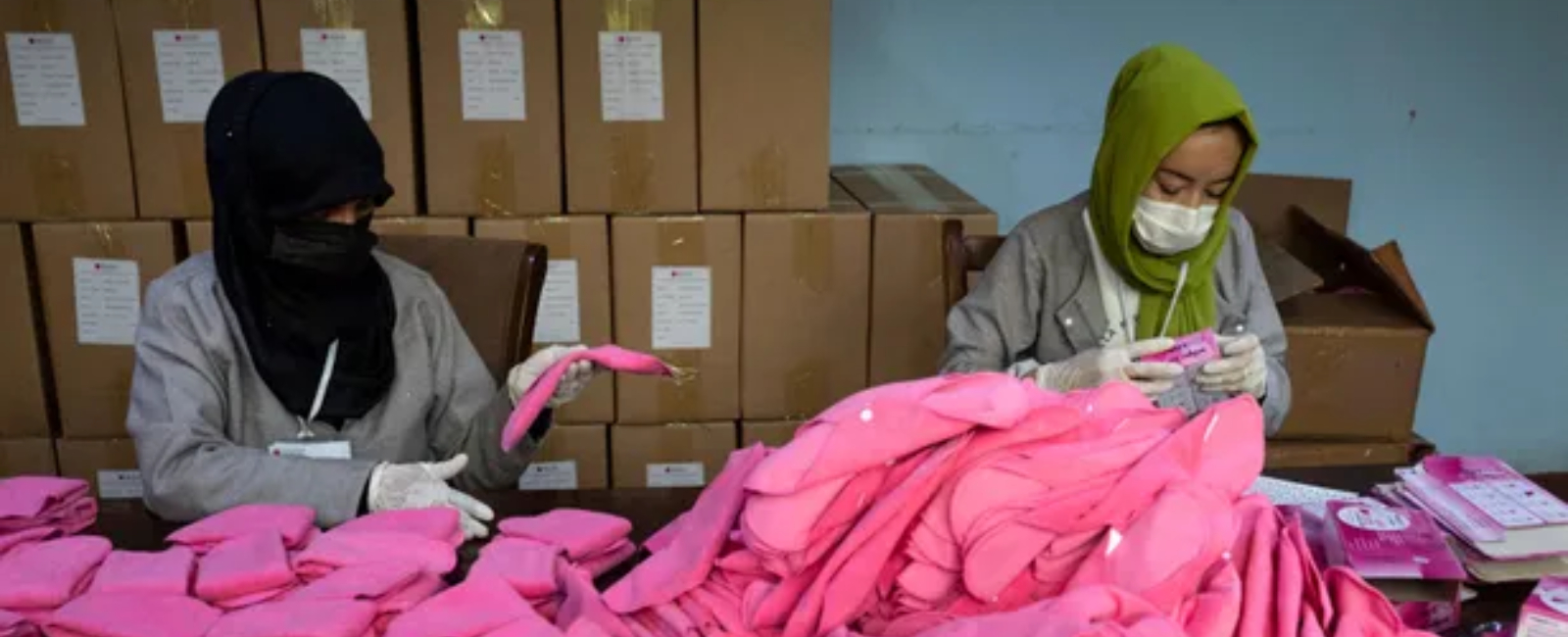
The federal government has proposed abolishing tax on sanitary towels, related women’s health products and contraceptives in the budget for fiscal year 2026-27.
Finance Minister Muhammad Aurangzeb made the announcement while presenting the federal budget, saying essential items for women’s health were daily necessities linked to dignity and social participation.
“Essential items for women’s health, such as sanitary towels and related products, are daily necessities that are indispensable for women’s health, dignity, and full participation in social activities,” the finance minister said in his budget speech.
“Therefore, it is proposed to abolish the tax on sanitary towels and related items,” he added.
Aurangzeb also announced the abolition of tax on contraceptives, linking the measure to Pakistan’s population challenge and the government’s family planning priorities.
“The second measure in this regard relates to the abolition of tax on contraceptives,” he said.
“Pakistan is the fifth-largest country in the world in terms of population. The rate of population growth is alarming, and family planning is a top priority of the government. Therefore, we are completely abolishing the tax levied on contraceptives.”
The proposal was welcomed by rights advocates and economic analysts, though they warned that the announcement should translate into actual price relief for consumers.
'Overlooked for far too long'
Lawyer and human rights activist Mahnoor Omar told Geo.tv that the government removing the pink tax and also the tax on contraceptives is a step in the right direction to finally show that they're willing to take women's health, and specifically sexual and reproductive health, seriously.
“This is not only an area where a lot of taboo and stigma exists, but it's an area that has been overlooked for far too long. Many other countries in the region have already abolished it, so I personally welcome this move, and I hope this is just the first step in the right direction, where we start taking women's health and well-being more seriously,” she noted.
This is not only an area where a lot of taboo and stigma exists, but it's an area that has been overlooked for far too long.
— Lawyer and human rights activist Mahnoor Omar
She noted that any perceived financial or economic deficit caused by removing this tax will actually be offset as more girls will now be able to attend school, and more women can take care of themselves without having to choose between buying sanitary pads and prioritising other essentials.
“More girls can also play sports comfortably. This affordability will lead to greater accessibility; while pads were previously unavailable in general shops across far-flung areas of Pakistan, this move may ensure they are accessible nationwide,” she said.
This is an extremely welcome step, Omar said, and hoped it leads us to review other Pakistani laws so we can do better to ensure inclusivity across all classes, socioeconomic backgrounds, and genders.
'Time for us to be very, very vigilant'
Bushra Mahnoor, founder of Mahwari Justice, a student-led organisation whose name translates to “menstrual justice”, appreciated the government’s proposal but told Geo.tv it was too early to celebrate.
“I really appreciate this move of the government to propose a reduction in the tax but I think this is also a very critical time for us and we should not be blinded by the optics of it,” she said.
Mahnoor said the measure had only been proposed at this stage and warned that “bureaucratic red tape” could still affect the actual removal of the tax.

“But even when we get the tax removed, there are so many things that we need to be aware of,” she said, citing the example of the United Kingdom, where she said manufacturers increased prices in subtle ways after the removal of tax on period products.
“So I think this is the time for us to be very, very vigilant and to increase our advocacy efforts and not celebrate just yet because there is a lot more that needs to be done,” she said.
Mahnoor said the proposal was still an “amazing move” and reflected years of advocacy by campaigners who had worked both on-ground and online to encourage conversations around menstruation.
However, she stressed that menstrual injustice in Pakistan was not limited to access to period products.
“Access to period products is just one part of that huge problem that we are trying to solve because there is only a very little number of people who get to use these period products to begin with,” she said.
She said many people did not use such products or did not want to use them, meaning the proposed tax relief would not reach as many people as advocates would want.
This is a step forward, but I would say it’s very symbolic.
— Bushra Mahnoor, founder of Mahwari Justice
Mahnoor added that even where safe period products were available, many women still lacked basic facilities such as toilets, clean running water and adequate sanitation.
“There are no toilets, there is no clean running water, women still have to walk miles and miles to access water just to clean themselves,” she said.
She also linked the issue to climate change and water scarcity, saying disaster situations and worsening access to water made safe menstruation more difficult.
“So yes, this is a step forward, but I would say it’s very symbolic,” she said. “This is definitely not the end goal. This is the start of our struggle because there is so much more needs to be done.”
Mahnoor said she would “truly celebrate” when menstrual education was included in Pakistan’s curriculum and when no one had to hide their periods because of stigma.
[This] is a step in the right direction to focus on benefiting half of the population's basic hygiene needs.
— AAH Soomro, an economic analyst
AAH Soomro, an economic analyst, also welcomed the proposal, calling it “a step in the right direction”.
“That is a step in the right direction to focus on benefiting half of the population's basic hygiene needs,” he told Geo.tv.
Soomro added that Pakistan also needed to do more to control population growth.
'Menstruation health not taxable privilege'
Tax law expert Dr Ikram ul Haq told Geo.tv that the proposal to exempt sanitary pads and contraceptives from taxation is a welcome and overdue recognition that these are not luxury goods but essential health and hygiene products.
“From both a tax policy and human rights perspective, taxing such items disproportionately burdens women and low-income households, creating barriers to menstrual health, reproductive health, and family planning,” he noted.
The tax expert said that access to these products is closely linked with the rights to health, dignity, equality, and bodily autonomy.
The revenue sacrificed is likely to be negligible compared to the social benefits of improved public health and reduced gender inequality.
— Tax law expert Dr Ikram ul Haq
“The revenue sacrificed is likely to be negligible compared to the social benefits of improved public health and reduced gender inequality. The real challenge, however, is to ensure that the tax relief is actually passed on to consumers through lower retail prices rather than being absorbed by intermediaries in the supply chain.”
He added that if the governments can grant billions in tax concessions to powerful sectors, removing taxes on sanitary pads and contraceptives is the minimum that a welfare-oriented state should do.
“Menstruation and reproductive health are biological realities, not taxable privileges.”
Haq added that the measure aligns taxation with constitutional guarantees of dignity and the state’s obligation to promote public health. “It should be seen not as a tax concession but as the removal of an unjust burden on essential healthcare products.”
'Value chain needs to be studied pragmatically'
Dr Razia Safdar, senior policy advisor at the Centre for Health Policy and Innovation, told Geo.tv that the abolition of 18% period tax is a very positive step to improve menstrual health, particularly for adolescent girls. Pakistan is now among 17 countries with 0% period tax, she noted.
“It will increase affordability, access and utilisation of products. At the moment, 16% of women use commercially available sanitary pads, 66% rely on cloth, and 50% use recycled cloth. So, the impact on menstrual health will not be immediate, but it will be facilitated.”
“Secondly, how the price is set after the budget, and there is a need to increase the local production of these products: The whole value chain needs to be studied pragmatically. I hope the end users get the benefit of such initiatives, especially in low-income segments.”
We need to take a deeper look at imported products, how the market is addressing the flow, and how customs duties will be addressed.
— Dr Razia Safdar, senior policy advisor at the Centre for Health Policy and Innovation
“Some start-ups are doing it to attract investments and seed money. But someone needs to study large-scale, commercially viable, low-cost business models in the Pakistani market because different kinds of business models can be simulated under different assumptions.”
Dr Safdar added: “We need to take a deeper look at imported products, how the market is addressing the flow, and how customs duties will be addressed.”
"There is a need for facilitating local production of products and start-ups doing it to attract investments and seed money. But someone needs to study large-scale, commercially viable, low-cost business models in the Pakistani market."
”I hope it can tolerate the traditional post-budget price hike,” she added.