


Beyond culling: Why we need humane solutions to manage stray dogs
The Islamabad High Court issued an explicit ban on dog culling, but the act continues in Punjab despite orders




 Updated Tuesday Jun 23 2026
The courts have ruled it illegal. The policy exists to prevent it. Yet, dog culling operations continue across Punjab at, what observers describe, “an increasing pace”. According to a report submitted to the Lahore High Court (LHC) by the Punjab Provincial Health and Population Department, stray dog bites reported in the province exceeded 500,000 cases between 2024 and March 2026.
And despite these numbers, the response from Metropolitan Corporation Lahore (MCL) as a solution remains the same: removing homeless dogs from the streets by poisoning and shooting them.
But, do such measures actually help counter the issue? Animal rights activists and lawyers reveal some shocking phenomena that can overtake the streets of Punjab soon after these operations.
This dilemma that the Punjab government is treating as a problem showcases a great example of how the "vacuum effect" will transform the streets of the province in ways that make cities less stable, not more.
The Lahore High Court, in several decisions, directed the government to abide by the Punjab Birth Control Dog Policy, 2021, which prohibits dog culling and relies on the World Health Organisation’s (WHO) policy adopted by all civilised countries using the Trap, Neuter, Vaccinate, and Release (TNVR) programme.
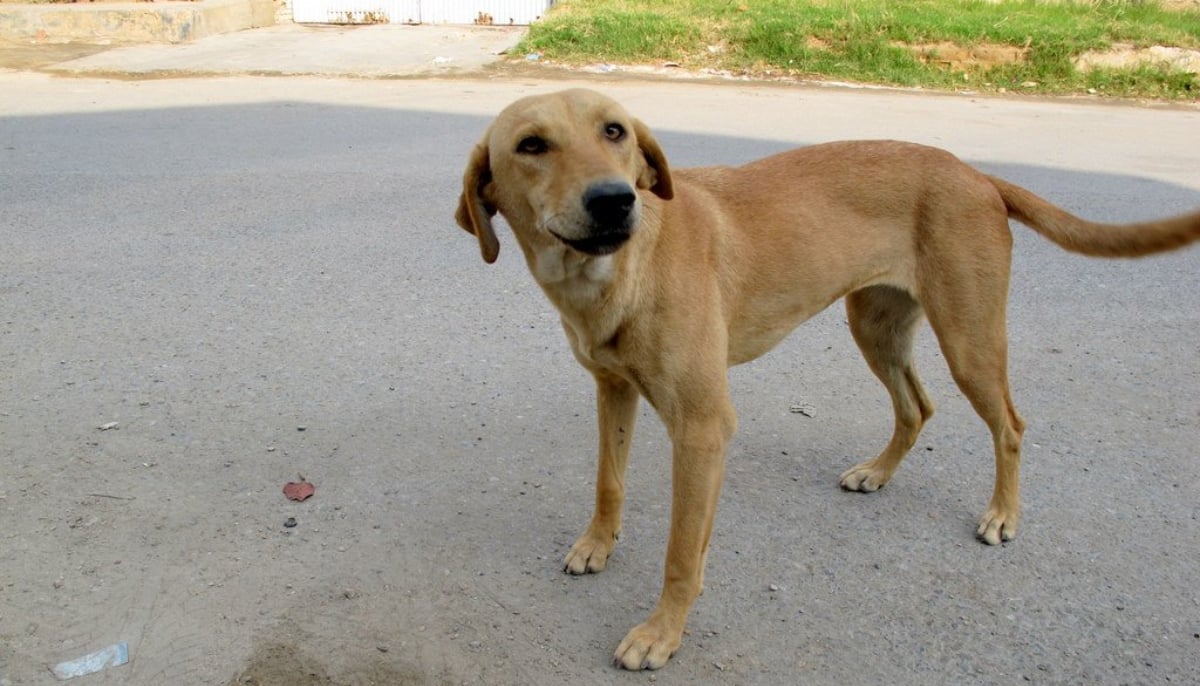
More recently, the Islamabad High Court (IHC) also issued an explicit ban on dog culling. Despite these decisions, the act continues in the province.
The reason, according to Supreme Court advocate and animal rights activist Maqsooma Bokhari, who is tracking dog culling cases closely, involves both politics and bureaucratic avoidance.
"It sounds good to the public who have no idea about TNVR. So, if a child is attacked in one area, the entire population [of dogs] is eradicated. A quick fix solution that wins votes." The pattern is predictable: a dog attack occurs, residents complain, and municipalities respond with culling.
"Recently, in the case 'Majeed Ghauri etc vs GOP etc' — filed by PPP leader Majeed Ghauri, the Punjab government, for the first time, through its chief secretary, city and district government and the Lahore Waste Management Company, gave undertakings that they will abide by the policy and shall not deviate from it. This was a major breakthrough as undertaking's violation amounts to contempt of court," Bokhari explained.
"Yet within weeks, the undertaking was violated with a ruthless and massive campaign."
The contempt case remains pending.
Why is culling not a solution? Vacuum effect explained
To understand why these measures don't work, it is important to understand the behaviour of strays in an urban setting. Dogs are territorial animals. A whole pack within a neighbourhood usually are the dogs that have knowledge of the environment around them, where they can find food and where they can take shelter.
Over time, the dogs, through adaptation, become familiar with humans and set up hierarchies that protect their territory from other dogs.
Dr Saad Uzair, a veterinarian working with Todd's Welfare Society (TWS), a shelter to homeless and injured animals working to rescue dogs from the areas where culling operations are underway, describes what happens when these territorial structures are destroyed with such operations.
"Removing existing resident dogs of a specific area creates a vacuum. This vacuum can be filled by wild animals or dogs that may be unfamiliar with the environment and its people. They may get involved in fights to win the territory’s dominance. Familiar dogs are usually harmless to humans as they have learned to co-exist,” Dr Uzair said.
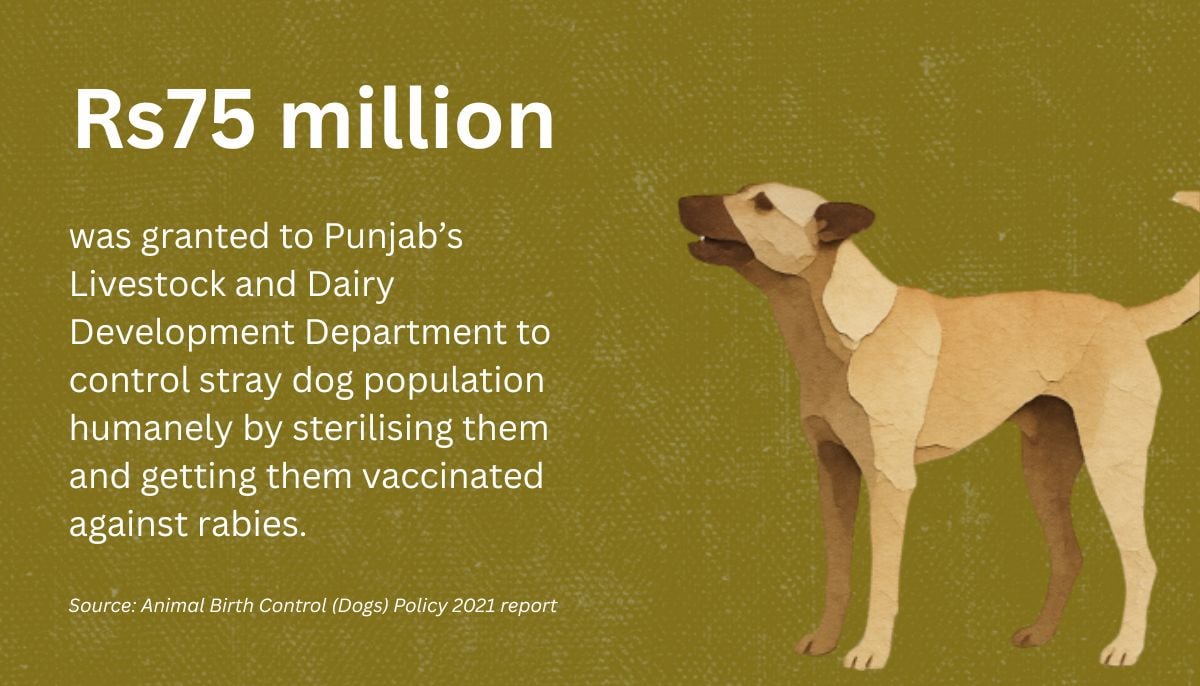
Since 2015, municipalities have spent a lot of money removing strays through culling operations. According to a report on the Animal Birth Control (Dogs) Policy 2021, Rs75 million was granted to Punjab’s Livestock and Dairy Development Department (L&DD). Funds were allotted with the aim of controlling the stray dog population humanely by sterilising them and getting them vaccinated against rabies. This programme was planned to establish Dog Control Cells at a district level under L&DD. However, there is no reduction in the number of stray dogs. The removal process is repetitive in nature, where dogs are removed, but their number continues to rise.
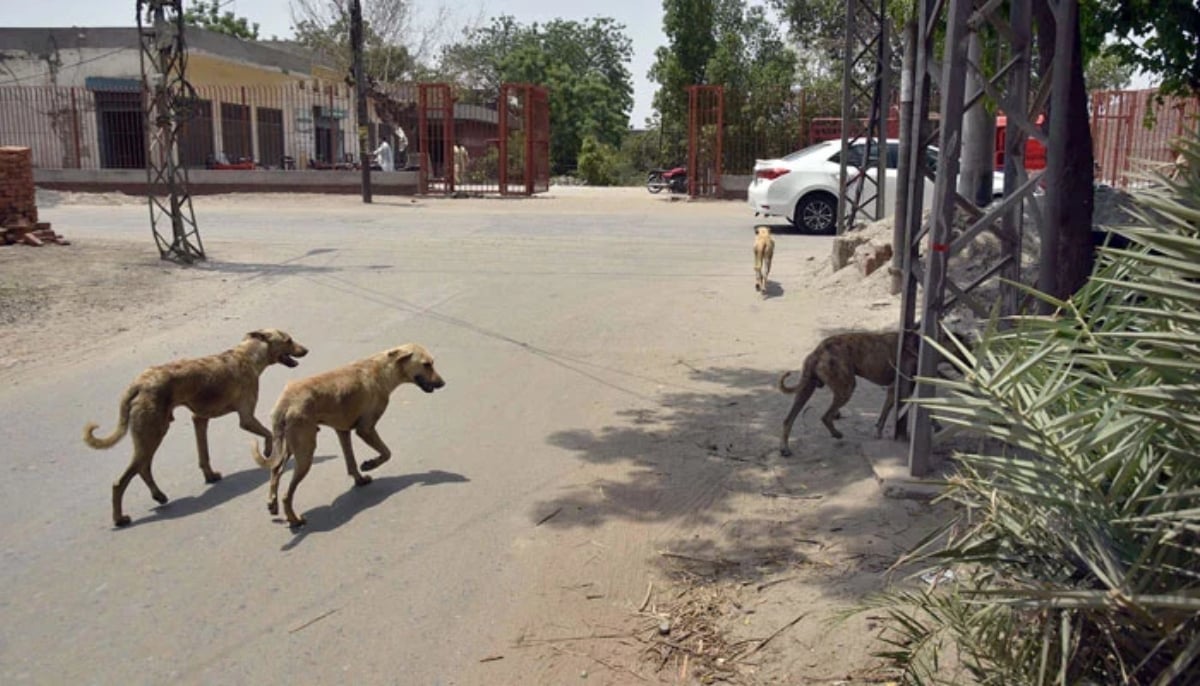
If dogs from a certain area are culled, the resource base still stays intact. There is still waste everywhere. There are still open sources of food that originally attracted the dogs to the area. As the old saying goes, “Nature abhors a vacuum.” Very soon, new dogs will fill those emptied space.
"Within a span of weeks, we can expect new dogs to move in because the area is vacant. Dogs guard their territories, preventing new dogs from entering that area. When we remove those dogs, through culling or poisoning, that area is now just an empty territory waiting to be filled by another pack of dogs, which is exactly what happens after culling," said Nabeeha Ayaz, president of TWS.
Understanding new dogs’ behaviours
The issue is not as simple as the arrival of new dogs; it is mainly about what their presence means for the neighbourhood they are residing in.
The new strays are typically younger, more desperate, and unvaccinated. They are new to the area and don't know the patterns of human activity or where food is reliably available. And because the resident territorial dogs have been removed, there is nothing preventing them from fully occupying the space.
"As we cannot remove 100% of dogs from earth, they can reproduce again. In this way, we might provide them with an environment to reproduce faster because there will be no competition among them," Dr Uzair explained.
Is culling a solution to deal with rabies?
More than 1.3 million dog bite incidents have been documented by the Punjab Provincial Health and Population Department from 2021 up to March 2026, where the rate at which the incidents have risen is quite high: 180,000 in 2021, more than 200,000 in 2022, close to 300,000 in 2023, and the number continued to increase through 2024.
"Higher aggression rate in new dogs will make them fight for territorial dominance," Dr Uzair stated. Dogs that lose their established territory through culling also experience trauma. This affects both survivors and newcomers.
Ayaz, describing the impact, told Geo.tv that the dogs who somehow get lucky enough to escape, are often witnesses to these activities.
“They see them, hear them. The sound of other dogs, often their friends, being aggressively picked up, whimpering, and wailing. Even when culling takes place, they hear these extremely loud gunshot sounds.
“See dogs fall down, one by one. For an already fearful dog, this just multiplies the trauma tenfold. They struggle to place their trust in human hands, more afraid, hiding away. For the surviving dogs, it affects every single interaction they have with humans afterwards.”
According to 2025 research by ‘MARKHOR, The Journal of Zoology’, rabies causes 200 to 400 deaths and up to more than 2,000 deaths in Pakistan annually. There are vaccines available for rabies, but the vaccination has not been consistently implemented due to an inadequate supply of essential medicines such as the Rabies Immunoglobulin (RIG).
Yet, culling does not address rabies transmission. In fact, it worsens the problem.
"Removing dogs does not decrease risk of rabies instead, we are inviting unfamiliar non-vaccinated dogs to the territory," Dr Uzair maintained.
According to a report issued by the WHO, 70% vaccination of dogs in a particular community is key to interrupting the spread of rabies. However, culling of the entire community of dogs will not help get closer to this benchmark.
This is because a well-thought-out programme that involves the sterilisation and vaccination of dogs directly tackles both population control and the issue of rabies. A vaccinated dog that is sterilised cannot reproduce, meaning the population stabilises.
"The duration is purely dependent on the number of dogs present in the area, with the right resources, 20 dogs in an area can easily be sterilised and vaccinated within a month. The average surgery recovery time that we have observed is five days,” said Dr Uzair, explaining the timeline.
In an intervention documented in Punjab, rescue missions successfully sterilised, vaccinated, and tagged 14 dogs previously slated for culling within a single week.
Why does culling continue despite orders?
Vaccination and sterilisation programmes require sustained funding, coordination between agencies, veterinary expertise, and government. A culling operation can be conducted in days, which satisfies immediate public pressure, costs less but creates long-term risks for the same area.
Looking back at 2021, the provincial government allocated Rs900 million for major cities to manage stray dogs under a structured rabies control programme. But dogs could neither be captured nor sterilised or relocated to shelters, some of which were built at a cost of over Rs15 million, yet the results were minimal.
Describing the impact of such operations, Ayaz said that two types of reactions are observed among the community: some celebrate, while others weep.
“People who have been complaining the most about the presence of dogs, are the happiest to see the dead bodies of so many. No remorse. Celebrating the murder of God's being. Saying things like 'JazakAllah', for killing them. It is terrible.
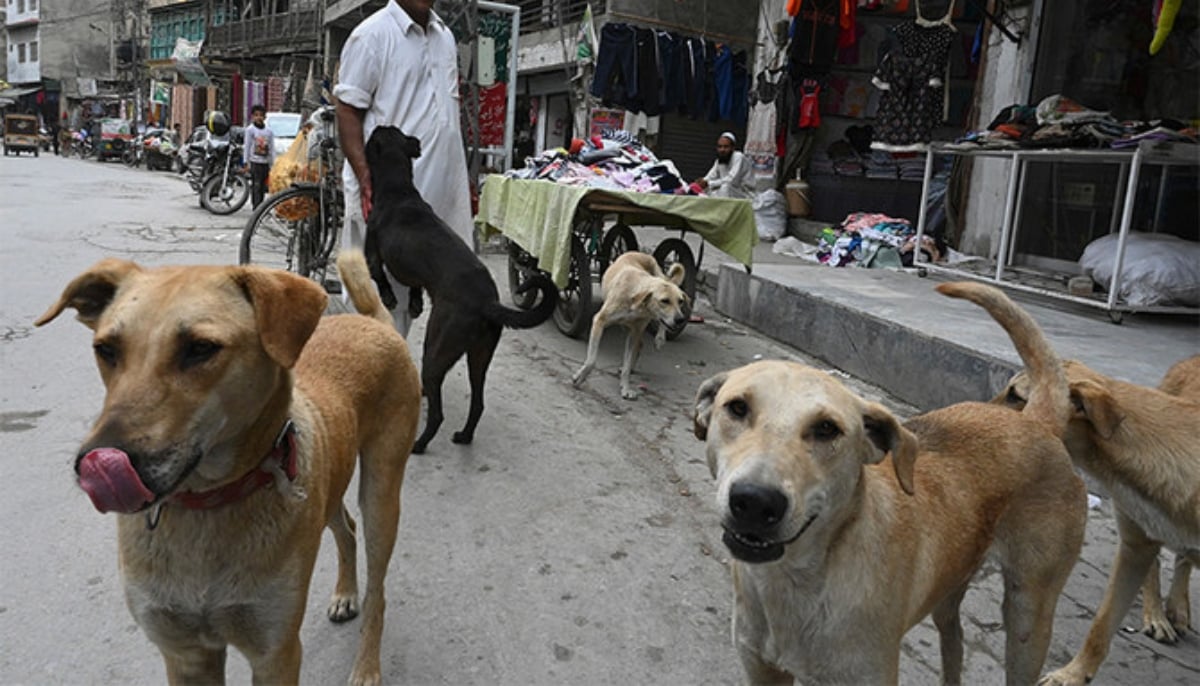
“The other side just grieves. There are some great people in our communities taking care of street dogs; they have gained their trust, feed them daily, and pamper them with love. These dogs really think that's how all humans are. Loving, kind, and generous. All of this is shattered when dog culling squads shoot them."
Dr Uziar identified that the lack of competence, non-technical decision makers, lack of empathy, shortage of budget, short-term decisions, illiterate public pressure, and no suggestions from experts act as obstacles to resolving the issue.
Bokhari's assessment, however, is direct. "If anything, the government should initiate its TNVR programme in that area. No excuse nor justification to bypass the law and violate court orders."
According to research modelling by the National Centre for Biotechnology Information, combining 80% rabies vaccination coverage with targeted sterilisation of female dogs reduces the free-roaming dog population by more than 50% over five years. Upfront surgical costs are higher.
Public pressure, Ayaz noted, is also helpful. "It shows that the general public deeply cares and is open to humane solutions, making those at the government level rethink their actions. However, despite the recent public outrage, the Lahore High Court orders, and even the undertakings Lahore Waste Management Company (LWMC) and MCL have taken in court, we are still seeing them carry on these mass culling operations at an unimaginable pace. Hundreds of dogs picked up from various parts of the city are taken to dumping sites to be shot. It's barbaric."
For now, the contempt case is set for a hearing, the legal framework prohibits culling, and the policy for TNVR exists. The science is also clear on what works and what doesn't. But on Punjab's streets, culling continues. Which, within weeks, can fill the streets again with new groups of dogs. It is, however, important to note that public safety remains compromised and the risk of rabies persists.
The vacuum, once created, fills itself, not with solutions, but with more problems.
Pareesa Afreen is a staffer at Geo.tv
Header and thumbnail illustration by Geo.tv