Iran says it will halt strikes as long as US bombing pause holds
After 13 nights of intensifying US airstrikes on Iran, Pentagon suspended campaign late on Friday
Published July 27, 2026
- US envoy to UN says Trump paused strikes to give diplomacy more time.
- US official says pause occurred over concerns of depleted munitions stocks.
- Tehran says has 'more scepticism than optimism' over latest lull in fighting.
DUBAI/WASHINGTON: Iran will halt its own attacks as long as the United States does the same, a senior Iranian official told Reuters on Sunday.
The development comes as the United States pressed pause on its bombing campaign after President Donald Trump's advisers told him they were running out of targets and expressed worries about depleting the US arsenal.
After 13 nights of intensifying US airstrikes on Iran, the Pentagon suspended the campaign late on Friday, with no US attacks reported on either Saturday or Sunday. Iran, which had been following each night of US attacks with its own strikes on neighbouring countries that host US bases, has also so far held fire for two days.
The Iranian official, speaking on condition of anonymity, told Reuters that Tehran's position "remains 'attack for attack': if the attacks stop, Iran will also halt its operations. That message has already been conveyed to the United States."
The US ambassador to the United Nations, Mike Waltz, told "Fox News Sunday" and other US media that Trump had decided to pause US attacks to allow more time for diplomacy.
"He's giving talks some space, he's giving it a little bit of room," Waltz said, without providing further details.
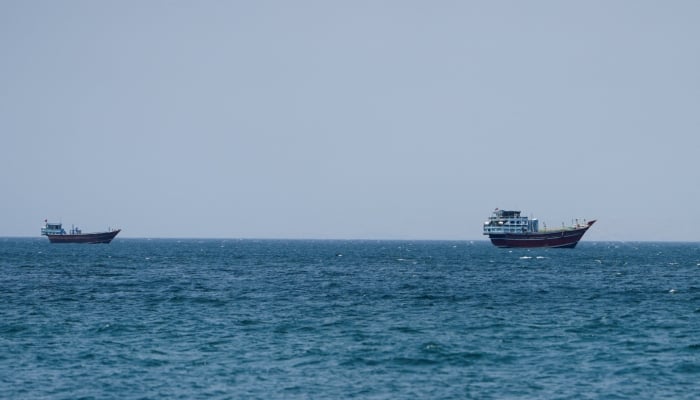
US military officials in recent days have cautioned that bombings over the past two weeks meant to deter Iranian threats to shipping in the Strait of Hormuz — a narrow waterway that has become a key flashpoint in the war — had largely exhausted the pre-selected sets of targets, one US official said, speaking on condition of anonymity.
Resuming major combat operations remains an option, but General Dan Caine, chairman of the Joint Chiefs of Staff, has cautioned privately to Trump that it would carry risk given the negative impact on stocks of munitions, the official said. That includes interceptors used by US air defences in the Middle East, the official added.
Caine's office and US Central Command declined comment. US military officials have traditionally declined to comment on their private advice to a sitting US president, even in testimony to Congress.
On NBC's "Meet the Press," Waltz said the US military "has everything that it needs," but also said that when Defence Secretary Pete Hegseth took over under the Trump administration, he "inherited a depleted situation."
The senior Iranian source, who spoke on condition of anonymity, told Reuters that Tehran did not hold much hope that Trump's decision to pause strikes represented a major shift in the US negotiating position.
"There is more scepticism than optimism about the halt in attacks. The prevailing view is that the pause is tactical rather than genuine. Iran has accumulated enough bitter experience with what it sees as US deception," the source said.
Stuck in limbo
For the past two weeks, US forces had been striking Iran nightly in what Washington said was retaliation for Iranian attacks on shipping in the Strait of Hormuz. Iranian forces have responded to the US attacks by launching strikes at water desalination plants in nearby Gulf Arab states.
Iran says it aims to retain control of the strait, through which a fifth of global oil flows passed before the war.
The renewed US military campaign effectively torpedoed last month's interim agreement aimed at ending the war.
Trump's decision to pause the strikes followed what several media outlets described as a meeting on Friday where Caine and other senior military and political advisers raised concerns.
CNN said Vice President JD Vance had expressed reservations. Axios reported that the overall commander of US forces in the Middle East, Admiral Brad Cooper, had advised halting the US bombing campaign because it had reached the limits of its effectiveness.
Residents of Iran remain apprehensive. Nader, 49, an import-export business owner in Tehran, said he doubted any pause in strikes would last.
"Everyone in the country is stuck in limbo," he told Reuters by telephone. "Trump is playing games with Iran. He neither ends the war and leaves the region nor strikes decisively. It's exhausting."