PSX rebounds as oil falls on US-Iran strike pause
Reversal in market primarily due to cooling of tensions and potential restart of ceasefire talks, says expert
Published July 27, 2026
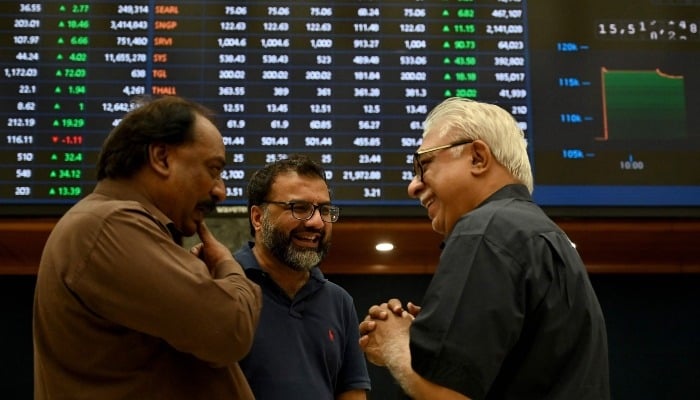
- KSE-100 Index closed at 178,262.33, up 7,241.13 points, or 4.23%.
- Index hit intraday high of 178,588.33, up 7,567.13 points, or 4.42%.
- Index hit a low of 175,153.16, still up by 4,131.96 points, or 2.42%.
Stocks staged a sharp rebound during Monday's session as oil prices tumbled after a pause in US-Iran strikes revived hopes of renewed ceasefire talks and relief for global energy markets.
The Pakistan Stock Exchange's benchmark KSE-100 Index closed at 178,262.33, up 7,241.13 points, or 4.23%.
The index rose as much as 7,567.13 points, or 4.42%, to hit an intraday high of 178,588.33. It touched a low of 175,153.16, still higher by 4,131.96 points, or 2.42%, during the session.
"The reversal in the market is primarily due to cooling of tensions and the potential restart of the ceasefire talks," Ismail Iqbal Securities Chief Executive Officer Ahfaz Mustafa told Geo.tv.
He said the development had caused oil to reverse by up to 5%, giving relief to equity markets as well.
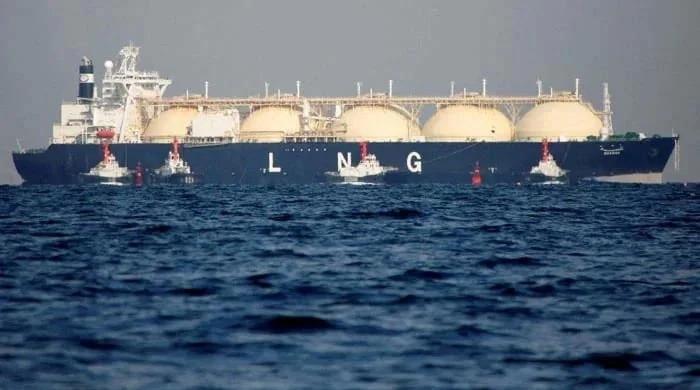
Oil prices tumbled more than 5% on Monday after the United States and Iran paused strikes over the weekend following two weeks of attacks, raising hopes of a diplomatic solution that could de-escalate the conflict and allow shipping to resume through the Strait of Hormuz.
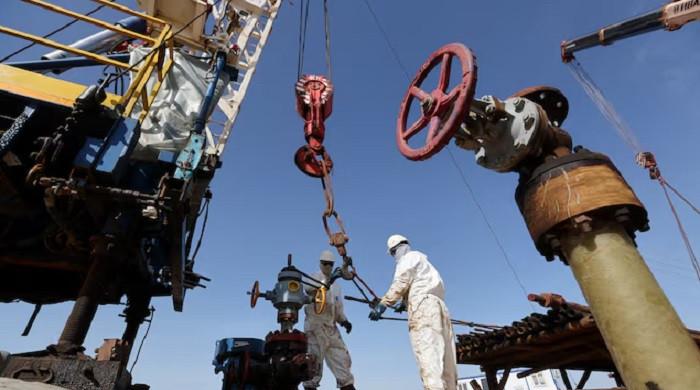
Brent crude futures fell $5.70, or around 5.9%, to $91.08 a barrel by 0804 GMT after briefly slipping below the key $90 level earlier in the session. US West Texas Intermediate crude stood at $84.51 a barrel, down $4.80, or around 5.4%.
Both contracts were trading at their lowest levels in nearly a week after rising for the past three weeks.
The United States held fire over the weekend after 13 days of attacks on sites in Iran, and US ambassador to the United Nations Mike Waltz told Fox News Sunday and other US media that President Donald Trump had decided to pause US attacks to allow more time for diplomacy.
Tehran said in turn it would stop its retaliatory attacks on regional neighbours, handing Gulf shipping and the oil industry a respite.
The two sides resumed hostilities this month, breaking a fragile truce, after Iran attacked ships passing through Omani waters in the Strait of Hormuz, sparking a pattern of escalation.
That derailed diplomatic efforts between Washington and Tehran, while the conflict later expanded beyond the vital energy corridor when Iran-backed Houthi rebels in Yemen hit Saudi vessels in the Bab al-Mandeb Strait, a key passage into the Red Sea.
Brent had reached $100 per barrel as the conflict reduced oil shipments through the Strait of Hormuz and spilled over to the Red Sea, hindering exports from Saudi Arabia via the Bab al-Mandeb Strait to Asia.
Trump's decision to hold off on more strikes and Iran's claims on Sunday that it had made progress in talks with Oman on management of the Strait of Hormuz provided relief to investors.
Iranian foreign ministry spokesman Esmaeil Baghaei said discussions with Oman focused on “common principles and operational mechanisms” for ensuring the safe passage of shipping through the strait while respecting the sovereign rights of the two states.
A report also said mediator Pakistan was looking at resuming US-Iran peace talks following a push initiated by China.
However, analysts warned that the pause did not remove supply risks.
Fewer than 10 commodity vessels passed through the Strait of Hormuz daily during the weekend, shipping data from Kpler showed.
Ship traffic through the Bab al-Mandeb Strait also fell on Sunday after Yemeni Houthis attacked Saudi oil installations along the Red Sea coast, although a third Chinese supertanker exited via the route.
Societe Generale analysts estimate that each month without a resolution in the Red Sea would add at least $10 a barrel to the oil price.
The fall in oil prices eased concerns over a fresh inflation shock and another round of interest rate hikes, helping equity markets higher.
The PSX had remained under pressure on Friday, with the KSE-100 Index falling 718.25 points, or 0.42%, to close at 171,021.20, extending the previous day's heavy losses.