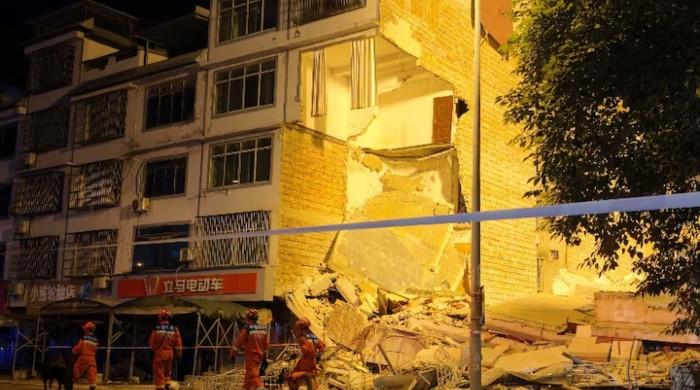
What triggered the catastrophic flood on the Nepal-Tibet border?
Nearly 1,500 people including at least 800 foreigners are missing, say authorities
Published August 27, 2026
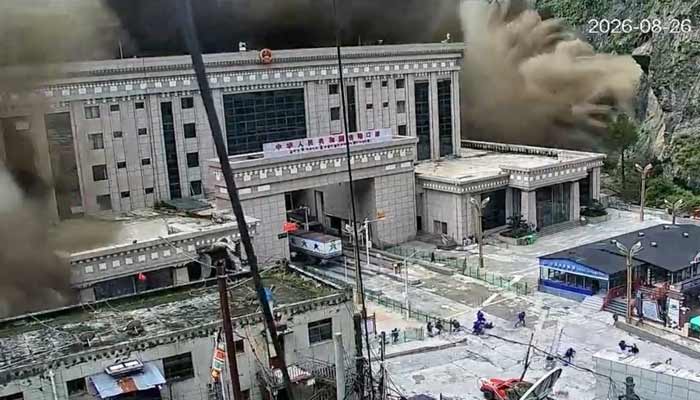
Flash floods that struck the Himalayan border region of Nepal and China's Tibet on Wednesday have killed at least 165 people.
Nearly 1,500 people including at least 800 foreigners are missing, authorities said, on Thursday, after a wall of mud and rock collapsed into a Himalayan river, sending catastrophic floods through towns and valleys.
Here is a look at what caused the calamity, and where things stand now.
What Happened
On Wednesday morning, the lower part of a glacier in the Himalayas collapsed and crashed onto the valley floor. While initial reports suggested the collapse was possibly triggered by an earthquake, the US Geological Survey said the reported tremor was in fact seismic energy generated by the collapse of glacial rock and ice, followed by debris flow.
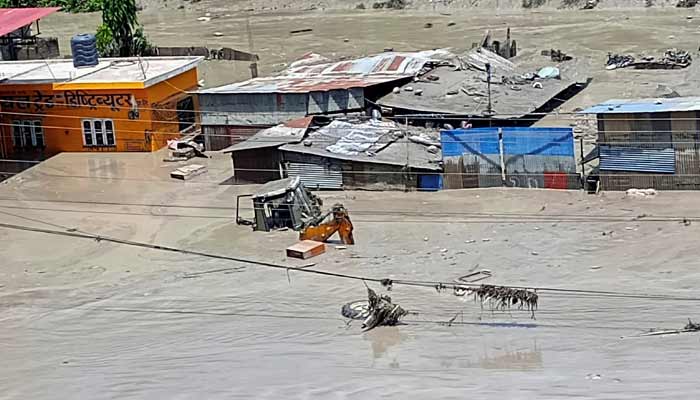
An avalanche of ice and rock swept down the Lhende Khola river, which runs along the mountainous Nepal/Tibet border.
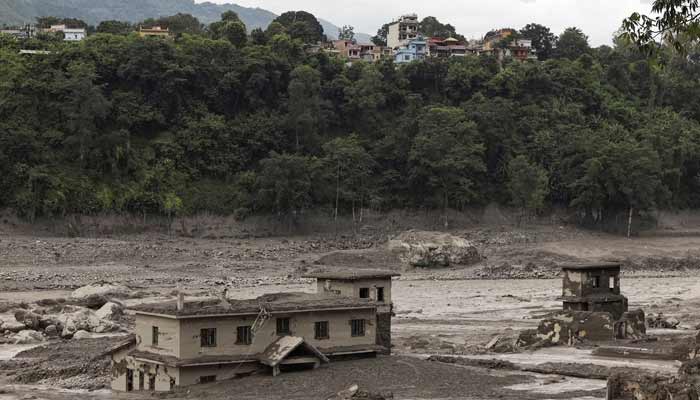
The mudslide slammed into Gyirong port in Tibet and into Nepal, creating high-speed flash floods that washed away entire roads and power projects and inundated villages.
How many are dead and missing?
Authorities in Nepal have recovered 165 bodies so far, but the death toll is expected to rise sharply. Almost 1,500 people remain unaccounted for across China and Nepal.
The missing reportedly include nearly 750 foreigners on both sides of the border.
In Nepal, they include 177 Indians, many on a pilgrimage to the sacred Kailash Mansarovar site, as well as 63 Americans, 53 Ukrainians, 34 Australians, 33 British nationals, 28 Malaysians and 25 Canadians. Nine South Koreans working on a hydropower plant are unaccounted for, and citizens of some 20 other countries were also reported missing.
There were no immediate details on foreigners missing in Tibet.
About 5,000 people were evacuated in the Indian state of Bihar, downstream from Nepal, after flood alerts were issued.
What is the situation now?
Police and military personnel are conducting rescue efforts. Helicopters are dropping tents, food and other emergency supplies provided by neighbouring India, said Raja Ram Basnet, a spokesperson for Nepal's army.
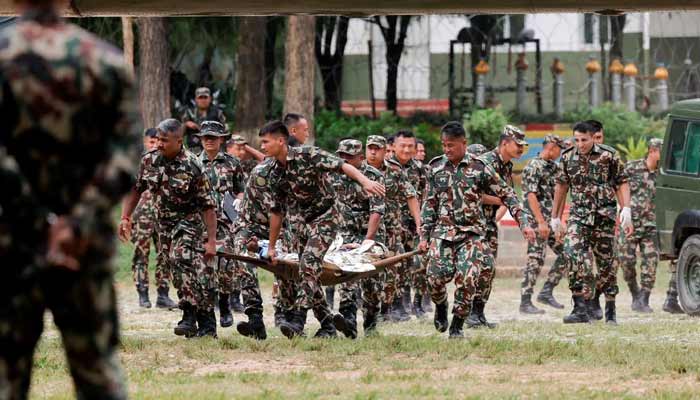
More than 5,000 army and police rescue personnel were mobilised to look for survivors and had rescued 125 people on Thursday, including 20 foreigners, he said. Much of the area is without electricity and flood sediment is posing a challenge.
Other countries have also promised aid. The United Nations has said it is mobilising supplies and personnel to support affected communities. India said it was coordinating closely with Kathmandu on rescue and relief efforts, and South Korea is sending a rapid-response team.