Khawaja Asif accuses PPP of 'double standard' as debate over new provinces intensifies
Defence minister says he sees “something else” behind PPP’s contradictory position on new administrative units
Published September 05, 2026
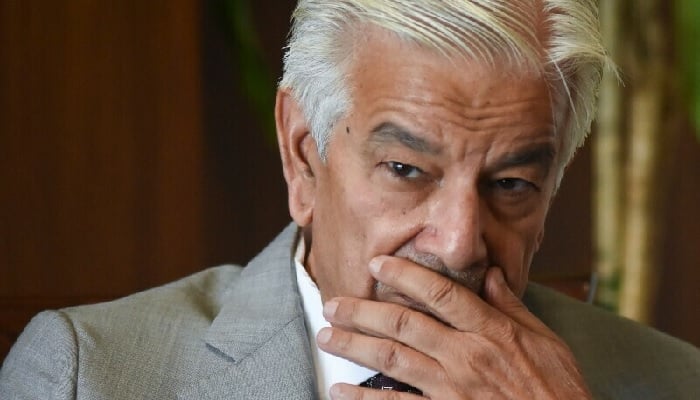
- Asif says 18th Amendment established devolution but it's poorly implemented.
- "PPP backs Saraiki province but invokes Sindhudesh over wider restructuring."
- Minister stresses "we are Pakistanis, first and last" as he calls for devolution.
Defence Minister Khawaja Asif has accused the Pakistan Peoples Party (PPP) of a “double standard” on new provinces, saying it backs a Saraiki province in Punjab but the party raises the Sindhudesh issue when broader administrative restructuring is discussed.
Asif, in an X post, said the PPP supported or showed a “soft corner” for the demand for a Saraiki province whenever the issue was raised in Punjab.
“But when there is talk of multiple provinces or administrative units instead of four, the talk of Sindhudesh begins,” he said, adding that he believed there was “something else” behind what he described as the PPP’s contradictory position.
Asif said he would explain what he believed was behind the policy “at some point”, while stressing that “we are Pakistanis, first and last”.
The defence minister also called for genuine implementation of devolution under the 18th Constitutional Amendment, saying the principle had been established constitutionally but had not been respected in practice.
He said the current system had become outdated because of the concentration of powers and argued that authority needed to be transferred to lower levels so democracy could take root at the grassroots and people could benefit from it.
Asif said Pakistan could use its existing 36 divisions as the basis for a new administrative arrangement or develop another geographical structure, arguing that the devolution of power was “inevitable”.
His remarks come amid a renewed debate over whether Pakistan needs additional provinces or administrative units.
Interior Minister Mohsin Naqvi reignited the debate in July, saying Pakistan’s existing governance system had “collapsed” and could no longer address the country’s challenges.
He called for fundamental reforms and said the country needed to move towards administrative units, whether they were called provinces or something else.
Naqvi also argued that powers should be devolved to lower administrative levels and that provinces should be divided on administrative grounds to improve governance and speed up development.
He later said he stood by his assessment that the country’s system had been “completely destroyed”, while clarifying that he was referring to its deterioration over the past 80 years.
The PPP pushed back against the proposal, advising that the debate over new administrative units should not be taken further. The party said no concrete proposal on administrative restructuring had been presented to it.
The debate has since expanded beyond Naqvi’s proposal. Planning and Development Minister Ahsan Iqbal has called for a national debate on Pakistan’s administrative structure and proposed the creation of 12 to 15 provinces.
He said a committee on administrative reforms should be formed through the law minister to examine what could be done and begin a political and national discussion. He stressed that creating new provinces would ultimately require political consensus.
Iqbal has also argued that Pakistan’s four provinces have become increasingly centralised, with powers remaining concentrated in provincial centres despite the devolution carried out under the 18th Amendment.
He proposed around 160 empowered district governments across the four provinces, arguing that it was not administratively possible to effectively govern the whole of Sindh from Karachi, Punjab from Lahore, Khyber Pakhtunkhwa from Peshawar and Balochistan from Quetta.
He warned that demands for new provinces could intensify if genuine devolution to the district level was not achieved.
The latest proposals have therefore brought two related questions into focus: whether Pakistan needs to redraw its provincial boundaries or whether greater powers should instead be transferred to districts and local governments.
Asif’s latest remarks put the debate in a political context, questioning the PPP’s position while arguing that Pakistan’s administrative structure must ultimately move towards greater devolution of power.