Three killed, 36 wounded in Houthi attacks on Saudi airports amid Yemen war
Fighting has intensified around Bab el-Mandeb Strait, key shipping route linking Red Sea with Gulf of Aden
Published October 08, 2026
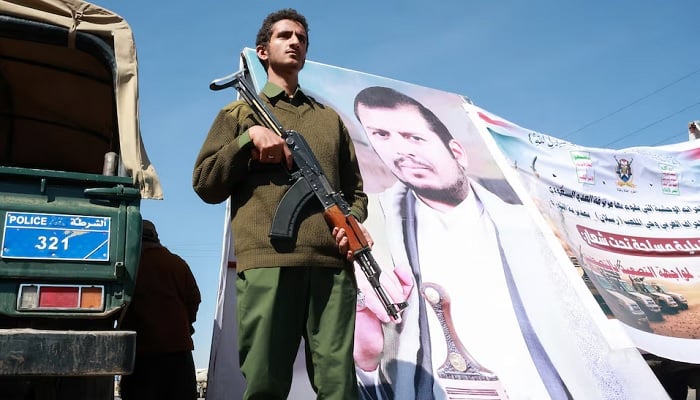
- Houthis strike Aden airport as flight due to land, ministry says.
- Saudi-backed forces trying to reverse Iran-aligned Houthi gains.
- Ongoing violence has caused mass displacement, worsened hunger.
Three people have been killed in attacks on Saudi airports, the country's civil aviation authorities said on Wednesday, as fighting intensified in Yemen between the Iran-aligned Houthis and Saudi-backed government forces.
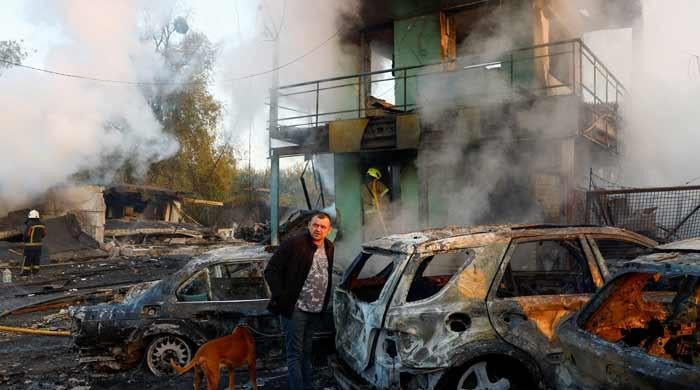
One person was killed and eight wounded in an attack on King Khalid International Airport in the Saudi capital Riyadh, and two were killed and 28 wounded in an attack on facilities at Abha airport, it said in a statement.
One of the attacks was on Wednesday and the other on Tuesday, the civil aviation authorities said, without saying which attack had occurred on which day.
The Saudi airport attacks were among a series of strikes targeting aviation infrastructure on Wednesday.
Yemen's Houthis attacked Aden's international airport with ballistic missiles and explosive-laden drones earlier on Wednesday, the country's Transport Ministry said.
One missile landed near the runway minutes before a flight from Cairo was due to land, the ministry said. The airport is the main international gateway for parts of Yemen outside Houthi control.
Battles in Yemen have focused in recent days on areas around the Bab el-Mandeb Strait, a shipping route that has become more crucial for energy exports since the conflict between the US and Iran restricted trade through the Strait of Hormuz.
This week, Yemeni government forces with Saudi-led coalition air support launched a counteroffensive to recapture strategic territory near the strait and around the town of Mocha that the Houthis had captured in September, but it is unclear if their advance will hold.
The fighting, a spillover from the wider US-Iran conflict, has revived a complex 12-year war in Yemen that led to one of the worst humanitarian crises globally and fragmented the Arab world's most impoverished country. The number of people displaced since the latest round of fighting began has risen to more than 200,000, the International Organisation for Migration (IOM) said on Wednesday.
"People are running for their lives and finding nowhere safe to go," said IOM Director General Amy Pope, who called for more funding amid rising needs for food and shelter. Both sides allege that hundreds of people have been killed in fighting, without providing details. The UN says three in four families are going hungry in parts of Yemen.
The Houthis have repeatedly targeted infrastructure including airports, oil refineries and pipelines in Saudi Arabia, a US ally.
On Wednesday, the Saudi-led coalition said it had intercepted and destroyed a Houthi ballistic missile north of the Saudi capital Riyadh. It said it was tracking the launch platform over Houthi-controlled Sanaa and would destroy it, but gave no details of casualties or damage.
Houthi military spokesperson Yahya Saree said in a statement that the group had targeted King Khalid International Airport in Riyadh with several drones.
Battles over the strait
Any Houthi control of the strait could threaten shipping or global oil flows, and Saudi Arabia has been seeking international assistance to repel the Houthis. Turkey is sending mainly defensive and technical support, two officials said on Wednesday, after the NATO member and Pakistan pledged to implement a collective defence commitment under their newly formed alliance.
Syria is carefully considering providing military assistance to ally Saudi Arabia amid the escalating war against the Houthis, a US official and a Syrian military official briefed on the matter said.
Options being considered include defensive aid to protect the kingdom from attacks, or deployment of forces in an offensive capacity to help Saudi-backed Yemeni troops fight the Houthis, the people said.
The US official said Saudi Arabia had requested that Syria deploy forces to fight the Houthis.
In response to a request for comment from the Syrian foreign ministry, a Syrian diplomat said Syria stood firmly with Saudi Arabia in the face of Houthi attacks but that the government's primary focus was on domestic priorities such as recovery from the country's civil war.
Fighting on the western front remains concentrated in the Dhubab district overlooking Bab el-Mandeb, with pro-government forces attempting an advance in the strategic hills to the east of that coastal plain, Yemeni military and government sources said.
On Monday, the Yemeni government said it had reached Mocha, which sits at a junction with a supply route to the critical battleground of Taiz, but the claim had been premature, according to Yemeni military officials on the ground and analysts.
The Houthis, who control much of Yemen's north, seized the capital Sanaa in 2014, prompting a military coalition led by Saudi Arabia, fearful of rival Iran's influence in Yemen and chaos on its borders, to intervene.
The Saudi-led coalition accuses Iran of arming, training and funding the Houthis. The group, mountain fighters who have emerged as a force of tens of thousands with missiles and drones that threaten the region, denies being part of Iran's Middle East proxy network, and says it develops its own weapons. Tehran also rejects the allegations.