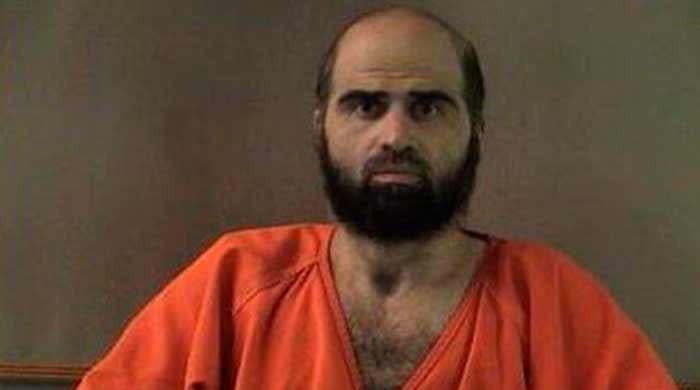
Trump 'absolutely' approves Fort Hood shooter's execution, undecided on livestream
US Vice President JD Vance says he does not know whether execution of former army psychiatrist will be broadcast or not
Published October 10, 2026
- Critics say livestream may glorify Hasan, fuel extremist propaganda.
- Republican Senator Thom Tillis calls plan 'beyond disgusting'.
- Jack Reed says broadcast would aid terrorist recruiters.
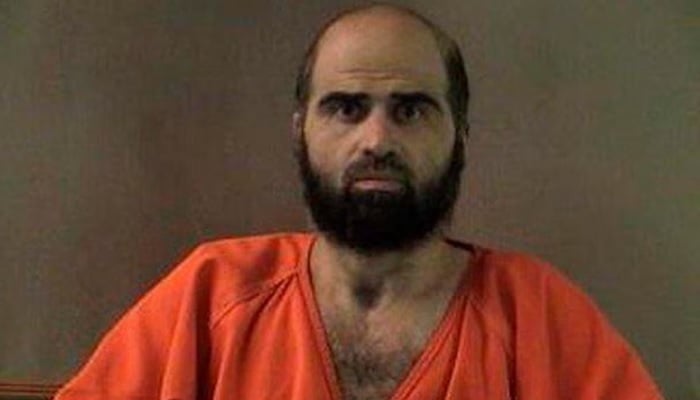
US President Donald Trump said on Friday he had “absolutely” approved the execution of Nidal Malik Hasan, the former Army psychiatrist convicted of killing 13 people at Fort Hood in 2009, but had not decided whether the execution should be livestreamed.
Trump said Hasan deserved the death penalty by firing squad, calling him “a maniac” at a White House event. The Pentagon has announced plans to livestream the execution, scheduled for December 3 at Fort Hood, Texas, but Trump has not publicly said whether he supports broadcasting it.
Defence Secretary Pete Hegseth has defended the plan, saying people should understand that serious crimes have serious consequences. The proposal has drawn condemnation from lawmakers, former officials and human rights representatives, who warn that a public broadcast could glorify the killer and provide propaganda for extremist groups.
Vice President JD Vance said on Friday he did not know whether the livestream would go ahead and would not watch it if it did.
“I don't know that that's actually going to happen,” Vance told reporters in Cincinnati. “I'm not going to be watching it.”
Vance's remarks raised questions about the extent of opposition within the Trump administration to the Pentagon's plan.
'Free propaganda'
Joe Kent, who resigned this year as Trump's head of the National Counterterrorism Centre, said the effort to deter extremism through a livestream could backfire.
“Streaming his execution is not just a stain on our morality — it also gives the terrorists free propaganda that they will use to radicalise & recruit more terrorists,” Kent wrote on social media.
Republican Senator Thom Tillis said Hasan should be put to death but described livestreaming the execution as “beyond disgusting”, adding that it was something “oppressive dictatorships like Iran and Afghanistan do”.
Senator Jack Reed, the top Democrat on the Senate Armed Services Committee and a former Army officer, said broadcasting the execution would give Hasan further attention.
“This is a gift to anti-American terrorist recruiters. It is absolutely shameful and damaging to America's interests and core values,” Reed said in a statement.
The UN human rights office also condemned the plan, warning that a public execution would violate international human rights standards.
“Public executions constitute a form of cruel, inhuman or degrading treatment or punishment,” Shabia Mantoo, a spokesperson for the UN High Commissioner for Human Rights, told a news briefing in Geneva.
Mantoo added that it would “breach the absolute prohibition of torture”.
Death penalty experts said the broadcast would mark the first known livestream or broadcast of a lawful execution.
Execution amid wider death penalty debate
Hasan killed 13 people and wounded 32 others when he opened fire at a medical facility at the Texas military base on November 5, 2009. He was convicted by a military jury in 2013 on 13 counts of premeditated murder and 32 counts of attempted premeditated murder, and sentenced to death.
The shooting took place weeks before Hasan, now 56, was scheduled to deploy to Afghanistan with US forces. He was left partially paralysed and confined to a wheelchair after being shot by police during his arrest.
If carried out, Hasan's execution would be the first by the US military since 1961. The military's last known firing-squad executions took place in 1945, according to the Death Penalty Information Centre. The group Death Penalty Action, which opposes capital punishment, has also said the planned execution would end a decades-long gap in military executions.
The plan comes amid renewed debate in the United States over capital punishment following the botched lethal injection last week of a Tennessee woman sentenced to death for a 1995 murder.
The controversy has also emerged in the run-up to the November 3 US midterm elections, with polls indicating that Trump's Republican Party could lose control of the House of Representatives and possibly the Senate to the Democrats.
At least five US states have firing squads as an execution method, according to the Death Penalty Information Centre. South Carolina carried out the first firing-squad execution in the United States in 15 years in 2025.