Senate passes bill letting ex-lawmakers keep blue passports without serving full term
Separate proposal to extend blue passports to ex-lawmakers’ spouses, dependent children under 28 withdrawn
Published October 20, 2026
- Bill still requires National Assembly approval before becoming law.
- 30,000 blue passports cancelled, cutting total from 75,000 to 45,000.
- Minister for tighter controls, says “respect not built via blue passports”.
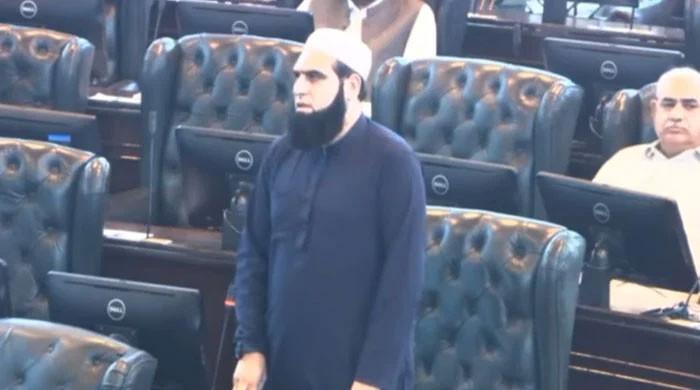
ISLAMABAD: The Senate on Monday approved a bill allowing former lawmakers to retain their official blue passports even if they served only part of a parliamentary term, while a separate proposal to extend the privilege to their dependent children under 28 was withdrawn following opposition from treasury members.
According to the details, the approved amendment to the Passports Act, 1974, would cover former members of the National Assembly (NA) and Senate who took the oath of office but left before completing a full term.
The measure, however, must still clear the NA before it can become law.
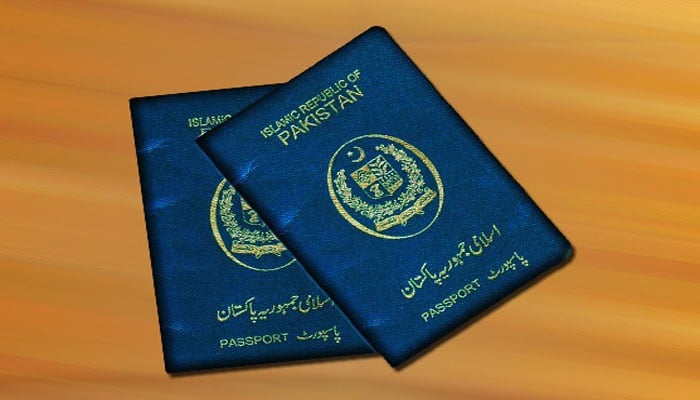
Official blue passports are issued to designated constitutional office-holders, government and judicial officials, senior bureaucrats and their eligible dependents. They provide visa-free access to 55 countries, including 22 in Europe, according to the report.
Both bills were moved by Senator Abdul Qadir. The approved legislation proposes inserting a new Section 3-A into the Passports Act, allowing a former parliamentarian to retain and use a gratis official passport after leaving office, whether they served a full term or completed only the remainder of another member’s tenure.
Under the existing rules, National Assembly members become eligible for blue passports after taking the oath, while senators must complete their six-year term to qualify. The amendment seeks to remove that disparity by allowing former lawmakers from either House to retain their official passports even if they leave office before completing a full term.
The proposed provision states that “a retired parliamentarian who has taken oath as a Member of the National Assembly (MNA) or the Senate, whether for a full term or for the remainder of the term of another member, shall, on such terms and conditions as may be prescribed, be entitled to retain and use the gratis official (blue) passport issued to him or her after ceasing to hold office”.
The change would cover lawmakers who leave the NA before completing five years or the Senate before completing six years. Under the existing Passport Rules 2021, former parliamentarians qualify for blue passports if they have served at least one full term in either House.
The bill’s statement of objects and reasons says the amendment “brings parity with the privileges available to other high-ranking officials and ensures uniform treatment of persons who have served the state at the highest level”.
Children’s passport proposal withdrawn
The Senate also withdrew a separate bill proposing blue passports for former lawmakers’ spouses and dependent children under 28 after treasury members opposed the measure.
The proposed amendment to Section 12 of the Members of Parliament (Salaries and Allowances) Act, 1974, stated that “an ex-member, the spouse of the ex-member and the dependent children of the ex-member below the age of 28 years shall be entitled to a gratis official (blue) passport”.
The proposal had been approved by the relevant Senate committee in July, drawing criticism over the extension of an official travel privilege to family members. Minister of State for Interior Tallal Chaudhry had subsequently said steps would be taken to ensure the documents were used for “only official duties” abroad and issued for limited periods in most cases.
Addressing the Senate on Monday, Chaudhry said the number of official blue passports issued in Pakistan had fallen from 75,000 to 45,000 after European countries and Canada raised concerns. He said around 30,000 unnecessary or inactive passports had been cancelled.
“Security and dignity of passport is a matter of the dignity of people of Pakistan,” he said, adding that Pakistan had agreements with other countries concerning blue and red passports.
Chaudhry said the government had no objection to parliamentarians receiving blue passports but was concerned about extending the facility to their families. A large number of such passports, he said, could make other countries reluctant to offer visa-free access.
He also said the government would soon introduce legislation to withdraw the blue-passport facility available to children of retired bureaucrats.
Law Minister Azam Nazeer Tarar called for tighter regulation, stressing that official passports were intended for government business.
“Let children make their own careers; respect is not built through blue passports,” he said.
Tarar also called for the removal of the six-year service requirement for senators to qualify for official passports, arguing that the rules should be consistent across both Houses. NA members become eligible after taking the oath, whereas senators must complete their full six-year term. Under the existing arrangement, a senator who resigns shortly before the end of the term may lose eligibility.
PML-N Senator Abid Sher Ali, meanwhile, criticised the requirement for parliamentarians to obtain a no-objection certificate (NOC) from the interior ministry before being issued blue passports. He said the condition had not previously applied and described it as a breach of privilege.
“Are we dacoits or terrorists that we need NOCs?” he said, announcing plans to move a privilege motion.
KP emergency, governor’s rule challenged
The Senate also saw a confrontation between opposition and treasury members over the imposition of emergency and governor’s rule in Khyber Pakhtunkhwa (KP).
Leader of the Opposition in the Senate Allama Raja Nasir Abbas denounced the measures as an “assault on the people’s mandate”.
“You robbed the people’s votes. Your own minister said the system has collapsed,” he said, referring to Interior Minister Mohsin Naqvi’s earlier remarks that the country’s governance system required a reset.
Speaking at the Pakistan Economic Summit in July, Naqvi had said the existing “system” had “collapsed” and was fundamentally incapable of resolving the country’s problems.
Abbas described the measures in KP as “sheer oppression” and said they could have been avoided. He also warned the government against pushing people to the wall.
“You snatched the mandate from Bengalis, and they separated. You have still not learned,” he said.
The opposition leader also called for a parliamentary briefing on Yemen, recalling that Parliament had passed a resolution in 2015 against Pakistan becoming part of the conflict. He said he had written to the prime minister and foreign minister, urging them to pursue mediation rather than involvement in the war.
“This is a sensitive issue. Countries are economically devastated, and we are going to be part of another war,” he said.
Responding to the criticism, Parliamentary Affairs Minister Tariq Fazal Chaudhry defended the measures, saying the president had imposed emergency and governor's rule under Articles 232 and 234 of the Constitution, and the Senate and the National Assembly subsequently ratified them.
“All steps have been taken in the interest of peace, stability and national interest,” Chaudhry said.
The bills will now follow separate paths, with the blue-passport amendment requiring approval from the National Assembly before it can become law. The Senate debate also saw opposition criticism of the governor’s rule in Khyber Pakhtunkhwa and calls for Pakistan to pursue mediation over the conflict in Yemen.