


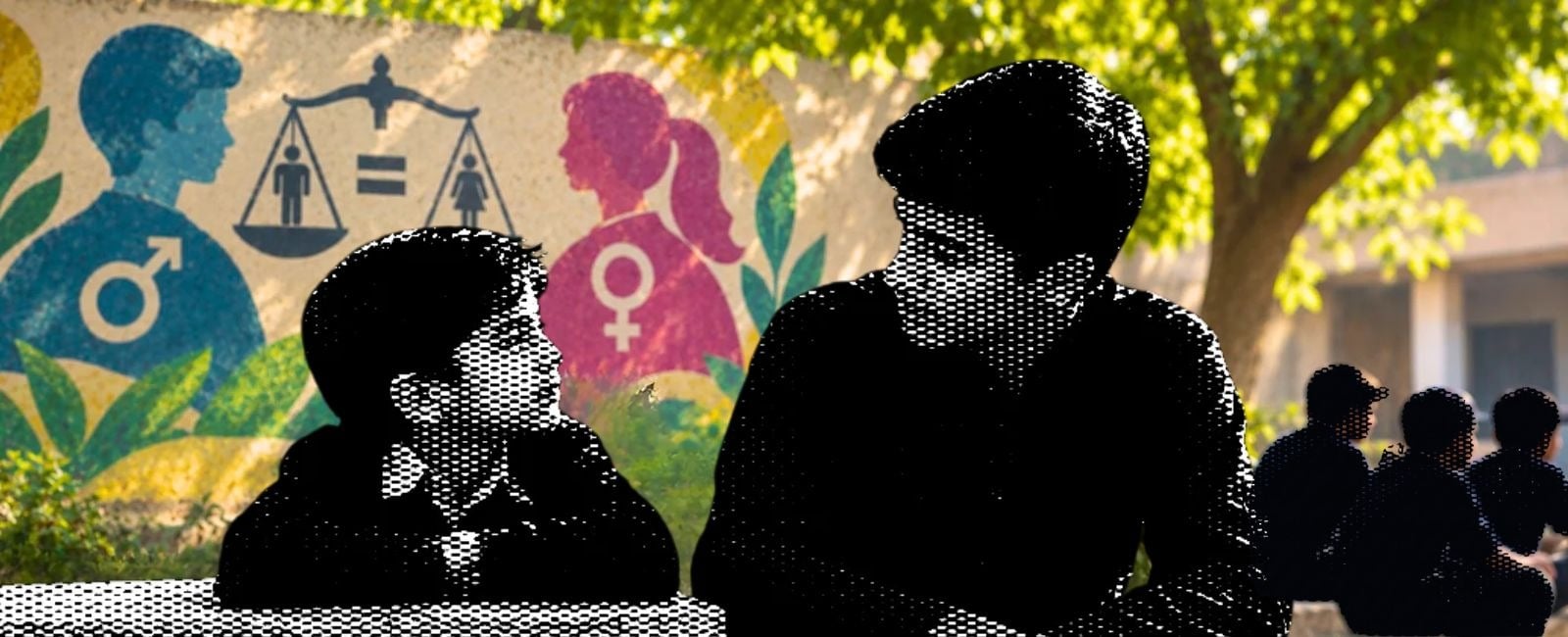
To end violence against women, we must rethink how we raise boys
Changing how men and boys understand power and respect may help reduce violence against women over time, but training alone cannot end it



 Updated Monday Oct 26 2026
Whenever a case of gender-based violence (GBV) comes to light in Pakistan, the conversation often turns to what women should do to stay safe. They are advised to learn self-defence, carry pepper spray or avoid going out alone. There is much less discussion about why women have to take these precautions in the first place, and what needs to change in men’s attitudes and behaviour.
The numbers give some idea of how serious the problem is. The 2017–18 Pakistan Demographic and Health Survey found that 28% of women aged 15–49 had experienced physical violence since the age of 15. It also found that 34% of ever-married women had faced physical, sexual or emotional violence from their husbands.
Safety advice has its place, but it cannot be the whole answer. Women cannot be expected to carry the burden of stopping violence on their own. This is where work with men and boys comes in. Organisations such as Rozan, Aahung and Shirakat are trying to challenge the gender roles and attitudes that can allow violence against women to continue.
How gender roles shape men's behaviour
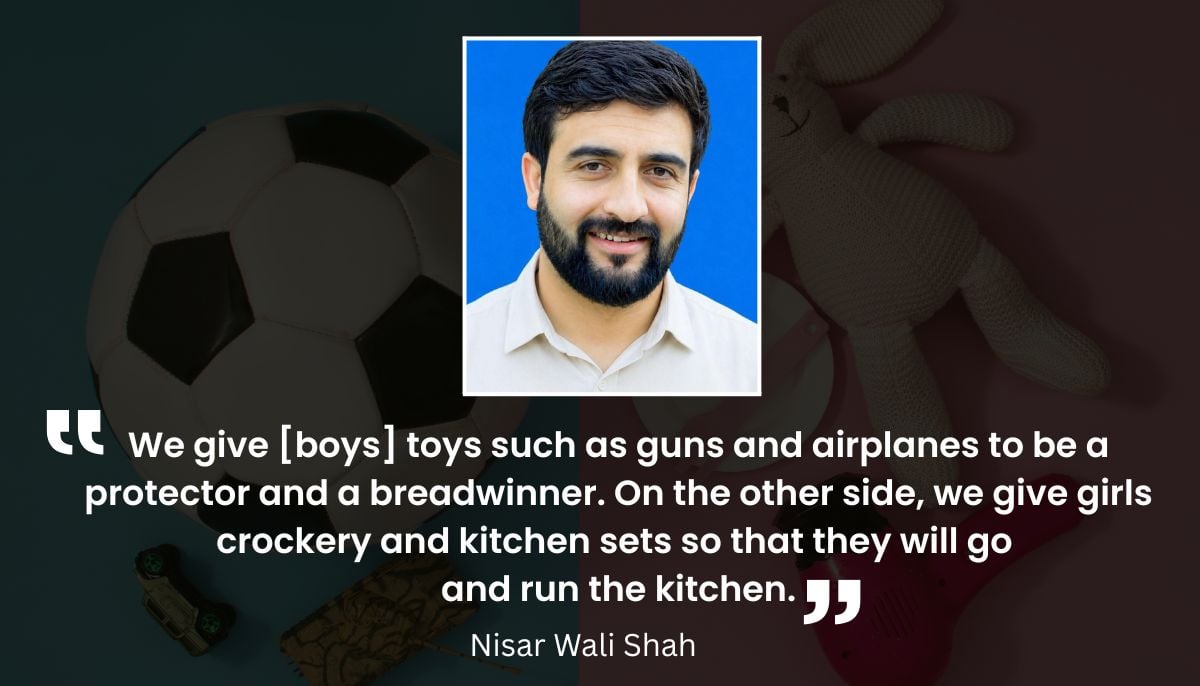
Speaking to Geo.tv, Nisar Wali Shah, a senior programme officer at Rozan, explains that gender roles are taught from an early age. Boys are encouraged to become protectors and breadwinners, while girls are prepared for domestic responsibilities.
“We give [boys] toys such as guns and aeroplanes to be a protector and a breadwinner. On the other side, we give girls crockery and kitchen sets so that they will go and run the kitchen,” Nisar says.
As children grow up, Nisar explains, they internalise these expectations and begin to see them as natural or God-given, even though they are socially constructed.
These beliefs can shape how men understand masculinity, power and their relationships with women. Expectations to protect or provide can also become assumptions that men should take charge or exercise authority.
The challenge of changing deep-rooted attitudes
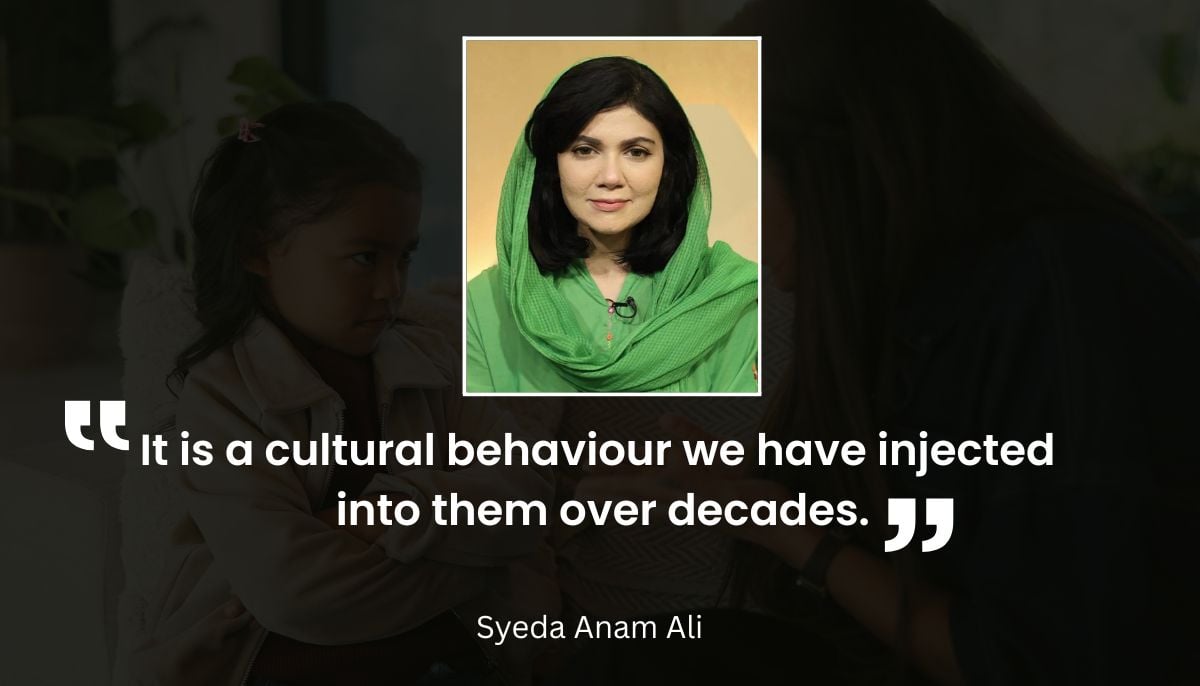
Counsellor and behavioural therapist Syeda Anam Ali, who conducts corporate training on GBV and safe workplaces for women, argues that education and professional qualifications do not necessarily undo deeply ingrained cultural attitudes.
“It is a cultural behaviour we have injected into them over decades,” Anam says.
According to the therapist, such conditioning can contribute to a sense of male superiority, in which men expect their actions to go unchallenged, even when they violate women's boundaries. She cites photographing someone without consent, making inappropriate remarks and stalking as examples of behaviour that may be excused or overlooked.
Anam, who has more than eight years of experience in the field, also draws a connection between controlling behaviour and preventing violence against women. Based on her observations during training sessions, she says the expectation that women should obey men can contribute to aggression at home and in the workplace.
Changing these attitudes, however, is not as simple as telling men to behave differently. Anam identifies shame, guilt, fear of losing authority and pressure from family and society as barriers to unlearning harmful behaviour.
“The biggest barrier is your own internal voice,” Anam says.
Turning men into allies
At Rozan, the Humqadam programme focuses on engaging men in tackling violence against women. Rather than treating men only as potential perpetrators, Rozan aims to encourage them to become allies who challenge harmful behaviour and stand alongside women.
“Men are seen as a source of threat in our society. Our aim, our work, is to bring men on board as allies. When we talk about a threat somewhere, we see authority and control. But when we talk about an ally, what comes to our minds is someone who walks alongside, who walks step by step with you,” Nisar says.
The training begins with self-awareness, encouraging participants to examine their own beliefs before challenging the attitudes of others. Nisar says the sessions also explore how socialisation shapes ideas about masculinity, including expectations that men should be providers and protectors while women should take responsibility for the home.
Rozan adapts its training materials to suit participants. Children are taught using pictorial material, while university students receive modules suited to their level.
Nisar also discusses how masculinity, or “mardangi”, remains a taboo subject that many men are reluctant to discuss openly. He cites Rozan's “Guy Talk” project with the Norwegian Embassy, which explores conversations in men's spaces. In one video, a man is asked whether he would rather share his feelings with a male friend or jump from a plane with a parachute. He chooses the jump, illustrating the stigma surrounding emotional openness among men.
A participant in Rozan’s 2018 Capacity Building and Sensitisation on Issues of Violence, Gender and Masculinity training describes a change in everyday behaviour. The participant, who was 16 or 17 at the time and wishes to remain anonymous, recalls letting inappropriate remarks pass in the past. Now, in a group of 10 people, the participant speaks up: “You should not say that.”
However, the participant said that when he encouraged others to join the programme, many dismissed it as a waste of time. While this is one person’s account rather than systematic evidence of the programme’s impact, it illustrates the kind of small, practical change the training aims to bring about.
Teaching consent and equality from an early age
While Rozan works specifically to engage men as allies in combating the menace of violence against women, Aahung takes a broader approach, reaching boys and girls from an early age through schools and community programmes.
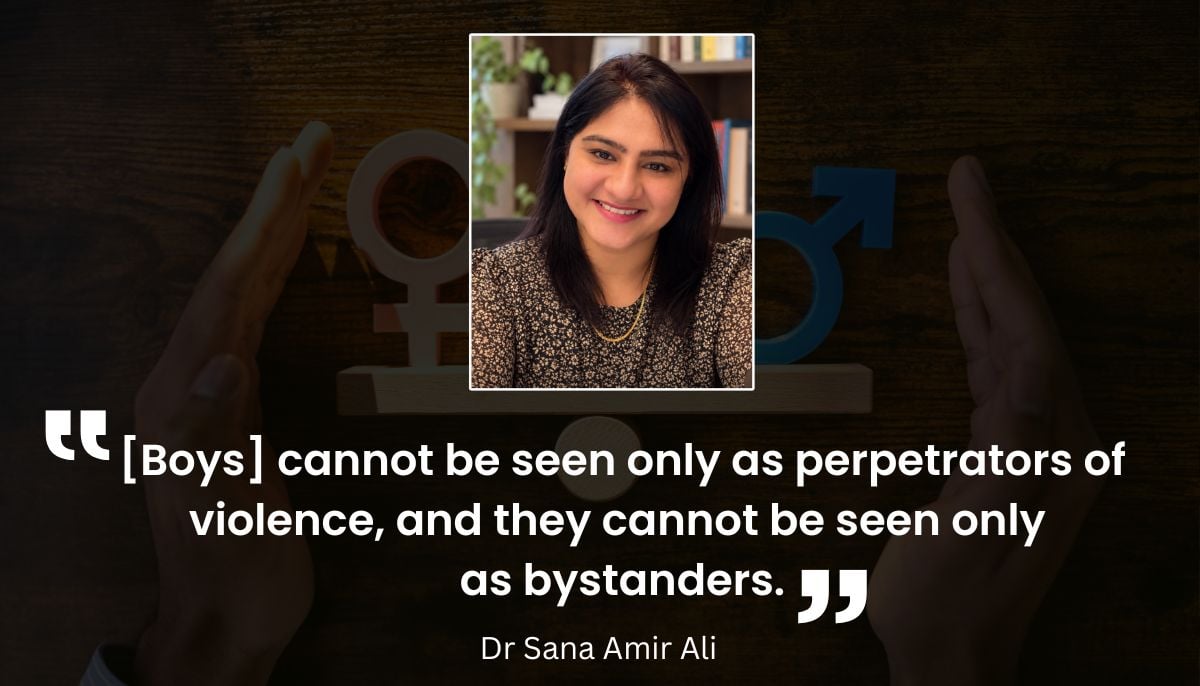
Dr Sana Amir Ali, Programme Manager – Life Skills Education at Aahung, says the organisation works with children and young people on consent, gender roles, personal boundaries and violence. Its approach also involves the adults who shape children's lives, including male teachers, fathers and school leadership.
“[Boys] cannot be seen only as perpetrators of violence, and they cannot be seen only as bystanders,” Sana says. “They can also play their role when it comes to gender equality, ending gender stereotypes, gender roles in society, and so on.”
Sana explains that lessons taught in school can be undermined if children encounter different expectations at home. Aahung therefore engages fathers to help ensure that classroom messages are reinforced by the adults around them.
Rather than relying on lectures, Aahung uses activities to encourage participants to examine their own assumptions. Sana describes a method called “Reflect, Connect and Apply”, in which participants discuss an activity, relate it to their own lives and consider how they might respond differently in similar situations.
“Our sessions are never direct, lecture-style sessions. Our sessions are activity-based,” Sana says. “We make them play, and through structured play the message reaches them.”
Sana also highlights the resistance Aahung faces because of deeply rooted beliefs about how men and women should behave. Changing these attitudes, she says, requires time and continued engagement.
Nisar makes the same point from Rozan’s side. According to him, men in their twenties are being introduced to new ideas after a lifetime of absorbing old ones, while teaching children early, particularly in schools, is more likely to have a lasting impact. Rozan has only recently started working with schools.
The Rozan participant agrees, adding that programmes should also reach teenagers and families because a child’s foundational attitudes are shaped at home. Working with adult men and raising boys differently are two halves of the same task. The first addresses violence happening now; the second seeks to prevent the next generation from learning it.
Do these training programmes make a difference?
The most important question is whether these programmes change behaviour and whether that change lasts. Assessing their impact requires looking beyond participants’ immediate responses to training and examining whether changes persist over time.
Hassan bin Zahid, a development-sector researcher and evaluator, explains that evaluators use surveys, qualitative interviews and focus group discussions to assess what participants learn and how their attitudes may change. Programmes also use internal monitoring and post-training forms, while external evaluations may be conducted midway through or at the end of a project.
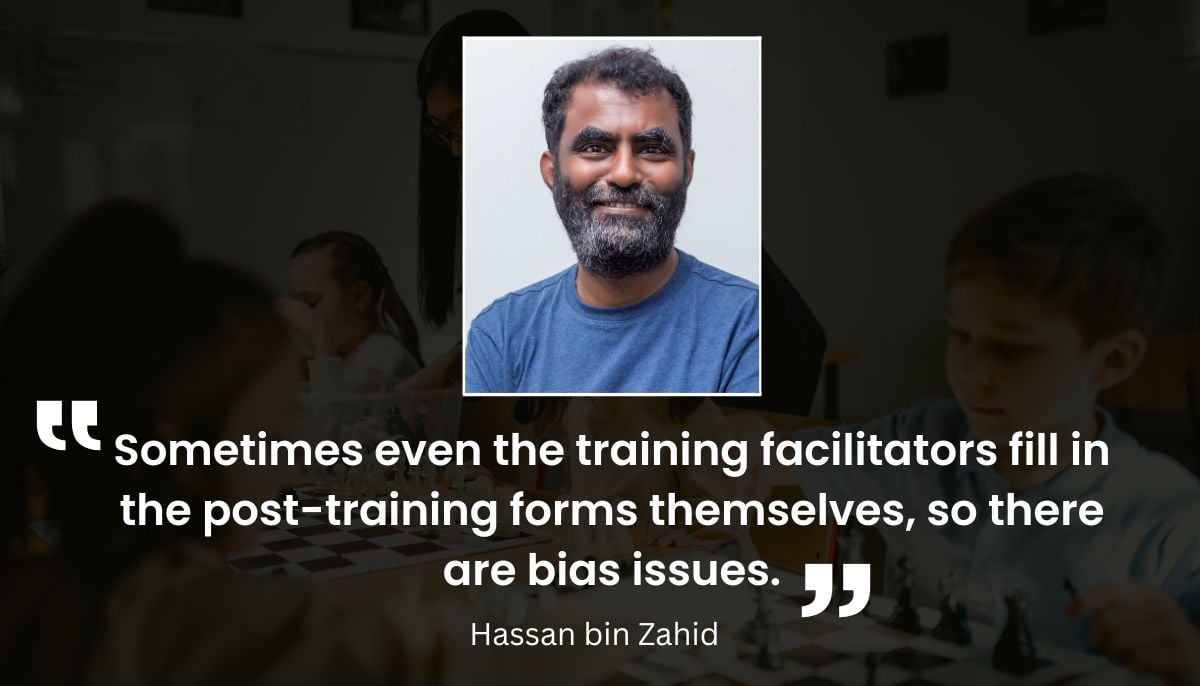
“But because it is internal, done by their internal team, there are biases. Sometimes even the training facilitators fill in the post-training forms themselves, so there are bias issues,” Hassan says.
External evaluations can provide a more independent assessment, although their scope and frequency depend on project funding and donor requirements. Limited budgets can also make it difficult to evaluate every session.
The evidence cited by the organisations mainly demonstrates short-term changes in attitudes and knowledge. Whether these translate into sustained behavioural change or a reduction in violence is harder to establish.
According to Nisar, Rozan’s assessments before and after training show participants moving away from ideas such as “a man should always be rough and tough”. He also says boys who attended the training have helped mobilise their communities.
Hassan cites individual cases that evaluators encounter. He recalls a young male participant who stopped his 17-year-old sister’s marriage by telling his parents it was wrong and that she should be allowed to study. Hassan presents the case as one example of the changes that can emerge through community engagement, although an individual account cannot establish the programme’s wider impact.
Change is slow, Anam explains. Some husbands and fathers continue to resist change after sessions because family members and friends reinforce established behaviours.
Zahid Lashari, a social development worker in Dadu, describes the long-term picture as mixed. He says long-running projects can leave lasting benefits, while short-term ones often end with the project, leaving little behind.
“It is also hard to check these claims from outside,” Hassan says. According to him, evaluations are mostly conducted when donors require them, and organisations do not usually make the reports public. He also says organisations may cite confidentiality concerns when asked to share data.
Publicly accessible evidence on the long-term impact of these programmes remains limited, particularly on whether changes in attitudes lead to sustained behavioural change and reductions in violence. More transparent reporting and independent evaluation would help establish what works, for whom and over what period.
How to make training programmes more effective
Hassan stresses the importance of selecting facilitators who understand the community's language, culture and social norms. Relatable storytelling and interactive activities can help participants feel comfortable discussing sensitive issues.
Groups should also be organised around similar age groups and backgrounds. Young women, for example, may hesitate to discuss experiences of violence in front of older relatives or people in positions of authority.
Hassan adds that much of Pakistan’s academic research on gender and reproductive health is inaccessible or underused. Making existing studies available and drawing on their findings, he argues, matters as much as producing new research.
A national strategy and the need for consistency
Nisar says Pakistan needs a national approach to engaging men and taking action against GBV. The National Strategy on Male Involvement to Prevent Gender-Based Violence is intended to provide that framework.
The Ministry of Human Rights launched the strategy in Islamabad on 24 September 2026, with technical support from UNFPA. It covers the period from 2026 to 2030. According to Nisar, the team initially identified more than 90 organisations working on GBV, 55 of which were engaged in work involving men. The team then held provincial consultations, formed a technical advisory group and validated the findings. Nisar also says the federal cabinet has approved the strategy as part of Pakistan’s gender policy.
The launch is an important step, but implementation will determine whether the strategy makes a difference. Key questions include who will fund it in each province, who will track progress and what outcomes will be measured.
Nisar describes the strategy as a framework that organisations and individuals can use when working with men. Its development involved consultations and an evidence review, but its long-term effectiveness will depend on how it is implemented and evaluated.
Hassan explains that projects generally use internal monitoring, alongside external evaluations when donors require them. For Lashari, programme design, implementation and evaluation must work together if the benefits are to last.
Anam believes consistency remains a major gap in training programmes. She stresses the need for regular sessions on men's health, awareness and behaviour.
“Every month, every five or six months, we should be designing programmes,” Anam says.
From strategy to accountability
A national strategy provides a framework for action, but a framework alone is not a result. Its value will depend on whether it is funded, implemented across every province and assessed through changes in behaviour, rather than simply attendance figures or forms completed at the end of a session.
That requires independent evaluations, publicly available reports and follow-up with participants months or years later. It also means sustaining the regular engagement Anam advocates, rather than relying on one-off workshops.
Training has limits, too. Changing how men and boys understand power and respect may help reduce violence over time, but workshops cannot replace investigation, prosecution or support for survivors.
The strategy should ultimately be judged not by how many men attend sessions, but by whether harmful behaviour declines, violence falls and perpetrators are held to account.
Farheen Qureshi is a freelance journalist. She can be reached at [email protected]
Header and thumbnail illustration by Geo.tv