Dallas celebrates Sindhi Cultural Day
Dallas community celebrates Sindhi Cultural Day with music, dance, and tradition
Published December 08, 2025
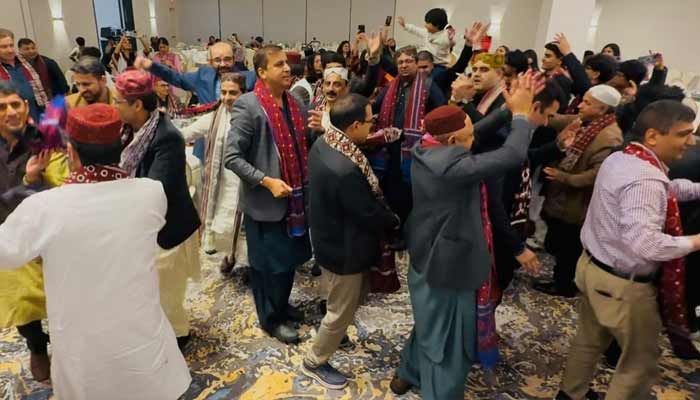
The Sindhi Association of North America (SANA) brought a vibrant slice of South Asian heritage to Texas this weekend as families from across Dallas–Fort Worth gathered to celebrate Sindhi Cultural Day.
What unfolded inside a packed community hall was more than a cultural programme; it was a reaffirmation of identity for a diaspora thousands of miles away from its ancestral soil.
The event drew notable attendees, including Texas State Representative Salman Bhojani, Farhan Ahmed, Vice Consul at the Consulate of Pakistan in Houston, SANA’s Central Vice President Asghar Pathan, Central General Secretary Asad Shaikh, and several community leaders who added stature to the celebration.
Addressing the audience, Rep Bhojani described Sindh’s culture as “a living symbol of peace, love, and tolerance,” adding that Dallas had paid respect to that legacy by gathering in such large numbers. Vice Consul Farhan Ahmed noted that the Sindhi topi and ajrak are not merely garments but “icons of Pakistan’s cultural identity,” and said that Sindhi Cultural Day strengthens a positive image of Pakistan around the world.
SANA leaders Asghar Pathan and Asad Shaikh emphasised that Sindhis carry their traditions wherever they go, calling it their pride and their inheritance. Other speakers highlighted that Sindh is not just a geographical region but a civilisational idea grounded in human dignity, poetry, music, and centuries of coexistence. Ajrak, topi, literature, and folk arts, they said, are living testaments to a culture that refuses to fade.
The programme was elegantly steered by SANA Dallas President Amir Memon, while Suhail Khaskheli, Sarfaraz Abbasi, Shehryar Arshad, Ghulam Nabi Kalwar, Imran Pirzada, Muhammad Shafi, and Fahad Junejo welcomed guests with traditional ajraks and caps.
Among the attendees were prominent Pakistani American community members, including Barkat Basria, Democratic candidate Attorney Sofia Anwar, and Nadeem Akhtar of Pak Pack Group.
One side of the hall showcased hand-crafted Sindhi arts. On the other hand, children performed with a joy that felt like an emotional bridge between generations. Many attendees remarked that for a moment, Dallas felt like Hyderabad, Tando Allahyar, Larkana, or Khairpur — places where identity is woven into daily life and where culture is lived, not displayed.
The evening concluded with the traditional “Ho Jamalo” dance, as women, men, youth, and children joined in a circle, celebrating not only the past but the resilience of a culture carried proudly across continents.