Why does Elon Musk want to put AI data centres in space?
Space-based AI data centres offer solar power, reduced costs, but face technical risks
Published January 30, 2026
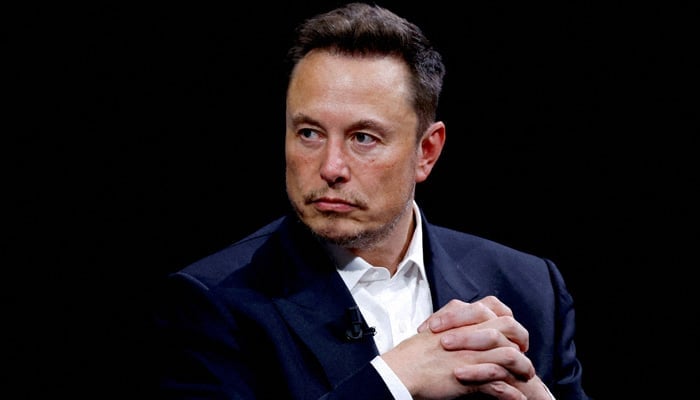
A proposed merger between Elon Musk's SpaceX and xAI, reported exclusively by Reuters on Thursday, could give fresh momentum to Musk's plan to launch satellite data centres into orbit as he battles for supremacy in the rapidly escalating AI race against tech giants like Alphabet's Google, Meta and OpenAI.
Here is what we know about space-based AI computing:
What are space-based AI data centres?
Space‑based data centres — still an early‑stage concept — would likely rely on hundreds of solar‑powered satellites networked in orbit to handle the enormous computing demands of AI systems like xAI’s Grok or OpenAI’s ChatGPT, at a time when energy‑hungry Earth‑based facilities are becoming increasingly costly to run.
Advocates say operating above the atmosphere offers nearly constant solar power and eliminates the cooling burdens that dominate ground‑based data-centre costs, potentially making AI processing far more efficient.
But engineers and space specialists caution that commercial viability remains years away, citing major risks from space debris, defending hardware against cosmic radiation, limited options for in-person maintenance, and launch costs.
Deutsche Bank expects the first small‑scale orbital data-centre deployments in 2027–28 to test both the technology and the economics, with wider constellations — potentially scaling into the hundreds or thousands — emerging only in the 2030s if those early missions work.
Why does Musk want to do this?
SpaceX is the most successful rocket-maker in history and has successfully launched thousands of satellites into orbit as part of its Starlink internet service. If space-based AI computing is the future, SpaceX is ideally placed to operate AI-ready satellite clusters or facilitate the setting up of on-orbit computing.
"It's a no-brainer building solar-power data centres in space ... the lowest-cost place to put AI will be space, and that will be true within two years, three at the latest," Musk said at the World Economic Forum in Davos earlier this month.
SpaceX is considering an initial public offering this year that could value the rocket and satellite company at over $1 trillion, Reuters has reported. Part of the proceeds would go to funding the development of AI data centre satellites, sources say.
What are Musk's competitors doing?
Jeff Bezos' Blue Origin has been working on technology for AI data centres in space, building on the Amazon founder's prediction that "giant gigawatt data centres" in orbit could beat the cost of their Earth-bound peers within 10 to 20 years by tapping uninterrupted solar power and radiating heat directly into space.
Nvidia‑backed Starcloud has already offered a glimpse of that future: its Starcloud‑1 satellite, launched on a Falcon 9 last month, carries an Nvidia H100 — the most powerful AI chip ever placed in orbit — and is training and running Google’s open‑source Gemma model as a proof of concept. The company ultimately envisions a modular “hypercluster” of satellites providing about five gigawatts of computing power, comparable to several hyperscale data centres combined.