UAE captures rare daylight image of Ramadan crescent
Experts describe successful daytime capture as "notable astronomical achievement"
Published February 18, 2026
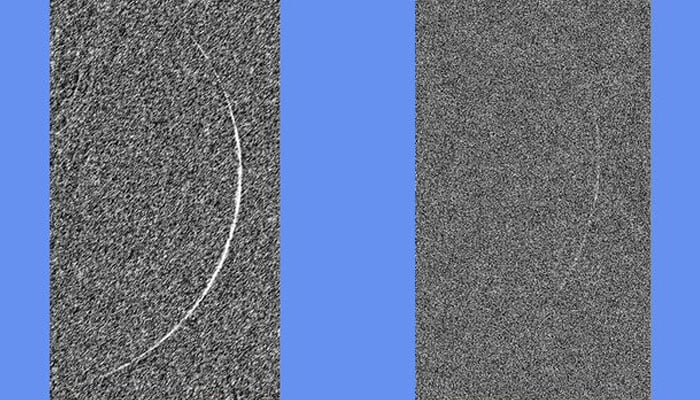
DUBAI: The United Arab Emirates has released a daylight image of the Ramadan crescent, captured in a rare astronomical observation aimed at documenting the birth of the lunar month, according to local astronomers.
The image of the thin crescent marking Ramadan 1447AH was taken in broad daylight on February 18, 2026, at around 10:30am UAE time from Abu Dhabi, officials said.
Astronomers at the International Astronomical Centre said the crescent was recorded using modern imaging techniques at the Khatm Astronomical Observatory, allowing the moon to be detected even when it was too faint to be seen by the naked eye.
According to the centre, the moon was about 16.6 hours old at the time of imaging and positioned roughly 9.8 degrees away from the sun.
Experts described the successful daytime capture as a notable astronomical achievement that helps scientifically confirm the moon’s birth before it becomes visible after sunset.
Astronomers explained that the first crescent is usually visible to the naked eye when the moon is around 18 to 24 hours old, depending on weather, clarity of the sky and its position above the horizon.
They added that sighting a 15- to 16-hour-old moon is rare but possible under ideal conditions, while a moon younger than 12 hours is generally considered impossible to observe without advanced equipment.