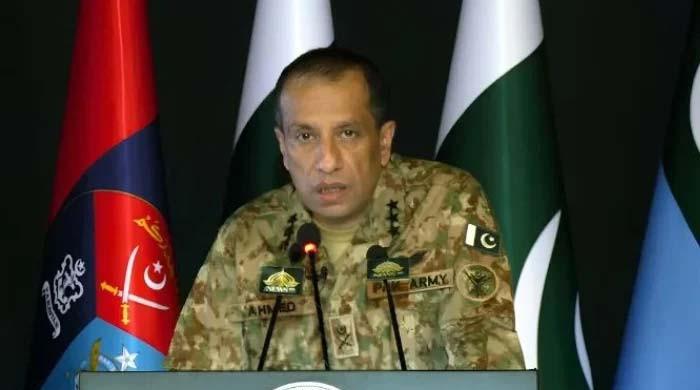
Pakistan-hosted quadrilateral meeting discusses ways to bring 'permanent end' to Iran war
Discussions with Saudi, Turkish, Egyptian FMs focused on de-escalation, regional stability, says DPM Dar
Published March 29, 2026
- Meeting focuses on easing tensions amid Middle East war.
- Islamabad mediates between Iran, US as conflict drags on.
- PM Shehbaz holds detailed call with Iran’s president.
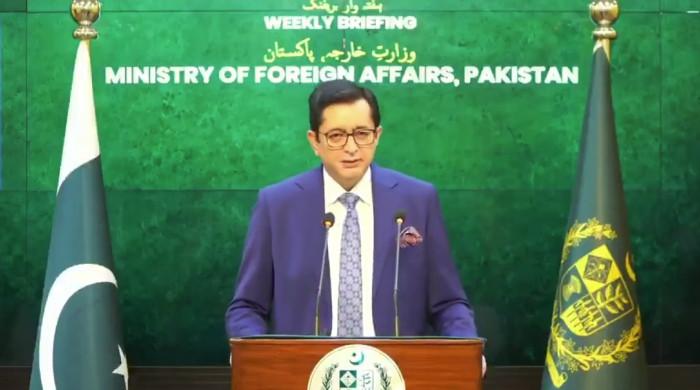
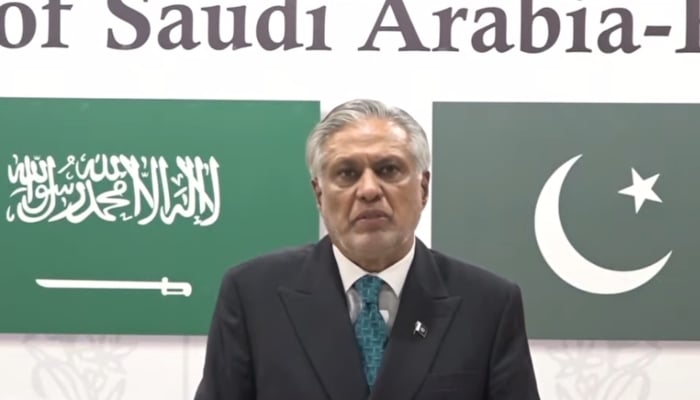
The quadrilateral meeting of foreign ministers from Pakistan, Saudi Arabia, Turkiye and Egypt called for an immediate and permanent end to the ongoing war in the Middle East, said Deputy Prime Minister Ishaq Dar on Sunday.
In a televised address following the quadrilateral moot in Islamabad, DPM Dar said Pakistan hosted the meeting in the federal capital to discuss a range of issues, including efforts to ease rising regional tensions amid the US-Israeli war on Iran.
The meeting, attended by Saudi Foreign Minister Prince Faisal bin Farhan, Turkish Foreign Minister Hakan Fidan and Egyptian Foreign Minister Badr Abdelatty, comes as Islamabad steps up efforts to help de-escalate tensions in the Middle East.
During the meeting, the participants of the meeting agreed that war served no one’s interests and discussed ways to bring "an early and permanent end" to the conflict, DPM Dar said.
The foreign ministers stressed that dialogue and diplomacy remained the only viable path forward, he added.
DPM Dar said that the discussions focused on de-escalation and regional stability.
Dar said the visiting ministers were briefed on the prospects of potential negotiations between the United States and Iran, with Pakistan offering to facilitate the process.
Iran and US have expressed confidence in Pakistan’s role in facilitating the negotiations, he added.
He also confirmed holding a detailed telephonic conversation with China’s foreign minister as part of ongoing diplomatic engagement.
Urging all countries to respect the sovereignty and security of others in line with the United Nations Charter, DPM Dar said the ongoing Middle East situation has underscored the growing importance of unity within the Muslim world.
In an earlier post on X, DPM Dar said the FMs' visit to Pakistan reflected the "strong fraternal ties" between the countries.
"Our candid and constructive discussions focus on the evolving regional situation and advancing peace and stability, while strengthening our partnership and deepening cooperation," he wrote.
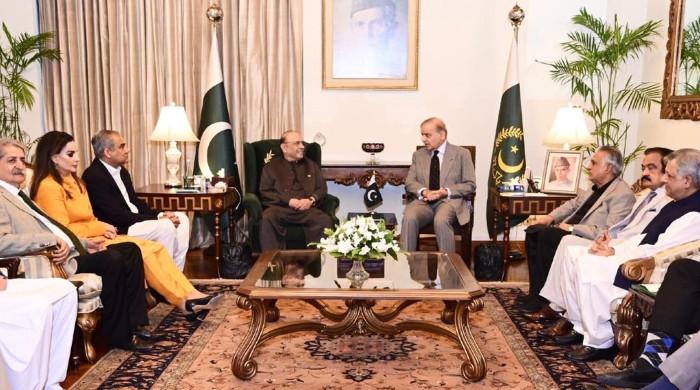
After attending the quadrilateral moot on the Middle East conflict at the Ministry of Foreign Affairs, Saudi Foreign Minister Prince Faisal bin Farhan called on Prime Minister Shehbaz Sharif this evening.
According to a statement issued by the Prime Minister’s Office, the premier warmly welcomed the Saudi FM and conveyed his respectful regards for the Custodian of the Two Holy Mosques King Salman bin Abdulaziz Al Saud and warm greetings for Crown Prince Mohammed bin Salman bin Abdulaziz Al Saud.
While reaffirming Pakistan's full and unwavering solidarity and support with Saudi Arabia, PM Shehbaz appreciated the remarkable restraint exercised by Riyadh amid the current crisis.
PM Shehbaz assured the Saudi FM that Pakistan would always stand shoulder to shoulder with Saudi Arabia.
The premier recalled his recent conversations with the crown prince, including their meeting in Jeddah on March 12.
He shared with the Saudi FM Pakistan’s extensive diplomatic outreach during the current crisis, including the mediation efforts for de-escalation and bringing both the US and Iran to the negotiating table.
While emphasising Saudi Arabia’s leadership role in the Muslim Ummah, the PM stressed the need to forge unity within the Islamic countries at this critical time.
The Saudi FM's meeting with PM Shehbaz follows his arrival earlier today for the Pakistan-hosted quadrilateral meeting. Turkish Foreign Minister Hakan Fidan and Egyptian Foreign Minister Badr Abdelatty also arrived on Saturday to attend the talks.
The quadrilateral meeting comes amid efforts to open a window for diplomacy to end over a month-long war between the US, Israel, and Iran, which began on February 28 and has affected the broader Middle East.
Islamabad has emerged as a key facilitator between Iran and the United States as their war drags on, serving as an intermediary for messages between the two sides.
Two days earlier, DPM Dar confirmed that indirect talks between the United States and Iran were underway through messages being relayed by Pakistan, with Turkiye and Egypt also helping in the effort.
These efforts included direct contact between Chief of Defence Forces (CDF) and Chief of Army Staff (COAS) Field Marshal Asim Munir and US President Donald Trump on Sunday, confirmed by the White House.
Subsequently, Pakistan delivered a US proposal to Iran, a senior Iranian source told Reuters on Wednesday. The source did not reveal details of the proposal or confirm if it was the 15-point US framework reported by media outlets.
However, Iran rejected the US proposal, insisting it will end the ongoing "imposed war" on its own terms and timeline, a senior political-security official told Press TV.
Iran outlined five conditions for ending the war: a complete halt to "aggression and assassinations"; mechanisms to prevent the war from being reimposed; guaranteed payment of reparations; resolution across all fronts and resistance groups; and international recognition of Iran's control over the Strait of Hormuz.
As part of preparations, Prime Minister Shehbaz Sharif said he had a detailed telephone conversation with Iranian President Masoud Pezeshkian earlier today (Saturday), lasting over one hour.
The call was the PM’s second conversation with Pezeshkian in five days, both of which focused on de-escalation and dialogue.
"I reiterated Pakistan´s strong condemnation of the continued Israeli attacks on Iran, including recent strikes on civilian infrastructure, and conveyed Pakistan´s solidarity with the brave people of Iran," he wrote on X.
PM said he also expressed his condolences on the tragic loss of precious lives and prayed for the swift recovery of the injured and displaced.
"I apprised him of Pakistan's ongoing diplomatic outreach — engaging the United States and brotherly Gulf and Islamic countries — to facilitate dialogue and de-escalation."
The PM Office said separately that Pezeshkian "stressed the need to build trust in order to facilitate talks and mediation".
Pakistan, Saudi Arabia stress dialogue for regional peace
Pakistan and Saudi Arabia have agreed to continue working together at bilateral and multilateral levels to further strengthen cooperation and contribute to regional peace and prosperity.
This commitment was expressed during a meeting between DPM Dar and Saudi FM Prince Faisal in Islamabad today.
The two leaders held detailed discussions on the evolving regional and international developments.
They underscored the importance of dialogue, diplomacy, and collective efforts to promote peace, security and stability in the region.
Egyptian, Turkish FMs meet DPM Dar
Meanwhile, the deputy prime minister held separate meetings with his Egyptian and Turkish counterparts at the Ministry of Foreign Affairs on the sidelines of the upcoming two-day quadrilateral meeting in Islamabad.
During the meeting, both sides held discussions on the Middle East tension as well as strengthening bilateral relations between Pakistan and Egypt.
According to a statement issued by the Foreign Office, the deputy PM warmly welcomed the Egyptian foreign minister and reaffirmed that Pakistan attaches great importance to its longstanding and brotherly relations with Egypt.
The two sides exchanged views on regional and international developments, particularly the situation in the Middle East. They underscored the need for restraint, de-escalation, and the resolution of disputes through dialogue and diplomacy.
Dar reaffirmed Pakistan’s unwavering support for the Palestinian people and strongly condemned the continued aggression by Israeli occupying forces in Gaza and the West Bank.
He appreciated Egypt’s role in facilitating humanitarian assistance to the people of Gaza, including support extended to Pakistan’s relief efforts.
The meeting reaffirmed the shared commitment of Pakistan and Egypt to further strengthen their close and brotherly relations and to deepen cooperation across all areas of mutual interest.
In a meeting with FM Fidan, the two sides exchanged views on recent regional developments, including the evolving situation in Iran, and emphasised the importance of dialogue and sustained diplomatic engagement to promote peace and stability.
DPM Dar and FM Fidan also reaffirmed their unwavering support for each other’s core national interests, agreed to maintain close coordination, and to continue working together to deepen the strategic partnership between Pakistan and Turkiye.
The deputy prime minister expressed satisfaction at the positive trajectory of bilateral relations and reaffirmed Pakistan’s commitment to expanding cooperation with Türkiye across all sectors of mutual interest.
'Dialogue and diplomacy'
Separately, DPM Dar held a telephonic conversation with Iranian Foreign Minister Abbas Araghchi, according to a statement issued by the Foreign Office.
The two leaders discussed the evolving regional situation and ongoing developments.
The deputy premier emphasised the need for de-escalation, stressing that dialogue and diplomacy remain the only viable path for lasting peace.
He also underscored the importance of an end to all attacks and hostilities.
Dar said that Pakistan remains committed to supporting all efforts aimed at restoring regional peace and stability.