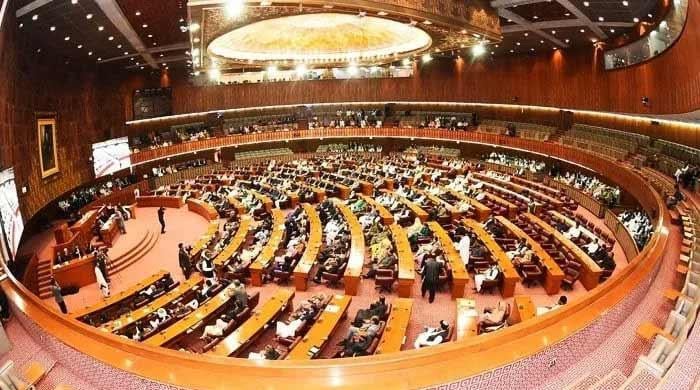
Budgeting beyond control
The budget preparation process in Pakistan is currently ‘bottom-up’, driven by the demands of various ministries
Published May 24, 2026
In recent years, the fiscal deficit has consistently exceeded budget estimates by almost 25% on average, partly due to inadequate revenue projections, weak expenditure controls and supplementary grants.
These chronic mistakes have undermined the integrity of the federal budgeting process. The technical assistance report 2024 highlights poor implementation and budget execution despite the enactment of the Public Financial Management Act in 2019. Governance and Corruption Diagnostic Assessment (GCDA) 2025 has raised serious concerns over Pakistan's public financial management system, highlighting persistent shortcomings in budget execution and fiscal transparency that erode fiscal discipline and trust in the budgetary process. While GTTN provides a comprehensive analysis of the budget execution process, offering detailed insights, it follows the GCDA report and provides possible pathways.
The budget preparation process in Pakistan is currently ‘bottom-up’, driven by the demands of various ministries rather than by strategic fiscal planning. The lack of timely fiscal projections and expenditure caps has left medium to long-term fiscal goals at a considerable distance from annual budgets.
This disconnect has made it more difficult to exercise expenditure discipline and to give discretionary reallocations within the fiscal year. Macro-fiscal functions in Pakistan lack coordination, as the Macro-Fiscal Policy Unit (MFPU) remains underdeveloped and unable to generate timely forecasts for budget preparation; it typically produces outdated forecasts in March, even though the budget preparation process starts in January.
There are vulnerabilities, and you can't always be committed to them.
One of the most important conclusions of the IMF (2024) assessment was that there are shortcomings in the commitment controls within Pakistan's Financial Accounting & Budgeting System (FABS). Many expenditure processes are still executed manually and are not well integrated.
The federal government budget structure includes 40 ministries, 104 attached departments and agencies, 21 Cabinet Secretariat budget lines and 30 miscellaneous expenditure budget lines. The cumulative budgetary deficit of federal ministries from 2015 to 2024 averaged Rs210.22 billion. Most federal ministries recorded moderate budget deviations, while a small group drove major fiscal overruns. The top five ministries – energy, defence, interior, cabinet and health – accounted for nearly 91% of cumulative overspending, which rose sharply after FY2020. Overspending on energy-sector circular debt, emergency health spending and security-related issues exacerbated fiscal imbalances and increased domestic borrowing.
The assessment also indicates that the number of subsidies paid has increased sharply in recent years. There is growing fiscal fragmentation in the structure as subsidy budget lines expanded from 13 worth Rs664 billion in 2022-23 to 37 worth Rs1,363.4 billion in 2024-25, while grants and transfers increased from 56 worth Rs1,174.5 billion in 2022-23 to 97 worth Rs1,776.7 billion in 2024-25, showing a decline in the priority of budget lines and a rising fiscal burden.
The finance ministry shows a significant rise in average budgetary underspending from Rs37.8 billion (2015-2019) to Rs402.6 billion (2020-2024), indicating considerable inconsistencies in expenditure planning and execution. Likewise, the Power Division overspent its subsidy budget by Rs166.1 billion, and the Petroleum Division by Rs82.7 billion on average over the last five years (2020-2024). Spending on subsidies spiked significantly across industries and production activities, as well as in planning and development activities.
The report also highlighted the Benazir Income Support Programme (BISP) for its fast-growing budget. The actual expenditure of BISP increased from Rs 116 billion in 2019 to Rs 722 billion in 2025, representing growth of around 522%. Under the Ministry of Poverty Alleviation and Social Safety, BISP's 2024 actual expenditure has now become the second-largest item among all federal ministries after the Ministry of Defence.
Classification inconsistencies in BISP expenditures were also noted. In 2024, BISP's estimated expenditure was classified across official budget documents into different categories, raising serious questions about transparency and making expenditure analysis challenging.
The World Bank 2023 public expenditure review revealed that current expenditures breached approved allocations, while development expenditures were squeezed to address fiscal pressures. The average execution rate of current spending was 111% for the FY2008 to FY2022 period, while the execution rate for development spending was significantly lower at 81%.
Experts cited in the assessment say that increasing taxes alone or taking short-term austerity measures is not the answer to Pakistan's fiscal problem. Rather, they urge structural reform measures to enhance the credibility of the budget process, develop more accurate macro-fiscal forecasts and tighten expenditure controls.
Strengthening the MFPU, establishing an integrated Medium-Term Fiscal Framework and improving coordination between the Finance Division and the Planning Commission need to be prioritised.
However, there are apprehensions that the government's commitments may be more performative than substantive in matters of economic governance reform. Meaningful reform will require stronger political commitment, institutional arrangements, and independent oversight mechanisms to ensure the successful implementation of fiscal governance reforms, thereby improving budget execution and accountability.
The writer is a freelance contributor.
Disclaimer: The viewpoints expressed in this piece are the writer's own and don't necessarily reflect Geo.tv's editorial policy.