Mathematicians say 'don't believe hype' on AI capabilities
AI developers face commercial incentive "to overstate capabilities of their products", reads declaration
Published June 02, 2026
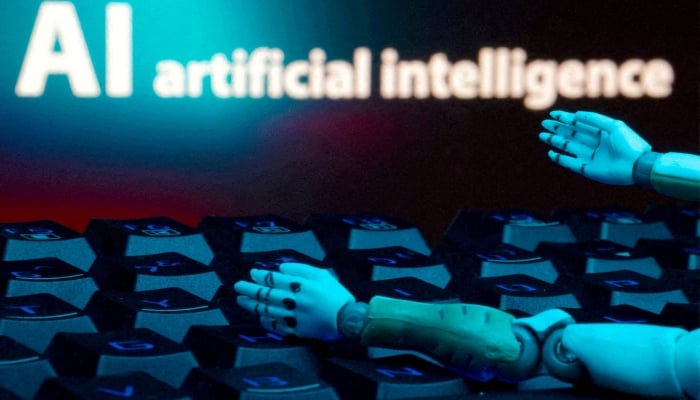
Dozens of mathematicians on Tuesday signed a declaration calling for the discipline to resist beating the drum for artificial intelligence developers.
The "Leiden Declaration", backed by over 150 professors from across the world, including Europe, Japan and the US, warned governments especially not to "believe the hype" about systems' maths abilities.
Their intervention follows claims of increasing capability from AI firms, including performance in elite international competitions and alleged solutions to thorny open questions in the field.
AI "opens new and exciting opportunities, but it also raises questions that cannot be left unexamined," International Mathematical Union (IMU) vice-president Ulrike Tillmann wrote in an endorsement.
"The future of mathematical research must be guided by human judgment, fair and transparent practices, and the shared values of the global mathematical community," she added.
AI developers face "a strong commercial incentive... to overstate the capabilities of their products," the declaration read.
Released "on market timelines" rather than at the pace of human-reviewed science, AI publicity can "misleadingly use specific mathematical tasks as metrics for the general reasoning capacities of commercial models", it added.
With hundreds of billions of dollars in investor cash up for grabs, companies are scrambling to paint AI models in a glowing light.
"There is a competition to the death on the part of the main labs... they are trying, using mathematics... to attract investment so that each of them will be left standing," Columbia University professor Michael Harris, one of the declaration's co-authors, told AFP.
In recent days, both SpaceX — the Elon Musk-owned rocket firm which includes subsidiary xAI — and Anthropic have advanced towards stock market listings, while industry standard-bearer OpenAI is believed to be close behind.
Just last week, OpenAI published to social media a video in which UCLA professor Terence Tao, a past winner of the IMU's prestigious Fields Medal, vaunted its products' potential to support research.
Tao is "a very generous person, he gives an enormous amount to mathematics, but it's not healthy... to keep turning to the same person as if that person is the voice through which mathematics speaks," Harris said.
Beyond the risk of maths being enlisted for commercial gain, the declaration authors said AI systems could produce plausible-seeming but incorrect proofs that are hard for humans to verify, or undermine attribution and credit to researchers on whose work it builds.
They fear increased use of AI in maths could incentivise bandwagon-chasing research that takes advantage of the new tools at the expense of other problems, short-circuit peer review systems and put researchers at the service of AI developers, rather than self-directed free inquiry as in universities.
AI also has potential harms in the shape of "warfare, mass surveillance, political disruption and environmental damage," the authors wrote.
They urged individual mathematicians to "evaluate the ethical consequences of your research, and if necessary, withdraw from harmful work".