Sherwood Forest's 1,000-year-old Major Oak is dead: have long, dry summers taken their toll?
England is rich with a wealth of large and ancient giants: 114 living oaks with a circumference of over nine metres
Published June 18, 2026
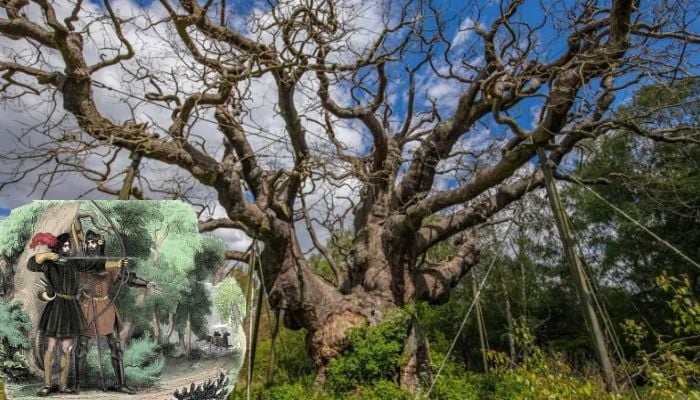
The Major Oak, the Nottinghamshire tree, located in Sherwood Forest after living for 1,000 years, did not produce any leaves this summer, met the eternal fate.
The Oak had frequent visitors each year; with its old-age, giant 11-metre girth and 28-metre canopy, it has nurtured a dense woodland of folklore.
For the unversed, England is rich with a wealth of large and ancient giants: 114 living oaks with a circumference of over nine metres, referred to as “the white rhinos of the UK.
While the rest of Europe has only 98, that includes Scotland and Wales.
The Oak was named after Maj Hayman Rooke, a local historian who wrote of the tree in 1790.
What contributed to Major Oak's death?
The Major oak, one of Europe’s oldest, largest and most buzz-worthy ancient trees, has died after suffering from the stress of long, dry summers.
The announcement made by the Royal Society for the Protection of Birds (RSPB), the primary conservation organisation that manages Sherwood Forest, said after the tree’s first spring didn’t produce any leaves this year, scientific experts presumed the Major Oak dead.
However, the charity has not detailed what led to Oak’s demise but added a number of issues contributed to the tragedy, including years of “well-intentioned structural intervention and huge amounts of human activity” all around the trunk, which were considered to be “major contributors.”
As part of the conservation efforts, the Major Oak is not going to be eroded from its place at Sherwood Forest as a habitat for wildlife and “natural monument” for visitors.
The tender young oaks from the tree have been planted in various parts of the world.
The conservation efforts were made in June 2025, using special irrigation equipment to water the tree’s roots in an effort to rescue it from rising temperatures.
The stunning longevity of Major Oak had survived fires, winds, and snowstorms and, most recently an onslaught of extreme weather that proved fatal.