The war that ended where it began
Washington now carries strategic dependency on Pakistan which was unthinkable a year ago
Published June 25, 2026
“A wise man once said, Iran never won a war but never lost a negotiation”. When Fox News’ Peter Doocy reminded Donald Trump of that 2020 line at a June 17 press conference, the president hesitated. “Who said that?” he asked. “You did,” Doocy replied.
It was a brief exchange, easily missed in real time. But in hindsight, it captures the central irony of America’s latest confrontation with Iran: a war justified in the language of strategic clarity has ended in the language of negotiation, ambiguity and unresolved objectives — with talks at the Burgenstock resort in Switzerland, where Pakistani and Qatari mediators worked to hold together an agreement already under acute strain.
Richard Haass, president emeritus of the Council on Foreign Relations, wrote that the emerging deal “constitutes a massive victory for Iran & its government. The best & perhaps only good thing to be said about the deal with Iran is that the US will cut its losses”.
From Foreign Policy magazine to Republican hawks and former members of Trump’s own administration, a growing chorus argues that Washington has reached an outcome that raises fundamental questions about the value of the conflict itself. Political scientist Paul Musgrave, writing in Foreign Policy, is among the most direct.
“His choice to launch a campaign against Iran was encouraged by others, but fully his own”, he wrote. “It has led to a reversal that marks a strategic calamity far greater than the US defeat in the Vietnam War”.
After months of escalation, Washington and Tehran are negotiating over the same core issues that existed before the war began: sanctions relief, nuclear enrichment, and verification mechanisms. The Islamabad Memorandum ends hostilities and opens the door to sanctions relief. It contemplates reconstruction assistance and establishes a 60-day window on Iran’s nuclear programme.
But there is no permanent dismantlement of enrichment capability, no comprehensive verification regime, no binding enforcement mechanism. Senate Minority Leader Chuck Schumer was blunt: “This is not the art of the deal. This is the art of the surrender. It’s not peace through strength. It’s payoffs through weakness. Iran took Trump to the cleaners”.
That verdict has produced an unusual alignment of critics from within Trump’s own coalition. Senator Bill Cassidy offered the most devastating Republican summary. “Reagan is rolling over in his grave. Iran’s nuclear ambitions were not curbed, and they have learned that threatening the Strait of Hormuz works.
Before the war, the strait was open, Iran was being crushed by sanctions, and 13 service members were still alive. Now, 13 Americans are dead, families have paid billions at the pump, sanctions will be lifted, and the bombing has stopped. This is the worst foreign policy blunder in decades”.
Former VP Mike Pence said the agreement “does smack of the kind of appeasement that our administration rejected in the Obama-Iran nuclear deal”. Former UN ambassador Nikki Haley called it a “huge mistake”, warning that unlocking billions for Tehran would fuel its nuclear ambitions and terrorist proxies. Senator Ted Cruz said the president was receiving “some really bad advice on this deal”.
Senator Lindsey Graham warned that permitting enrichment risks replicating the failures of the JCPOA. Senator Chris Murphy called it “a multi-billion-dollar payoff in exchange for nothing”. Former deputy assistant secretary of State Victoria Taylor concluded the outcome was “no better than what could have been achieved had the United States pursued diplomacy rather than war in the first place”.
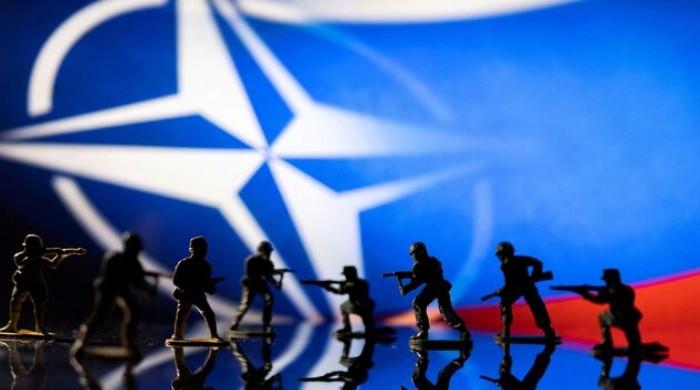
By the time negotiations became unavoidable, Trump found himself diplomatically isolated. Nato allies had distanced themselves. His attempt to link the settlement to an expanded Abraham Accords was rejected publicly by Pakistan and met with stunned silence from Gulf leaders.
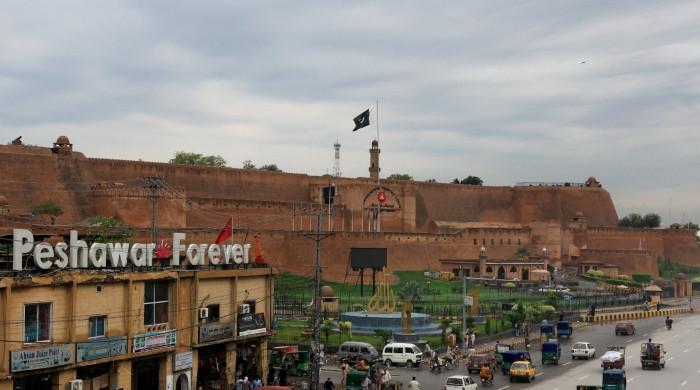
Deprived of credible partners, Washington became structurally dependent on Islamabad, a country Trump had once denied military aid and accused of harbouring terrorists.
Pakistan’s role was irreplaceable. It was the only non-Arab Muslim state Iran could trust as a genuine broker: sharing a 900-kilometre border with Tehran, hosting one of the world’s largest Shia populations outside Iran, and maintaining no US military bases on its soil.
It was also a nuclear-armed state whose military weight had been demonstrated in the 88-hour war with India in May 2025 — the most serious confrontation between two nuclear powers in decades.
When Pakistan convened its Nuclear Command Authority during that crisis, alarm in Washington was so acute that Rubio urgently called COAS-CDF Army Chief Field Marshal Asim Munir, and Vance called Modi to broker a ceasefire — an episode that established Munir as a figure Trump genuinely trusted, hence “my favourite field marshal”.
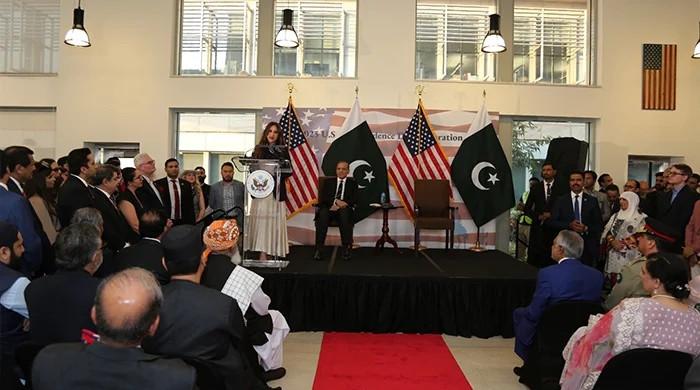
Pakistan’s civil-military leadership worked both channels — Tehran and Washington — through weeks of stalemate. Qatar joined later, helping narrow gaps on sanctions and the nuclear file, but Washington’s primary focus remained on Pakistan, which signed the Islamabad Memorandum as co-mediator.
When Trump demanded Pakistan join the Abraham Accords as a condition of settlement, Islamabad flatly refused — yet suffered no diplomatic penalty, because there was no alternative. It emerged from Burgenstock with its international standing rehabilitated, having conceded nothing.
The Switzerland talks have been anything but smooth. Iran claimed to have closed the Strait of Hormuz again in response to Israeli strikes in Lebanon, prompting Trump to threaten that the US would resume bombing and “take over” the strait — remarks that caused Iranian negotiators to briefly walk out.
“If they don’t make a deal, we’ll collect tolls”, he warned. Iran’s lead negotiator Mohammad Bagher Ghalibaf responded coolly: “They would do better to be careful about their statements”.
The pattern tells its own story: a leader threatening to bomb a country with which his own administration is simultaneously negotiating, brandishing escalation he has already demonstrated he cannot sustain. It is the behaviour, some would argue, not of a man who has won, but of one who knows he has not.
This was the consequence of a deeper miscalculation. When oil prices surged past $100 a barrel in the early weeks of conflict, Trump posted on Truth Social: “Short term oil prices, which will drop rapidly when the destruction of the Iran nuclear threat is over, is a very small price to pay for U.S.A., and World, Safety and Peace. ONLY FOOLS WOULD THINK DIFFERENTLY!”
Months later, with gas prices having peaked at nearly $4.60 a gallon nationally – up more than 50 per cent since the war began – sanctions about to be lifted and Iran’s nuclear programme unresolved, it reads as an epitaph for the entire enterprise. The administration had assumed overwhelming force would break Iranian resolve within weeks. Instead, Tehran absorbed the strikes, refused to submit and emerged with its political structure intact and its leverage enhanced. It did not capitulate. It endured and, in enduring, it negotiated.
Wars are ultimately justified by their outcomes, not their intent. A war was fought to alter the diplomatic landscape. The result is a return to that same landscape — only after escalation, 13 American lives lost and a human cost on the Iranian side that no memorandum can paper over.
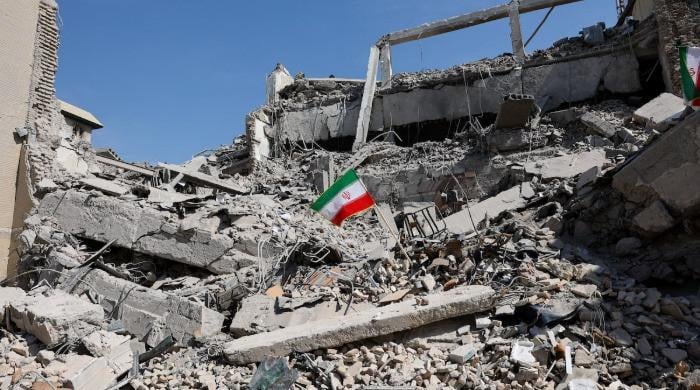
Over 1,700 Iranian civilians were killed, among them more than 250 children. The war’s opening salvo destroyed the Shajareh Tayyebeh elementary school in Minab on its first morning, killing 120 schoolchildren — condemned by Unesco and investigated by multiple independent bodies, whose findings pointed to a US missile strike.
The economic disruption has been global. And Washington now carries a strategic dependency on Pakistan that would have been unthinkable a year ago.
The Trump administration may present the MoU as a demonstration of strength. But its emerging political legacy is more damaging — and the verdict is not waiting for history to deliver it.
It is already coming from Washington. And from within Trump’s own house.
The writer is former head of Citigroup’s emerging markets investments and author of ‘The Gathering Storm’.
Disclaimer: The viewpoints expressed in this piece are the writer's own and don't necessarily reflect Geo.tv's editorial policy.
Originally published in The News