Total solar eclipse set to darken Europe first time in 30 years: key things to know
The UK skies will see the daylight fading into twilight, since 1999
Published July 11, 2026
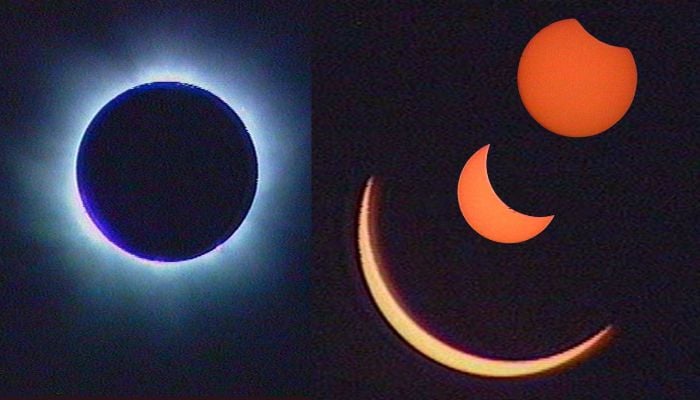
Europe is set to witness a total solar eclipse in almost three decades when day will briefly turn into dark for parts of Europe.
This celestial delight deadline is approaching fast providing a perfect chance for skywatchers to plan in advance.
The complete solar eclipse will offer a celestial delight when folks would be able to experience when the moon travels directly between the Earth and the Sun.
The phenomenon will turn people in areas of Greenland, Iceland, northern Russia, Spain, and a small corner of Portugal into darkness, according to NASA.
The total solar eclipse will occur on Wednesday, August 12, offering a rare chance in 30 years to see the moon align perfectly between Earth and the sun.
Key things to know about Europe’s first total solar eclipse
Since 1999, the UK skies will see the daylight fading into twilight on August 12, 2026.
For the unversed, it will mark the first time in 30 years when a total solar eclipse is visible across Europe, last seen across much of southwest England, in Cornwall and Devon.
This time the UK and Irish skies will lose about 90% of the sun’s light, rather than being fully blocked.
According to the Royal Museums Greenwich, in London, around 90% of the sun will be blocked at its peak, while those in Cornwall will experience an eclipse reaching about 95%.
While for skywatchers of Ireland’s southwestern coast, they will experience it with 97.75%.
Will the UK experience full solar eclipse?
The UK will see only a partial solar eclipse, but still there’s a greater possibility that it will still be darkened in the UK skies.
What time will it happen?
In the UK, the total solar eclipse will occur in the early evening on August 12.
While a partial eclipse will also be visible in some parts of Europe, Canada, and parts of northwestern Africa.