Indian youth protesters call for nationwide rallies as Modi govt imposes tough curbs
Cockroach movement protesters remain camped in Delhi over exam paper leaks affecting around two million students
Published July 23, 2026
- Digital payment disruptions affect vendors and restaurants.
- Modi promises strict action against those behind exam fraud.
- Congress leader Rahul Gandhi demands Pradhan's dismissal.
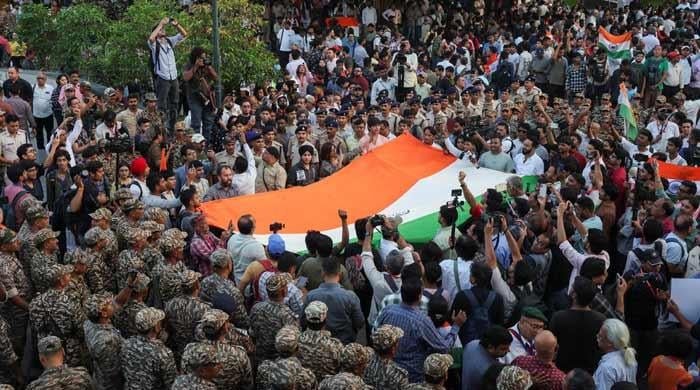
NEW DELHI: India’s youth protesters called for nationwide demonstrations on Friday even as Prime Minister Narendra Modi’s government urged them to join talks, while shutting metro stations and mobile internet services and curtailing business in central Delhi.
The youth protesters, led by the self-named Cockroach Janta Party movement, are demanding the resignation of the education minister over leaks of medical school entrance test papers that affected some 2 million students in May and have been linked to several student suicides.
The protests have swelled into the biggest youth challenge to Modi since he came to power in 2014. Opposition parties have echoed the youth movement's demands and have disrupted the monsoon session of parliament that began this week.
The Indian government has ordered telecom companies to disable mobile data services in central parts of the capital Delhi, in and around the site of youth protests seeking the resignation of the education minister, two sources told Reuters on Thursday.
The companies have complied with the order, the sources said.
Spokespersons for the government and the telecom department did not immediately respond to requests for comment from Reuters.
Top Indian telecom firms, billionaire Mukesh Ambani's Jio, Bharti Airtel and Vodafone-Idea, did not immediately respond to requests for comment.
There was no mobile data connectivity in many parts of central Delhi on Thursday evening, Reuters journalists said. Vendors, shopkeepers and restaurants complained that they were unable to accept digital payments.
Earlier today, the Cockroach Janta Party (CJP) rejected Prime Minister Narendra Modi’s government’s response to the ongoing paper leak controversy, announcing that it will continue its protest until the resignation of Education Minister Dharmendra Pradhan.
In a statement, CJP spokesperson Ashutosh Ranka said it was a positive development that the prime minister had finally taken notice after nearly one and a half months of protests. “Perhaps his foreign visits are over, and he has returned to India, which is a good thing,” Press Trust of India quoted Ranka as saying.
Reiterating the party’s stand, Ranka demanded Pradhan’s resignation and said the protests would continue until accountability was established. "We will not leave this place until Dharmendra Pradhan resigns," he said.
He questioned the effectiveness of imposing punishments after examination papers have already been leaked. “What punishment are you imposing after the paper leak has already taken place? That is not going to solve the problem of paper leaks. The real question is why paper leaks are happening in the first place. That question must be answered,” Ranka said.
Earlier in his social media post, Modi said, "Nothing is more important than the welfare and future of our youth," promising to set up fast-track courts to punish those involved in question paper leaks.
'Sack Dharmendra Pradhan'
Meanwhile, leader of the main opposition Congress party, Rahul Gandhi, also responded by quoting Modi’s post and saying that it was the prime minister who had harmed the future of our youth the most.
“You allowed and encouraged the total capture and destruction of our education system - and protected every person responsible for it,” Gandhi said and reiterated that Pradhan should be sacked, Modi should apologise to students, and those who assaulted them should be punished.
Protesters led by the "cockroach" movement have been camping in central Delhi since last month, demanding the resignation of Education Minister Dharmendra Pradhan over exam paper leaks in May that affected some 2 million students.
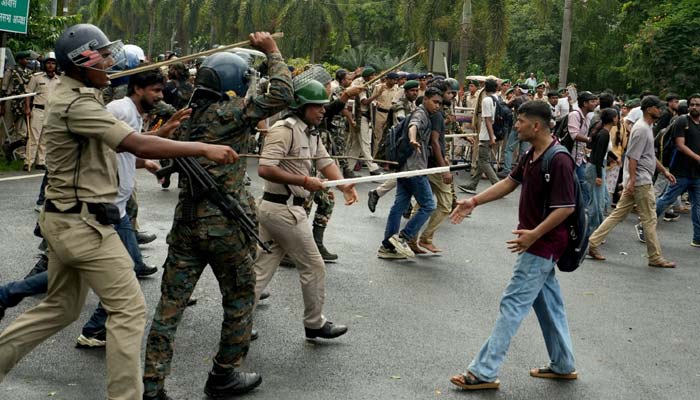
Protests snowballed on Monday after police fired tear gas and baton-charged tens of thousands of demonstrators as they tried to march to parliament on the opening day of the monsoon session.
As tensions escalated, protesters responded by hurling stones, marking the largest street rally in the capital in about five years.
At least 178 people, including security personnel, were injured in the violence, according to the police.
The CJP, which has millions of followers on social media, emerged in May initially as a satirical response to Chief Justice Surya Kant reportedly likening young people to "cockroaches" and "parasites" during a court hearing.
The movement has since broadened its agenda to include concerns over unemployment, opportunities for young people and what it describes as Modi´s increasingly authoritarian style of governance.
A series of exam irregularities have undermined trust in India's testing system, including the leak of a medical entrance question paper that forced more than two million candidates to retake the test.
Another dispute involving the online marking of examinations taken by nearly two million high school students has further fuelled public anger.