July full moon to coincide with peak meteor activity this week: Here's everything to know
Full ‘Buck Moon’ to light up skies this week as meteor showers peak
Published July 27, 2026
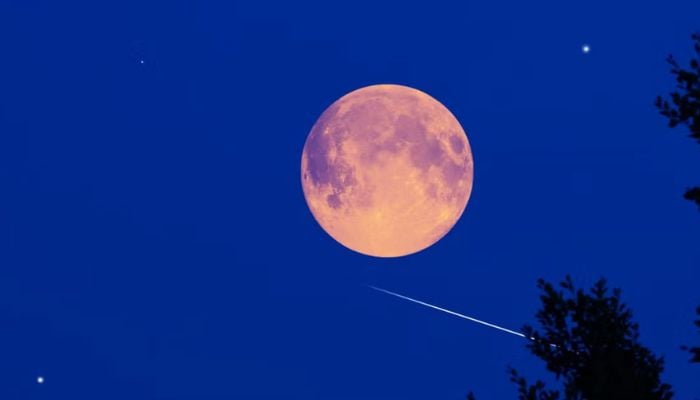
Skywatchers across the Northern Hemisphere are in for a celestial treat this week as July’s full “Buck Moon” rises alongside peak activity from multiple meteor showers.
The Buck Moon, which gets its name because this is the month when male deer start to grow new horns, will be at its fullest state at 10:37 a.m. EDT on July 29, Wednesday. Although the actual moment of fullness takes place during the day, the moon will still be seen as fully round during moonrise just after dusk.
Adding to the excitement, the astronomers reveal that the Delta Aquariid (meteor shower observed manually from mid-July to mid-August) and Alpha Capricornid (meteor shower takes place as early as 7 July and continues until around 15 August) will peak overnight from July 31 to August 1.
Together, there will be up to 30 meteors per hour, with Alpha Capricornids known for producing bright fireballs despite their lower hourly rate.
Unfortunately, the strong moonlight produced by the full Buck Moon might drown out less obvious meteors. According to experts, it is better to turn away from the moon and hide behind some objects like trees or buildings.
The Delta Aquariids, which take place between July 12 and August 23, are created because of the passage of Earth's orbit through the comet 96P/Machholz dust trail.
Moving forward, the most popular meteor shower of the year – the Perseid meteor shower – will reach its peak on August 12-13 and coincide with a total solar eclipse visible from eastern Greenland, western Iceland, and northern Spain.
Additionally, the UK and parts of North America will see a partial eclipse, with up to 90% of the sun covered.
To observe celestial activity, astronomers urge sky lovers to find dark skies away from city lights. No special equipment is needed to spot meteors, though eclipse glasses will be essential for the August 12 solar event.