The pain we almost ignore
Don’t ignore persistent or unusual changes in your body
Published August 11, 2026

Imagine a family that is, by all ordinary measures, happy. Both parents are working in their respective professions. The children are studying in schools and colleges. There are arguments at home, laughter after the dinners, fights between the two brothers, and then, as always, reconciliation a few minutes later.
The elder son just turned 18. A healthy, active young man. He plays cricket, goes to the gym regularly, studies, meets his friends, and is beginning to discover what adulthood looks like.
His mother is a paediatrician. She has spent years looking after children and worrying about the health of others. Like most mothers, however, she probably never imagined that one day she would have to sit on the other side of the doctor’s table, as a mother waiting for answers about her own child.
The son had recently returned from Umrah with his grandmother. Life was normal. Until one day, he mentioned something that initially did not sound particularly alarming. He had pain in the lower abdomen region. He was due to fly for Umrah in two days. There was no obvious emergency, and the family decided that he would see a doctor after he returned.
After all, he was young. Fit. Active. A cricket player. A regular at the gym.
And life has a strange way of convincing us that serious things happen to other people.
Not to us.
He went to Umrah and returned. His mother, being a doctor herself, arranged an appointment. Not once, but twice. But both appointments coincided with his cricket matches. The doctor visit was postponed. It seemed reasonable at the time.
There was always tomorrow.
Then the pain became a little more severe.
And this time, the son himself said, “Mama, I need to see the doctor.” That sentence changed everything. His mother decided not to take any chances. She arranged an ultrasound.
It was supposed to be a precaution. A simple investigation.
Instead, the ultrasound brought a piece of news that no parent is ever prepared to hear. There was a tumour in his lower abdomen. The world that had seemed perfectly normal only moments earlier suddenly looked completely different.
When a diagnosis leaves more questions than answers
The word tumour has a way of stopping time. For a parent, it doesn’t matter how much medical knowledge you have. It doesn’t matter if you are a doctor yourself. When the patient is your child, medical knowledge is suddenly mixed with fear. Questions begin arriving faster than answers.
What kind of tumour?
How serious is it?
Is it cancer?
Has it spread?
Can it be treated?
Will he be okay?
And perhaps the most frightening question of all:
Why him?
The family suddenly found itself navigating a world it had never expected to enter.
Who should they see first?
A urologist?
A general surgeon?
An oncologist?
Appointments were sought everywhere. Some were secured. Some were postponed. Some did not materialise. Every phone call carried hope. Every delay felt unbearable. Then came the next phase.
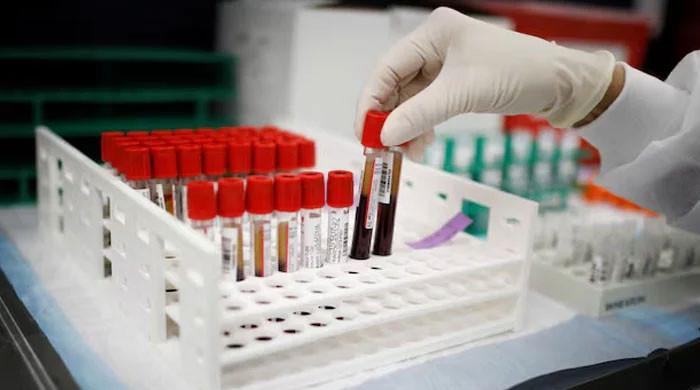
Blood tests.
Tumour markers.
More laboratory investigations.
CT scans of the abdomen, chest and pelvis.
The family was no longer living from week to week.
They were living from report to report.
Waiting for results.
Reading reports.
Asking questions.
Trying to understand medical terminology while, at the same time, trying to remain calm in front of their son. And then came the news they had been desperately hoping for.
The disease appeared to be confined to a specific lower abdomen area, thank God.
There was no evidence on the scans that it had spread elsewhere. It was an enormous relief. But it did not erase the fear. Because a tumour is not just a diagnosis.
For a family, it is a psychological earthquake.
The parents were suddenly forced to think about things they had never imagined thinking about when their son was just 18.
His health.
His future.
His treatment.
His fertility.
His career.
His cricket.
His dreams.
His life.
All because of a pain that, initially, had seemed easy to postpone.
The disease that doesn’t always announce itself
One of the most frightening things about this specific tumour is that it can occur among young men who otherwise appear completely healthy. Our son did not look sick. He was not lying in bed. He was not losing weight. He was not living with some long-standing illness.
He was playing cricket.
He was going to the gym.
He was travelling.
He was studying.
He was living the completely ordinary life of an 18-year-old. And yet, something dangerous had quietly developed inside his body.
That is perhaps the hardest lesson for a family to absorb.
We often associate serious disease with obvious warning signs.
We imagine that if something is really wrong, the body will surely tell us.
Sometimes it does.
Sometimes it doesn’t.
This particular type of tumour is relatively uncommon overall, but it is the most common among young men roughly in the 15-to-35 age group. The encouraging part is that when detected early, this tumour is highly treatable, and cure rates are excellent.
But “highly treatable” does not mean “something to ignore.”
A lump, swelling, enlargement, heaviness, discomfort, or persistent pain deserves medical assessment.
Not because every such symptom means a dreadful disease.
Most do not.
But because nobody can reliably determine the cause by simply looking or waiting.
In our case, the pain was the warning.
We almost treated it as an inconvenience.
A cricket match came first.
Then another.
The doctor’s appointment could wait.
It couldn’t.
Fortunately, eventually, the pain became difficult enough for our son to insist on seeing his mother. And that insistence may have changed the course of everything that followed. The frightening truth is that sometimes disease does not knock loudly.
Sometimes it whispers.
And if we are busy, young, healthy, confident, or simply unlucky, we may not hear it immediately.
The lesson we never wanted to learn
There are moments in life that divide everything into before and after. For this family, the ultrasound was one of them. Before the ultrasound, we were a normal family worrying about ordinary things. After the ultrasound, every ordinary thing suddenly seemed precious.
A cricket match was no longer just a cricket match.
A family dinner was no longer just dinner.
A son’s complaint was no longer something to casually dismiss.
We learned that being young does not make someone invincible.
Being fit does not make someone invincible.
Going to the gym does not make someone invincible.
Playing sports does not make someone invincible.
And being a doctor does not make a mother immune to the fear that comes when her own child becomes the patient.
We also learned something else.
Don’t ignore persistent or unusual changes in your body.
Especially when the symptoms involve something as personal as the lower abdomen.
Young men may hesitate to talk about such symptoms. They may feel embarrassed. They may assume it is related to sports, exercise, a minor injury, or simply something that will go away.
Parents may also hesitate.
“Let’s wait.”
“It is probably nothing.”
“He’s young.”
“He’s playing sports.”
“Let’s see if it gets better.”
Sometimes it does get better.
Sometimes it doesn’t.
The message is not to panic over every pain.
The message is to pay attention.
If something feels different, persists, becomes painful, or simply worries you, get it checked.
An ultrasound is a simple investigation. A medical consultation can provide clarity. And when something serious is found, early evaluation can make an enormous difference.
Our story is still being written.
We don’t know everything that lies ahead.
But we do know this:
We were blessed that the disease appeared to be confined to a specific area.
We were blessed that our son spoke up.
We were blessed that his mother insisted on investigating.
And we were blessed that, despite the delays, we eventually reached the right medical pathway.
Perhaps this story is worth sharing because somewhere, another 18-year-old boy may be having the same pain.
Perhaps he is playing cricket tomorrow.
Perhaps he has a gym session planned.
Perhaps he is embarrassed to tell his parents.
Perhaps his mother or father thinks it can wait.
Please don’t let embarrassment become a reason to delay medical attention.
Sometimes the body gives us only one small warning.
Listen to it!
The writer is Director HR at Geo News