9/11 case suffers setback as US judge rejects Khalid Sheikh Mohammed's FBI confession
The alleged mastermind is accused of orchestrating September 11 twin towers attacks that killed nearly 3,000 people
Published August 29, 2026
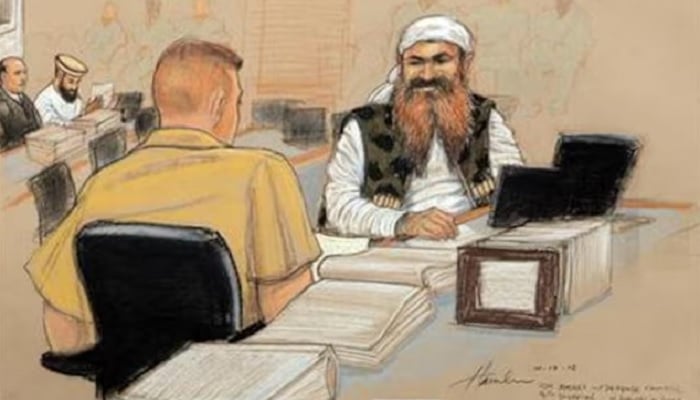
- Judge sets June 5, 2028, for Mohammed, three co-defendants to stand trial.
- Schrama rejected January 2027 start, citing unresolved pretrial issues.
- The trial will be held before a military panel at Guantanamo Bay.
A US military judge has rejected confessions made by Khalid Sheikh Mohammed, the man accused of masterminding the September 11, 2001 attacks, ruling that statements he gave to FBI agents were not voluntary and cannot be used at trial.
Judge Lt Col Michael Schrama said Mohammed's 2007 statements were tainted by the “unbroken continuation” of coercive treatment he had endured while in CIA custody, according to the ruling.
Mohammed was captured in Pakistan in 2003 and held at CIA secret prisons before being transferred to Guantanamo Bay in 2006. He was subjected to harsh interrogation techniques, including repeated waterboarding, before later questioning by FBI agents.
The ruling is a setback for prosecutors, who have described Mohammed's later interrogations as crucial evidence in the long-delayed case. A military judge had set June 5, 2028, for the trial of Mohammed and three co-defendants, but the latest ruling could lead to further delays if prosecutors appeal.
Families of September 11 victims have expressed concern that the decades-long proceedings could drag on further, with some fearing they may never see a final resolution.
Mohammed and three co-defendants are due to stand trial before a military tribunal at Guantanamo Bay, Cuba, beginning June 5, 2028, under an 11-page scheduling order issued by US Air Force Lieutenant Colonel Michael Schrama.
The trial will begin with the selection of a panel of service members who will serve as the jury. Opening statements are scheduled to begin 30 days after the panel is seated, followed by the prosecution's evidence and then the defence case. The proceedings will conclude with a sentencing phase.
Schrama rejected prosecutors' proposal to begin the trial in January 2027, saying that date would leave too little time to resolve pretrial evidentiary and compliance motions.
The case has been mired in legal disputes for nearly two decades. Mohammed and three co-defendants — Walid Muhammad Salih Mubarak bin 'Atash, Mustafa Ahmed Adam al Hawsawi and Ali Abdul Aziz Ali — are accused of conspiring to carry out the 9/11, 2001 attacks, which killed nearly 3,000 people.
Mohammed was captured in Pakistan in 2003 and held at secret CIA prisons before being transferred to Guantanamo in 2006. He has been described as the alleged mastermind of the attacks, in which hijacked passenger planes were flown into New York's World Trade Centre and the Pentagon.
The prosecution has faced repeated setbacks over evidence and the treatment of the defendants while in US custody. In 2024, Mohammed and two co-defendants agreed to plead guilty in deals that would have spared them the death penalty.
The agreement was approved by the official overseeing the Pentagon's Guantanamo war court but was revoked months later by then-Defense Secretary Lloyd Austin after criticism from Republican lawmakers.
A US appeals court last year blocked the defendants from pleading guilty under the agreements, reversing decisions by a military judge and the US Court of Military Commission Review that had supported the plea deals.
The Guantanamo detention facility was established by President George W. Bush in 2002 to hold foreign militant suspects captured after the 9/11 attacks.
The military commission proceedings have since been repeatedly delayed by legal challenges over evidence, interrogation methods and the defendants' treatment in US custody.