The women we fail
Report documents 3,172 reported cases of gender-based violence across Pakistan between January and June
Published August 29, 2026
A woman's home is supposed to be her safe space. So what does it say about us when the person she fears most is not a stranger outside her door, but someone already inside it?
Hina Javed was found dead in her Rawalpindi home, her hands tied behind her back and a wire around her neck. Her family says she had previously complained of abuse by her husband. Police have arrested her husband and a domestic worker in connection with her murder.
Hina's death is horrifying, but it is not isolated. In Taxila, 28-year-old TikToker Shamsu Bibi, known as Ayesha Gilamana, was shot dead in her car. Police allege family members conspired to kill her in the name of ‘honour’, reportedly because of objections to her social media activity. In Islamabad, 25-year-old Hina Zareef, who had reportedly been married against her will, obtained a khula and left the marriage. She was brought back from Lahore after assurances she would not be harmed, but was allegedly killed shortly after returning home.
Different women, different circumstances, but the same disturbing thread runs through their stories: a husband allegedly asserting control over his wife, a family allegedly deciding a woman’s choices had dishonoured them, and a young woman allegedly killed after exercising her legal right to leave a marriage. For too many Pakistani women, violence begins with the belief that somebody else owns their choices.
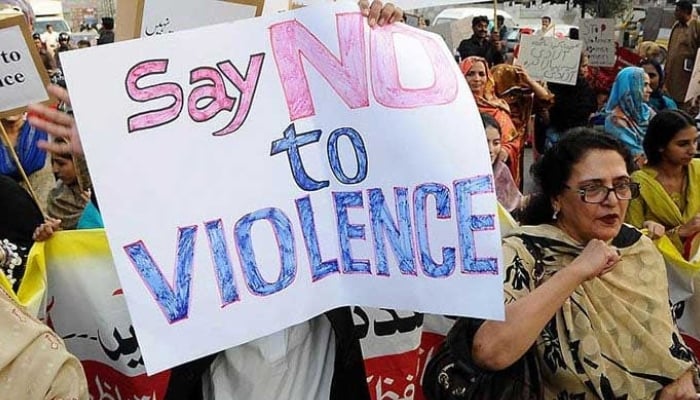
Sahil’s Six Months Cruel Numbers Report documented 3,172 reported cases of gender-based violence across Pakistan between January and June 2026, including 644 murders, 514 cases of torture, 462 abductions, 280 rapes and 132 so-called “honour” killings. More than half occurred inside victims’ own homes.
Yet the cycle is painfully familiar: a woman is murdered, there is outrage, arrests are announced, politicians condemn the crime and television debates follow. Then the country moves on.
We have seen this before. Qandeel Baloch was strangled by her brother in 2016. Her murder helped propel parliament to strengthen the law against honour killings. Yet her brother, initially sentenced to life imprisonment, was later acquitted. Her case left us with an uncomfortable lesson: passing a law and delivering justice are not the same thing.
I know that distinction from experience. I drafted the ICT Domestic Violence Act 2026 and defended its provisions through the Standing Committee process, resisting attempts to weaken or dilute the protections it sought to provide. I believe deeply in legislation. Laws establish rights, create remedies and tell society where the state stands, but I also know their limits.
Pakistan’s greatest deficit today is not legislation, but enforcement. And that failure often begins long before a woman is murdered.
The warning signs are rarely invisible. Abuse often announces itself gradually. A husband isolates his wife from her friends. He takes control of her phone, movements or money. Bruises are explained away. Threats become normal. A man refuses to accept rejection and begins harassing or stalking a woman. A family increasingly restricts a daughter because it fears what relatives or neighbours will say.
Then something happens that should activate the system. She tells somebody, seeks help or reports a threat. A relative notices. A complaint is made. That moment can be the difference between prevention and another post-mortem. Yet our institutions too often wait for violence to become catastrophic before treating it as serious.
That is where change must begin. Police officers dealing with domestic and gender-based violence must be trained to recognise risk before it becomes murder. The system must understand the dynamics of abuse well enough not to abandon a woman simply because fear, dependency or coercion affects the way she responds.
Investigation and prosecution matter just as much. A murder case should not collapse because evidence was badly collected, witnesses were mishandled or a family was pressured into silence. Justice cannot take so long that witnesses disappear, evidence deteriorates and grieving families simply give up.
Accountability must therefore extend beyond the perpetrator. When a woman repeatedly reports threats and is later killed, we should ask not only who killed her, but who failed to protect her. Was her complaint recorded? Was the threat properly assessed? And did anybody follow up? Those questions turn outrage into accountability.
But laws, police stations and courtrooms address violence after attitudes have already taken root. If we are serious about preventing the next generation of these crimes, we have to begin much earlier. Families must raise sons, not only protect daughters.
As the mother of an eight-year-old boy, I think about this often. We spend enormous energy teaching girls how to protect themselves: where not to go, when not to stay out, whom not to trust, what to wear and when to call. Perhaps we need to spend at least as much energy teaching boys something else.
We must also stop romanticising control. A husband monitoring his wife’s phone is not necessarily being protective. A family preventing a daughter from making her own choices is not automatically preserving honour. A man refusing to accept rejection is not demonstrating love. Possessiveness can become coercion, coercion can become violence, and violence can become a headline carrying another woman’s name.
Pakistan does not need another murdered woman to tell us that violence against women is a national crisis. We have laws. The challenge is to make those protections real: police must respond when women say they are afraid, prosecutors must secure justice and courts must deliver it in time.
We have spent generations teaching our daughters how to survive danger. It is time we taught our sons not to become it – and our institutions not to ignore it.
The writer is a member of the National Assembly. She holds a PhD in Law, and serves on the National Assembly’s Special Committee on Kashmir.
Disclaimer: The viewpoints expressed in this piece are the writers' own and don't necessarily reflect Geo.tv's editorial policy.
Originally published in The News