Sindh will remain Sindh
Provincial identity and provincial monopoly are not the same thing
Published September 06, 2026
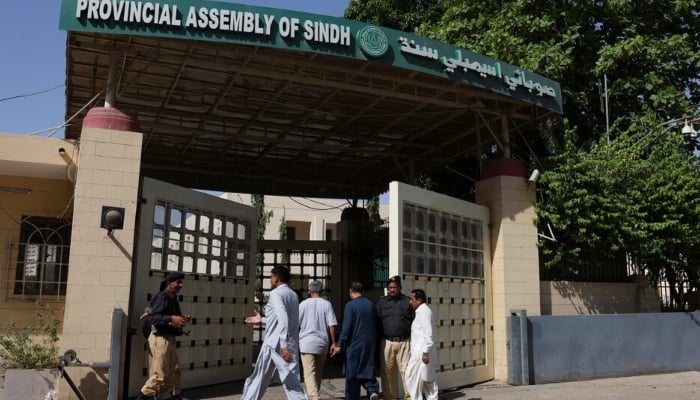
Maybe I am wrong but this is how I see it: Sindh will remain Sindh. Punjab will remain Punjab. Balochistan will remain Balochistan. Khyber Pakhtunkhwa will remain Khyber Pakhtunkhwa. Geography does not change. Culture does not change. Language does not change. History does not change.
Maybe I am wrong, but I was always taught that administrative reform is not about identity; it never was. Isn’t administrative reform about governance? Maybe I am wrong, but aren’t those two different things? Is there anybody redrawing who you are? I searched hard and deep and yet could not find anyone trying to redraw who you are. Yes, somebody is trying to redraw who answers the phone when the water doesn’t come.
Look closer. A district is not a nation. A tehsil is not a culture. When we talk about stronger local government, more administrative units, better delivery mechanisms, we are talking about school management. We are talking about hospital administration. We are talking about who shows up when the sewage line breaks.
Maybe I am wrong, but I do not see anyone talking about whether you’re Sindhi. No one is talking about whether you’re Punjabi, Seraiki, Baloch, Pashtun, Kashmiri or Hazarewal. That question was settled a long time ago, by history, by geography, by the people themselves — and no administrative order is going to unsettle it now, or ever.
The confusion — and it is a genuine confusion — comes from Pakistan’s habit of merging two separate arguments into one. Provincial identity and provincial monopoly are not the same thing. You can protect the first and dismantle the second at the very same time. In fact, you almost certainly have to.
Red alert: when reform is mistaken for erasure, reform stalls. And when reform stalls, delivery stalls with it. Which is exactly the outcome the fortresses — Punjab’s, Sindh’s, KP’s — quietly prefer.
History is witness that nobody has ever built a functioning school system by asking what language its students speak at home. You build it by asking who is accountable when it fails. Nobody has ever fixed a hospital by asking what province it’s located in. You fix it by asking who runs it, who funds it, who answers for it when a patient doesn’t get a bed.
Maybe I am wrong, but the way I see it is this: Sindh stays Sindh. Punjab stays Punjab. Balochistan stays Balochistan. Khyber Pakhtunkhwa stays Khyber Pakhtunkhwa. What changes — what must change — is who is accountable for what happens inside Sindh, Punjab, Khyber Pakhtunkhwa and Balochistan.
You see anyone attacking anyone’s identity? I searched hard and deep and couldn’t find anyone attacking anyone’s identity.
The mother of all questions that is being asked – perhaps for the first time in the past 78 years – is: who delivers? And that is the only question Pakistan 2026 should actually be asking.
The writer is a columnist based in Islamabad. He tweets/posts @saleemfarrukh and can be reached at: [email protected]
Disclaimer: The viewpoints expressed in this piece are the writer's own and don't necessarily reflect Geo.tv's editorial policy.
Originally published in The News