Can we turn money into resilience?
If Pakistan cannot immediately increase the resources available for climate action, it must become much better at prioritising them
Published September 18, 2026
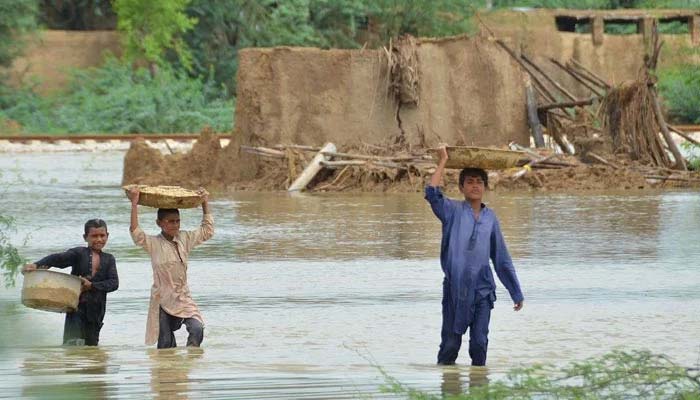
For countries on the front line of climate change, how much climate finance can be converted into resilience before the next disaster strikes has become far more consequential than simply how much money can be mobilised.
The catastrophic floods of 2022 exposed the enormous human, economic and fiscal costs of climate vulnerability, while the floods of 2025 reinforced how climate shocks have become recurring pressures on communities, livelihoods, infrastructure and public finances. The catastrophic flooding in Nepal in August 2026 has provided another sobering regional warning. A glacier collapse triggered devastating floods, killing over a thousand people and leaving thousands more missing, while damaging critical infrastructure.
The lesson for Pakistan and the wider Himalayan region is clear: mobilising climate finance is necessary, but money alone does not create resilience. The real test is whether institutions can plan, prioritise, deploy and account for those resources in ways that reduce vulnerability and deliver lasting public value.
This is where Pakistan’s climate finance debate needs to evolve. International commitments, climate funds and financing pledges understandably attract significant attention, particularly for a country facing enormous adaptation, recovery and reconstruction needs. Yet climate finance cannot remain a collection of stand-alone projects operating alongside the wider machinery of government. It must increasingly become part of mainstream public financial management, national and provincial budgets, public investment planning and medium-term fiscal frameworks.
The developments of 2026 make this institutional question even more pressing. Pakistan’s federal budget for 2026–27 has again highlighted the tension between escalating climate risks and constrained fiscal resources. Budget reporting highlighted reductions across several climate-related spending heads, even as disaster-management allocations increased.
This is not simply a question of whether the climate budget is large enough. Rather, when fiscal space is limited, are available resources being directed towards the investments that can reduce future losses most effectively?
If Pakistan cannot immediately increase the resources available for climate action, it must become much better at prioritising them. Encouraging signs suggest this transition is beginning. Climate budget tagging has increasingly been institutionalised, helping identify and monitor climate-related expenditure across government. Climate considerations are also being incorporated into public investment decision-making and project selection. But tagging expenditure is only the beginning. A project labelled ‘climate-related’ is not automatically a successful climate investment. The critical questions are whether it addresses a clearly
identified climate risk, reaches the communities and locations most exposed to that risk, is implemented effectively and generates measurable resilience outcomes.
Recent scrutiny of Pakistan’s climate allocations reinforces this distinction. The objective should not be to maximise the volume of expenditure classified as ‘climate finance’ simply to demonstrate progress. It should be to improve decision-making. Climate-sensitive public finance should help policymakers determine whether investments reach vulnerable regions, whether scarce resources are directed towards prevention rather than repeated reconstruction, and whether public investments are actually reducing future losses.
In this sense, the most valuable climate finance system is not necessarily the one that produces the largest numbers. It is the one that produces better choices. Climate disasters can also be understood as fiscal shocks, as they generate substantial demands for emergency relief, reconstruction and social protection. Repeated disasters can therefore compound existing fiscal pressures and reduce the resources available for education, health, infrastructure and other development priorities.
Pakistan consequently needs to manage climate finance within a broader framework for climate-related fiscal risk. This means moving beyond post-disaster financing to a more comprehensive approach that combines risk assessment, resilient public investment, contingency financing, insurance and other risk-transfer mechanisms, alongside social protection systems that can respond rapidly when households are affected.
The 2026 Himalayan disaster demonstrates why this matters. The destruction caused by the Nepal floods extended beyond communities and households to roads, bridges and hydropower infrastructure. The scale of the event shows how climate and disaster risks can cascade through infrastructure networks and economic systems.
For Pakistan, which shares the wider Himalayan-Hindu Kush risk environment and depends heavily on climate-sensitive agriculture, water systems and infrastructure, resilience must therefore be embedded in investment decisions before assets are built, not retrofitted after disasters occur. Institutional capacity and fiduciary governance are central to this transition. Pakistan must strike the right balance between control and delivery.
Weak fiduciary safeguards can undermine public trust, create opportunities for inefficiency and waste scarce resources. At the same time, overly rigid procedures can delay assistance and investment precisely when speed matters most.
The answer is not fewer controls, but smarter controls: proportionate, risk-based systems that protect public resources while allowing timely action during emergencies. Strong financial management should not be viewed as an administrative burden on climate finance. It is what makes climate finance credible. Ultimately, the credibility of climate finance will depend on whether stakeholders can follow both the money and the results. Resources should be traceable from their original source through budget allocation, procurement and implementation to the communities and outcomes they are intended to support.
Reporting that a certain amount was spent on flood-resilient infrastructure is not enough. Policymakers, development partners and citizens should be able to ask: What was built? Where was it built? Who benefited? Was it delivered on time and at reasonable cost? And, most importantly, did it actually reduce vulnerability?
Answering these questions requires a closer integration of financial reporting with results reporting, supported by evidence-based data, local monitoring, independent oversight and meaningful community feedback. It also requires stronger coordination across finance, planning, climate, disaster management and line ministries so that climate risk becomes part of routine investment decisions rather than something addressed only after a disaster.
Pakistan’s climate finance readiness should therefore be judged against four fundamental questions: Can institutions manage climate resources responsibly? Can climate finance be integrated into mainstream budgeting and fiscal planning? Can expenditure be tracked effectively through implementation? And can governments show measurable public value and reduced vulnerability for those most exposed to climate shocks?
The developments of 2026 make these questions impossible to postpone. Pakistan’s constrained fiscal space, evolving climate-budget architecture, and growing exposure to extreme events all point to the same conclusion: the country cannot afford to treat climate finance as an exercise in mobilisation and expenditure. It must become an exercise in risk-informed public investment and measurable resilience.
The future of climate finance should not be judged by the billions announced at international conferences, the number of projects approved or the amount classified as climate expenditure. Its ultimate measure is the resilience created on the ground: infrastructure that remains functional during extreme events, communities protected before disasters occur, social protection that reaches vulnerable households quickly and public finances capable of absorbing shocks without sacrificing long-term development.
Climate finance readiness ultimately asks whether Pakistan’s institutions are ready to turn the money the country can attract into resilience, accountability and lasting public value before the next disaster arrives.
The writer works on climate finance, carbon markets and sustainable development across disaster risk reduction and climate change.
Disclaimer: The viewpoints expressed in this piece are the writer's own and don't necessarily reflect Geo.tv's editorial policy.
Originally published in The News