Pakistan's power paradox
Polarisation steadily eroding Pakistan’s potential to prosper at home and exercise influence on global stage
Published September 26, 2026

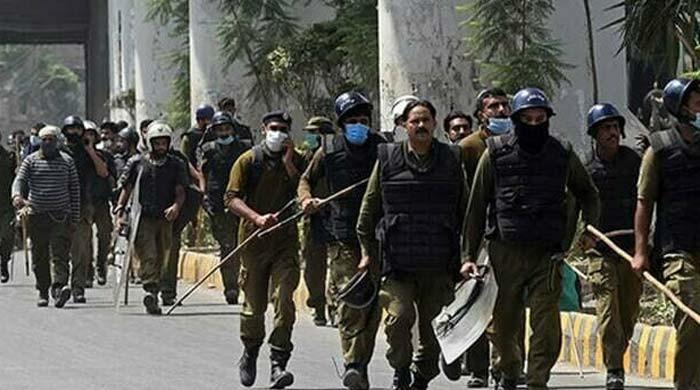
Where does one begin the story of Pakistan’s politics of perpetual confrontation? With the containers gathering around Islamabad, the preventive arrests ahead of the PTI’s September 27 march, or the continuing struggle over Imran Khan’s medical care, meetings with his family or the perpetual government-PTI verbal brawls over political legitimacy, judicial propriety and fair play? Or must one begin before Pakistan’s birth with the circumstances of its creation and the asymmetrical institutional and political power and anxieties and shortcomings of a political culture that evolved in an embattled environment?
The immediate confrontation is only the latest manifestation of a deeper, enduring asymmetry: between constitutional office and actual power; between authority claimed and legitimacy earned; and between institutions expected to remain within constitutional boundaries and those capable of crossing them with little cost or consequence. The players repeatedly change places, but the machinery of exclusion and coercion survives. This asymmetry has also been reinforced by the weak performance, excesses, omissions and shifting power alliances of the elected political class.
The state has an obligation to protect citizens, roads and public property. The PTI has an equal responsibility to ensure that its mobilisation remains peaceful. But neither obligation cancels the other. Rights do not extinguish accountability, and accountability does not extinguish rights. Pakistan’s recurring mistake has been to replace this essential constitutional balance with raw power. Yet power, power and more power cannot constitute a political system.
Three critical factors must therefore frame any serious discussion of power and politics in Pakistan. First, Pakistan must be understood through its own history. Any meaningful examination of Pakistan’s power structure must remain rooted in the historical circumstances of the Pakistan Movement, the creation of the state and the political developments that followed independence. Theoretical frameworks and international comparisons may help understand and interpret Pakistan’s experience, but they cannot substitute for its own historical realities. Detached from Pakistan’s own historical and current context, drawing accurate conclusions on the levers of power and indeed of disempowerment may be difficult.
This is not a call for cultural exceptionalism, nor an attempt to hide behind cultural explanations to justify dysfunctional power or the absence of legitimacy. It is, instead, a plea for greater factual and historical specificity — essential if Pakistan is to move wisely, truthfully and purposefully beyond its deepening polarisation. This polarisation is steadily eroding Pakistan’s extraordinary potential to prosper at home and, consequently, to exercise its rightful influence on the regional and global stage.
Failing this, our debates aimed at breaking out of the abiding confrontation within will remain obscured in a quagmire of confusion. The pervasive climate of conspiracy, manipulation, insecurity and anger across much of Pakistan’s political, institutional and societal landscape consumes the very energy that should be directed towards holistic progress and great achievement at home and abroad.
Pakistan was born amid enormous political, administrative and security pressures. The Muslim League had acquired its mass character principally during the final decade before independence. At Independence, the new state’s representative institutions were relatively fragile, while the inherited civil bureaucracy and military possessed hierarchy, discipline, organisational continuity and control over the instruments of the state.
Pakistan therefore began with a profound institutional asymmetry: political institutions struggling to establish themselves while the civil-military bureaucracy already possessed organisational coherence and administrative power. The subsequent concentration of authority within that structure was not a sudden development. It evolved through Pakistan’s early political crises, constitutional disruptions, judicial accommodations and the willingness of civilian politicians-at different times-to seek unelected support against their political opponents.
This historical context does not predetermine Pakistan’s future, nor does it absolve political leaders of their major continuing failures too. But without understanding it, we cannot explain why constitutional offices have so frequently existed without exercising the full authority formally assigned to them.
Second, power must be distinguished from legitimate authority. Power becomes authority only when those over whom it is exercised recognise it as rightful. That legitimacy rests partly upon performance, but equally upon whether it is exercised within an agreed constitutional framework. For Pakistan, that framework is the 1973 constitution, negotiated and endorsed by the country’s major political stakeholders. But a constitution becomes meaningful only when the judiciary enforces its boundaries impartially; institutions exercise restraint; political parties uphold its principles even when politically inconvenient; and citizens refuse to accept violations merely because those violations temporarily benefit their preferred side. When that does not happen, the constitutional arrangement begins to collapse.
Raw power then determines who governs, who is excluded, who may speak and whose rights can be suspended. Legitimacy falls by the wayside and becomes little more than an academic notion. Courts, citizens and political representatives must therefore act as the constitution’s collective guarantors. A constitution defended only when it protects one’s own political interests is not functioning as a constitution; it has been reduced to a tactical instrument.
Third, Pakistan’s domestic and external performance must be assessed through distinct but connected lenses. One of the perennial paradoxes of Pakistan’s history has been the divergence between its troubled domestic politics and its frequently impressive performance in foreign, diplomatic and security affairs. Even when the domestic political order has been deeply contested, Pakistan has often exercised considerable international influence.
The foundations were laid by Quaid-e-Azam Mohammad Ali Jinnah: engagement with the Muslim world, defence of oppressed peoples, support for justice and sovereign equality, and a determination that Pakistan should possess an independent international voice.
Zulfikar Ali Bhutto subsequently gave Pakistan exceptional diplomatic visibility, strengthened its engagement with the Muslim world and laid the foundations of its strategic nuclear programme. Successive governments operated through regional wars and international upheavals while protecting Pakistan’s core security interests. Nawaz Sharif’s governments pursued engagement with India, strengthened relations across the Muslim world and placed economic connectivity more firmly within Pakistan’s external outlook. PPP governments similarly contributed to Pakistan’s diplomatic reach and international engagement.
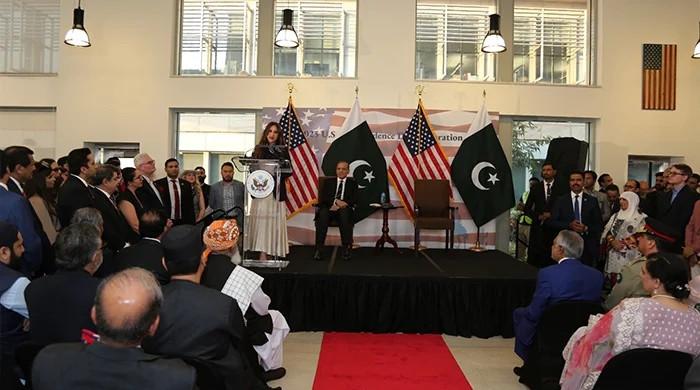
The present governing arrangement has demonstrated exceptional effectiveness in managing Pakistan’s foreign relations, security interests and international positioning, despite the grave political complications at home. That performance must be recognised and analysed on its own merits.
Yet, foreign policy and security cannot ultimately be insulated from political instability, constitutional disorder and deepening alienation among citizens. A state may perform impressively abroad for a period while remaining unsettled at home; but enduring international strength requires internal political stability.
This is Pakistan’s central paradox: a state repeatedly capable of strategic achievement abroad, yet unable to establish an uncontested constitutional balance at home. Resolving it requires more than changing governments or replacing one political beneficiary with another. It requires agreement among principal stakeholders on a constitutional framework for exercising authority. It must be rational and inclusive. Moving beyond the stranglehold of past blunders, personalised animosities and resentments, and often zero-sum games, constitutional rules and discipline must prevail. Grandstanding, vacuous populism and self-serving authoritarianism will always sabotage Pakistan’s collective progress.
Unless competent visionary statecraft is instituted through consensus, performance and commitment to rule of law, Pakistan will continue to be bogged down.
The writer is a foreign policy & international security expert. She tweets/posts @nasimzehra and can be reached at: [email protected]
Disclaimer: The viewpoints expressed in this piece are the writer's own and don't necessarily reflect Geo.tv's editorial policy.
Originally published in The News