Social media for the kids
At the end of the day, one has to wonder when a Pakistani government will care for legitimate public opinion, and not just the optics of it by manipulating social media
Published October 08, 2026
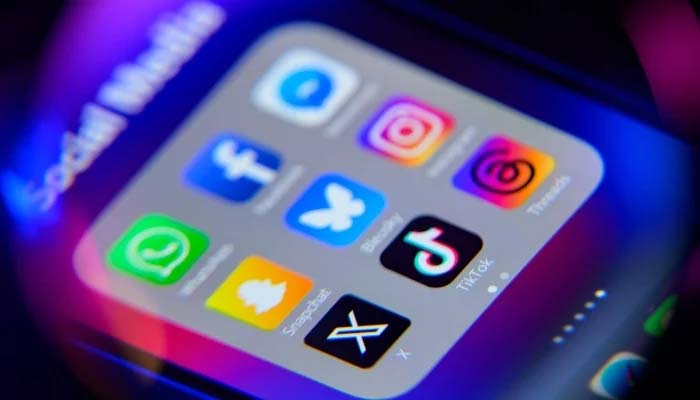
Pakistan has one of the youngest populations in the world, with over 64% of the population under the age of 30, all of whom are empowered by the constitution to freedom of speech and freedom of information, as per articles 19 and 19A, respectively. This makes talks of a social media ban for those under 16 concerning.
Social media can have deleterious effects on all individuals; it has been exceedingly used to argue that social media is especially harmful to adolescents. Nevertheless, it remains clear that such a ban would not be for the purposes of protecting the children in question, but to suppress public opinion, which matters exceedingly less to our government by the day. This is made clear by Pakistan – which continues to strongarm its control over free internet usage – only scoring 27 out of 100 on the Freedom On The Net Report.
There are countless examples of social media mobilisation being effective tools to hold the state liable. In the recent Ali Jafri case, it is reasonable to say that the police would not have mobilised to action, or at least as quickly as it did, if a tempest demanding justice for the victim had not struck the social media landscape. A storm that brewed overnight, driven by the youth, many under the legal age. It has also been shown that the social media response gave the victim the confidence to come out and pursue justice.
Examples of this kind can be found worldwide, detailing the role social media has had in driving a democratic response, including the augmentation of mass organisations against tyrannical states that refused to engage with their populace democratically. Some of the most prolific results have been observed within South Asia. Social media has played a significant role in transforming the governments of Sri Lanka, Bangladesh and Nepal. These examples are not to imply social media threatens a similar change of winds in Pakistan but are provided merely to demarcate the power the box in our pockets is capable of wielding.
Social media allows diverse political participation across the population, at all socio-economic levels; this is important for a country where poverty stands at 28.9%. Social media may facilitate the highest form of democratic expression in a world that continues to experience democratic backsliding, according to the Freedom in the World 2026 report.
Studies prove this fact; a study dating as far back as 2012 – a time when social media accessibility was a lot more limited for those belonging to lower socio-economic classes – shows that social media was crucial in shaping the 2011 protests in Egypt by Youth; another study details the role social media played in the even earlier political uprising in Tunisia starting in 2010.
Most crucially, no literature can conclusively establish a unique harm to adolescents. A metadata analysis of mental health harm caused by social media found that there was no “heterogeneity of these summary correlations by age”, whereas another study found higher effect sizes of psychological distress in older samples. On the other hand, an often-underdiscussed point regarding the benefits of social media cannot be ignored. A study has also shown that younger people are more likely to benefit from social media.
In addition, when it comes to internet fraud, scams and phishing emails, people of all ages are more or less similarly affected. However, the fraud and/or scams employed for different ages are of different characters, and older adults are more likely to face much more severe financial harms.
All this leads to the conclusion that social media is not a unique harm for adolescents but has the potential to be harmful to people of all ages, similarly. At the same time, the government does not exactly inspire confidence when it comes to impeding social media use over political motives.
After all, who can forget the great X-ban (Twitter-ban) saga immediately following the 2024 national elections, one which the government refused to even acknowledge at first. The interior ministry refused to comply with the Sindh High Court’s direction to justify the ban or rescind it. Such a ban only serves to increase disinformation.
Magically, the ban disappeared when the convenience of favourable public opinion arose amid military skirmishes with India, showing that the state understands the democratic power of social media quite well, at least when it’s in its favour.
Similar to the time of the national elections, political discourse is at its peak. The new provinces, which may alter Pakistani politics forever, seem to be on the horizon. Thus, the timing for discussing a ban on social media for those under 16 is greatly concerning. Such a ban has the potential to limit access to news for the future generation, and perhaps also to take away the only political voice they wield.
At the same time, the ban has a wider consequence of disabling the development of political thinking capacity for the voters of tomorrow. This is not to take away the responsibility social media providers have towards children; they must be held accountable for making a safer platform. The trade-off, however, cannot be a blanket ban which silences the voice of a major demographic.
At the end of the day, one has to wonder when a Pakistani government will care for legitimate public opinion, and not just the optics of it by manipulating social media. The emperor remained unclothed, even when both the emperor and the public acted as if he was wearing the finest clothes; until a child pointed out he was wearing nothing at all.
The writer is a freelance contributor.
Disclaimer: The viewpoints expressed in this piece are the writer's own and don't necessarily reflect Geo.tv's editorial policy.
Originally published in The News