Riyadh reports fresh drone interceptions as Cairo considers steps to defend kingdom
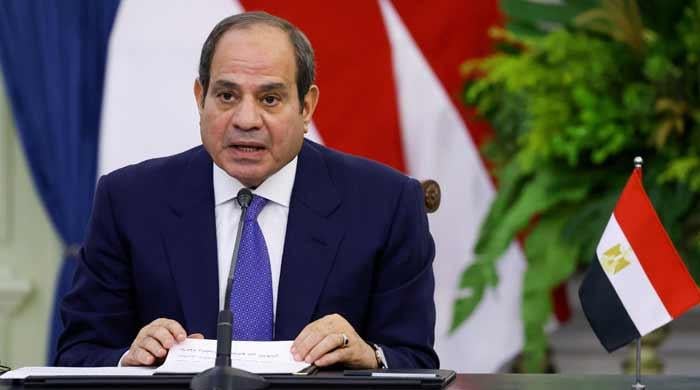
Egypt's al-Sisi says Cairo seeks no fight but cannot remain a spectator, stressing its position is purely defensive
Published October 18, 2026
- Yemen rejects Iran's mediation offer, accusing Tehran of being a party to war.
- Houthis claim Saudi strikes caused casualties across 7 Yemeni areas.
- Riyadh extends remote learning amid continued attacks.
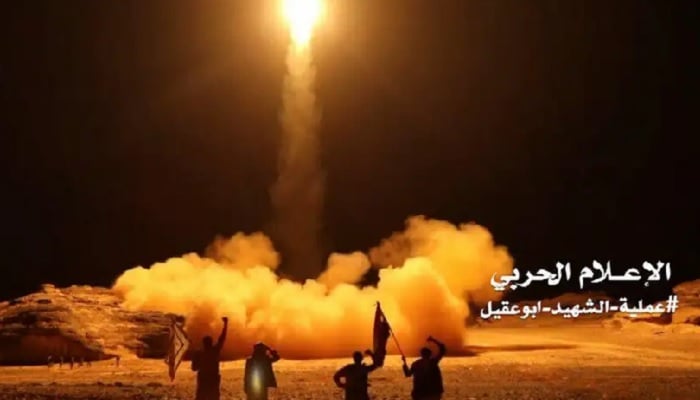
Saudi Arabia said on Saturday that it had intercepted a fresh wave of drones, as its ally Egypt weighed helping the kingdom defend against repeated attacks by Yemen's Houthis.
Riyadh leads a military coalition supporting Yemen's internationally recognised government in its war against the Houthis. A military spokesman for the Iran-backed group said on Saturday that dozens of Saudi strikes over the past day had killed and wounded "numerous" people.
Since Yemen's conflict flared up again in July after a years-long hiatus, Saudi Arabia has faced sustained Houthi missile and drone attacks targeting its oil installations, tankers and transit hubs, including an attack on Riyadh's airport last week that killed 13 people.
A spokesman for the Saudi-led coalition said on Saturday that it had "intercepted and destroyed four drones over the past few hours in the regions of Riyadh, the Eastern Province, and the South".
The interceptions came as Egyptian President Abdel Fattah al-Sisi said he was willing to "carry out any measure to protect" Saudi Arabia if its leaders requested it.
Sisi said Egypt was not seeking to intervene in regional wars but added that it was "inconceivable" for Cairo to stand by while the kingdom was "harmed or its security and stability threatened".
"I'm not talking about fighting anyone or attacking anyone," he said. "We are speaking only about defence."
Although Egypt is a member of the anti-Houthi coalition, its role has largely focused on Red Sea maritime security rather than the fighting in Yemen.
Egypt and Saudi Arabia have historically close relations and strategic economic ties.
Egypt's parliament will hold an emergency session on Sunday at Sisi's request.
The repeated Houthi strikes have prompted foreign embassies to warn their citizens against using Saudi airports or travelling to the kingdom altogether.
Saudi Arabia's Education Ministry on Saturday announced an extension of remote learning measures for students in Riyadh and nearby Diriyah.
'Political process'
Saudi Arabia has accused Iran of encouraging the Houthis' recent escalation, a charge Tehran denies.
Iranian Foreign Minister Abbas Araghchi said on Saturday that Tehran supported a "comprehensive political process as the only practical and sustainable way to resolve" the conflict on the Arabian Peninsula.
He also reiterated Iran's offer to mediate between the two sides.
Deputy Foreign Minister Saeed Khatibzadeh previously said Riyadh had not responded to Iran's offer.
However, Yemeni Foreign Minister Afrah al-Zouba rejected the proposal in a statement on X on Saturday, saying "the Tehran regime is a party to the war against Yemenis, not a mediator".
The Houthis are part of Iran's "Axis of Resistance" against Israel and the United States, but both the group and Tehran insist that the Houthis act independently.
Saudi Arabia has carried out daily airstrikes against the Houthis in Yemen, where government forces are seeking to reverse gains made by the group in a lightning offensive in September.
On Saturday, Houthi military spokesman Yahya Saree said Riyadh had carried out 53 strikes in the capital, Sanaa, and six other provinces over the past 24 hours, causing "numerous dead and wounded".
A Houthi-affiliated news agency had earlier accused Saudi warplanes of targeting "civilian residences" in Dhamar and Taiz provinces, killing 12 people and wounding more than 30.
It alleged that the strikes had been carried out "using cluster bombs, which are banned internationally".