Hitler's Eagle's Nest retreat destroyed by fire after surviving in World War II, arson suspected
The police arrested a 33-year-old German man riding a motorcycle away from the site
Published October 24, 2026
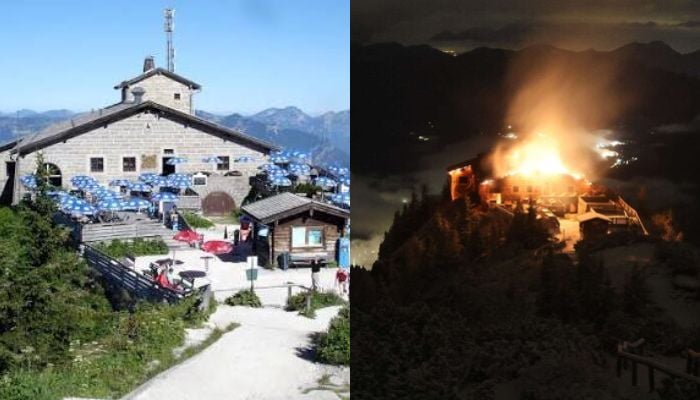
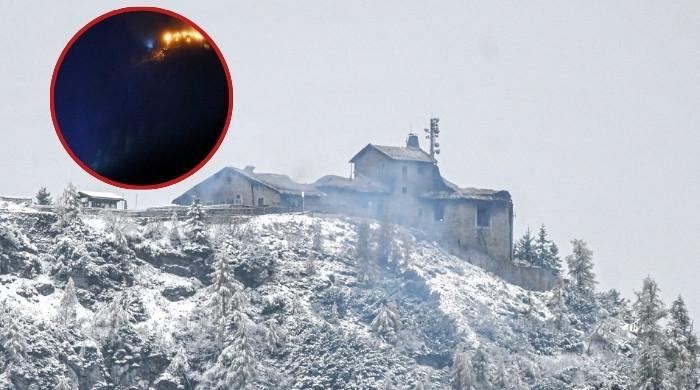
Nazi Germany’s dictator Adolf Hitler’s historic mountain retreat in southern Germany has been destroyed due to a massive fire in a suspected arson attack. The police have arrested one suspect.
The fire broke out at Eagle’s Nest, also known as Kehlsteinhaus, on Friday night and much of the building was destroyed by it. It is pertinent to note that the incident comes nearly 81 years after the historic retreat in the Bavarian Alps survived World War II without any significant damage.
Around 200 firefighters were deployed to contain the blaze; however, the emergency crew struggled to reach the building as it is located around 1,834 metres above sea level. The strong winds, rain and snowfall further complicated the operation.
According to AP, the police arrested a 33-year-old German man riding a motorcycle away from the site.
Prosecutors said the suspect had connections to the area and was being transferred to a psychiatric facility after questioning.
Investigators are examining whether the fire was deliberately started and whether there was a political motive behind the incident.
No injuries were reported.
Built between 1937 and 1938, the Eagle's Nest was designed to receive foreign dignitaries during Hitler's rule.
Despite its association with the Nazi leader, he rarely visited the mountaintop building, preferring his nearby Berghof residence.
The site survived Allied bombing during World War II and later became a popular tourist attraction, operating as a restaurant since 1952.
The fire has left the future of the historic structure uncertain.
However, Bavaria's Interior Minister Joachim Herrmann has pledged to restore the building, emphasising its importance in preserving the memory of Germany's Nazi past.
Authorities have yet to determine the full extent of the damage or establish the suspect's motive.