What Wall Street's U-turn on bitcoin means
Independent indices, including Chainalysis, rank Pakistan among top three countries for crypto adoption
Published October 27, 2026
In September 2017, the chief executive of America’s largest bank stood up at an investor conference and called bitcoin a fraud. Jamie Dimon said it would blow up. He said he would fire any JPMorgan trader caught trading it because it was against the bank’s rules and stupid.
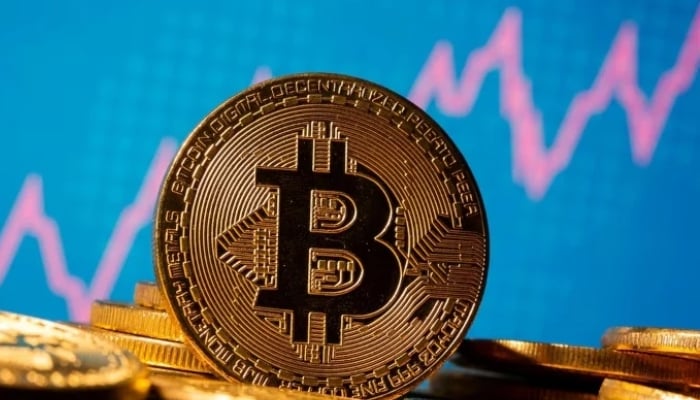
On October 19 this year, JP Morgan Asset Management, the investment arm of a bank worth around $900 billion that manages about $5.2 trillion, published its 2027 Long-Term Capital Market Assumptions. Large investors use it to plan a decade or more ahead. For the first time in its 31 editions, it put Bitcoin in those long-term forecasts. Base case: about 10% a year over the next 10-15 years, ahead of its forecasts for US stocks, gold and bonds. Bear case: a loss of 9.7% a year. Bull case: 17%.
Nine years, from fraud to forecast. The easy reading is the wrong one. JPMorgan did not tell anyone to buy bitcoin. Its own analysts still call it speculative. They put its expected volatility at around 55%, roughly three times that of US large company shares. They kept it out of their main portfolio models because its correlations with other assets are unstable. A forecast is not a recommendation, and a range that runs from minus 9.7 to plus 17 is an honest admission of uncertainty.
So the news is not the number. The news is that America’s largest bank now treats bitcoin as something that must be modelled, not mocked.
I have watched this change from the inside. I have been in digital assets since 2016. I was told crypto was a scam, and that being early made me a failure. The people who said that weren’t foolish. In 2016 there was no regulated custody worth the name, no clear law and plenty of fraud. Their scepticism was reasonable for the world as it was.
What changed is not bitcoin. The code is much the same. What changed is everything built around it. First, regulation. Rules arrived for who may hold client assets, how they must be segregated, and who is accountable when things go wrong.
Second, custody. Banks and specialist custodians now hold digital assets under supervision. Third, exchange-traded funds. Since US regulators approved spot bitcoin ETFs in January 2024, pension funds and wealth managers can hold exposure through the same accounts they use for shares. Those funds now hold over $100 billion. Fourth, and least noticed, the plumbing of credit.
That last one matters most. In October 2025, Bloomberg reported that JPMorgan planned to let institutional clients pledge bitcoin and ether (ETH) as collateral for loans, with a third party holding the coins. This month, Jeonbuk Bank became the first South Korean bank to lend against bitcoin to companies, in won. It does not hold the coins itself. A registered custodian does, and if a borrower defaults, the court sells the bitcoin under enforcement rules that took effect on October 1. In Switzerland, Sygnum Bank says bitcoin now makes up more than 80% of the collateral pledged for its Lombard loans, up from 63% in 2023.
Collateral is a boring word. That is the point. When a bank accepts an asset as collateral, it decides it can value it, hold it and sell it under the law on a bad day. It is how an asset moves from the trading screen onto a balance sheet.
None of this makes bitcoin safe. Prices still fall hard. Leverage against a volatile asset can wipe people out. But the question has moved on. It is no longer whether serious institutions will touch this asset. It is on what terms and under whose rules.
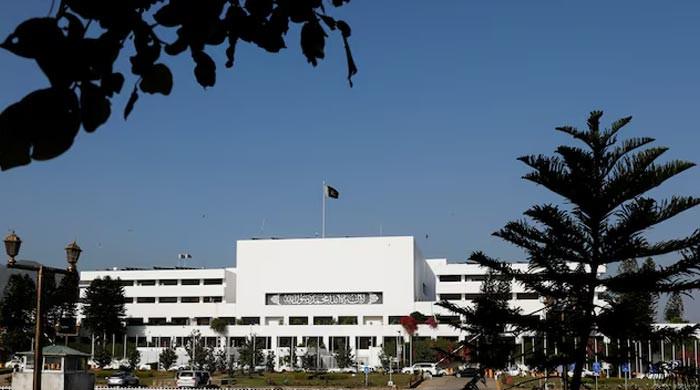
That is where Pakistan comes in. Independent indices, including Chainalysis, rank Pakistan among the top three countries for crypto adoption. Most of this activity has happened on offshore platforms, outside Pakistani law, with no local recourse when an account is frozen or a platform disappears. A young man in Faisalabad trading on his phone has had less protection than a pensioner buying a mutual fund in New York.
Then there are remittances. Pakistanis abroad sent home a record $41.6 billion in FY26. Some of the next generation of payment rails will run on digital assets. If those rails arrive without Pakistani rules, our families will use them anyway, on someone else’s terms.
This is why we built PVARA the way we did. Under the Virtual Assets Act 2026, no one may offer virtual asset services in or from Pakistan without a licence. Firms must incorporate here, pass fit-and-proper tests, hold capital, run proper anti-money laundering controls and keep client assets safe. The licensing regulations, with ten categories from exchanges to custody to lending, were notified in August. That is the framework. The harder work, licensing well and enforcing consistently, is under way.
And this is only the first shift. AI will move bigger and faster. Digital assets change how value moves. AI will change how value is created, how governments work, and how economies compete. I have spent a decade in digital assets. I was early when it was unfashionable, and wrong about plenty along the way. What those years taught me is simple. The hard part is never seeing the technology. It is seeing what it will do to institutions before the institutions notice.
That is the test now — and it is a bigger one. I sit in an unusual place: in government, in public policy, and still, at heart, a technologist. As a humble student of technology, I can see where Pakistan could move faster than far richer countries.
We have less legacy to unwind. Fewer old systems to protect. A young population that already lives on its phones.
That is not a guarantee. It is a window. JPMorgan took nine years to change its mind about bitcoin. Pakistan cannot afford to take nine years to decide on AI. The countries that prepare early write the rules. The rest live by them. This time, I want Pakistan to be among those writing them.
The writer is a minister of state and chairman of the Pakistan Virtual Assets Regulatory Authority (PVARA).
Disclaimer: The viewpoints expressed in this piece are the writer's own and don't necessarily reflect Geo.tv's editorial policy.
Originally published in The News