Five 300-year-old trees survive months without soil: Inside South Africa's extraordinary rescue mission
Conservationists launch costly operation to save giant baobabs after authorities thwart attempt to export them to Georgia
Published November 19, 2026
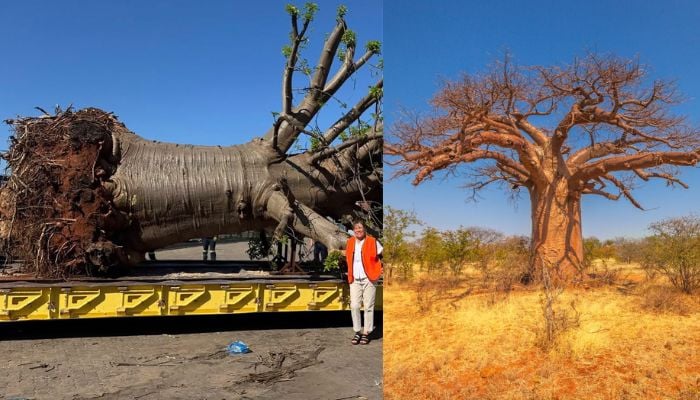
Having survived for centuries in the African wilderness, five enormous baobab trees are now fighting for survival after being uprooted for an overseas buyer.
Conservationists in South Africa are racing against time to replant the trees, estimated to be between 200 to 300 years old, following an alleged attempt to illegally export them to Georgia.
The shipment was intercepted by South African authorities on July 17, after it was discovered that the exporter did not have the proper permits.
The trees were then left to lie in a shipping warehouse parking lot in Durban for four months.
It is interesting to note that, even though the roots were cut, the trees started producing blossoms as conservationists were readying them for their new home.
The rescue operation, headed by ecologist Sarah Venter, saw the trees being moved over 900 kilometres to the Timbavati Nature Reserve.
Each tree is between 19 and 29 tonnes, so the transport costs are expected to exceed one million South African rand. Once replanted, the trees will be supported by cables and surrounded by electric fences to protect them from elephants.
African baobabs are commonly referred to as the "tree of life", and are known for their long life of over 1,000 years. They have large trunks that give shelter to many animals and their fruits nourish elephants, monkeys and other animals.
Meanwhile, criminal proceedings have been opened against the man in charge of the landscaping company who allegedly uprooted the protected trees.
The case will be heard again on January 15, 2027.