What is the Reimann hypothesis? Inside 167-year-old problem AI may have cracked
Anthropic mathematician claims AI-assisted proof a Reimann hypothesis, but verification pending
Published November 20, 2026
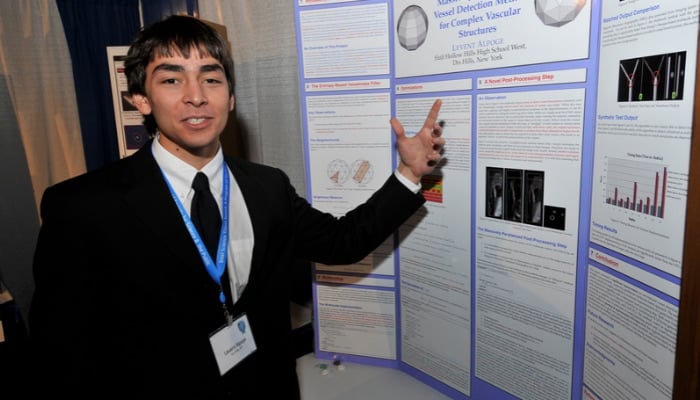
Anthropic mathematician Levent Alpöge has announced that working with the company’s AI model Claude, he has discovered a proof of the Reimann hypothesis, a mathematics’ most famous open problem, unsolved since 1859.
The claim covers not only the original conjecture about the distribution of prime numbers but also the Generalized Riemann Hypothesis (GRH), a broader version concerning related functions.
What is the Riemann hypothesis?
It is a question about prime numbers that has resisted the world’s best mathematicians since 1858. Primes (numbers divisible only by 1 and themselves) grow rarer as number increase, but their spacing looks irregular.
In 1859, Bernhard Riemann linked that pattern to a complex-valued function, now called the Reimann zeta function. Its “nontrivial zeros” all appear to lie on a single vertical line, where the real part equals ½.
The hypothesis states that every one of them does. The first ten trillion have been checked numerically, but examples are not a proof.
Why it matters
A proof would sharply limit the error in our estimate of how many primes exist below any given number, with consequences across mathematics and cryptography. It is one of Clay’s seven Millennium Prize Problems, carrying a $1 million award.
What Alpöge claims
Alpöge released the argument as lean code, a proof assistant that machine-checks every logical step.
A timeline in his note says the final push took 41 days, from October 6 to November 16, 2026. The approach reportedly adapts Stepanov’s method, previously successfully only in simpler function-filed settings, to ordinary integers, with a chain of “theta lifts” as the turning point.
What remains unconfirmed
No independent verification is complete. An independent project matched the archive and confirmed the theorem statements can be formalized in Lean, but its full proof-checking run is still pending.
Reviewers must also confirm the formal statement truly captures the Reimann hypotheiss and that no assumptions were slipped in.