US, Russia resist 'killer robots' treaty as UN talks collapse after all-night negotiations
More than 95 countries supported binding rules, but major military powers pushed for a weaker agreement
Published November 21, 2026
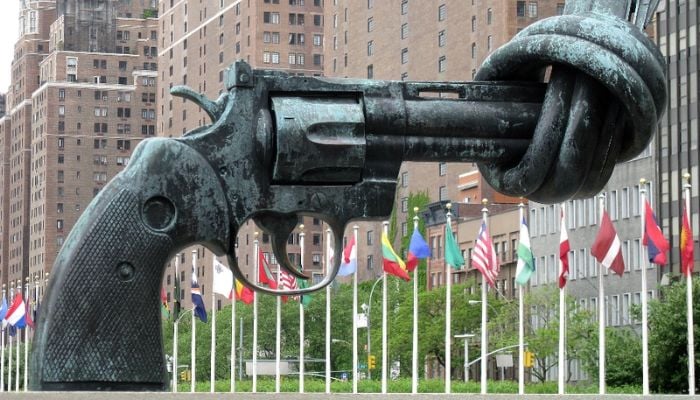
The international negotiations to regulate the autonomous AI weapons have collapsed after Russian objections. The U.S. and Israel also opposed any binding commitments.
Representatives from 128 countries were negotiating at the United Nations (UN) in Geneva for the past five days and reached a watered-down compromise on Saturday, November 21, 2026.
After spending multiple days and the latest session extending until 5 a.m., diplomats struggled to agree on legally binding restrictions on lethal autonomous weapons systems (LAWS), commonly known as "killer robots".
Instead, the representatives agreed to formulate an international agreement in the next two years, without determining whether its provisions would be legally enforceable.
More than 95 countries supported negotiations towards a treaty, but Russia, the United States and Israel opposed binding commitments.
What makes 'killer robots' so dangerous?
Unlike conventional weapons, autonomous systems can independently identify, select and attack targets after activation, potentially removing human involvement from decisions about who lives and dies.
Interestingly, such weapons have already been tested or deployed in conflicts, including Ukraine, according to campaigners.
"Delaying the creation of a legally binding instrument puts civilians and humanity at risk," Stop Killer Robots executive director Nicole van Rooijen warned.
Meanwhile, Washington maintains that existing international humanitarian law provides sufficient protection and favours non-binding guidelines.
The International Committee of the Red Cross (ICRC), however, has urged countries to prohibit unpredictable autonomous weapons and those designed to target humans directly.
Negotiations will continue until 2028, although there is no guarantee they will produce an enforceable treaty.