More satellites than stars? Scientists reveal how Earth's night sky is changing
Researchers warn that the growing number of satellites could threaten humanity's view of the universe
Published November 22, 2026
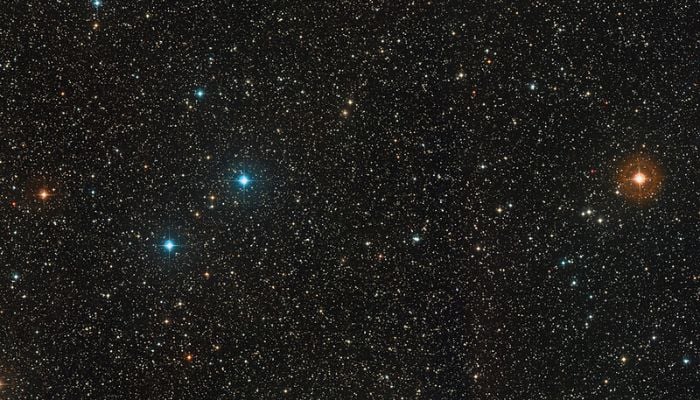
The night sky is becoming increasingly crowded with artificial satellites, with a new analysis revealing that more spacecraft hover above many towns than the stars visible to the naked eye.
Engineering firm Accu Components tracked satellites over 186 British towns and cities using orbital data collected in October.
The findings showed an average of 710 satellites above the horizon at any moment after dark, while nearly 13,000 different spacecraft passed over a typical town during one night.
However, not all satellites are visible. On average, only about 105 were capturing sunlight, while some were still too dim to be seen.
The number changes throughout the night, with satellites easier to see shortly after sunset and before sunrise.
Elon Musk's Starlink network accounts for around 70% of active satellites in low Earth orbit, according to the analysis.
There were just 120 Starlink satellites at the end of 2019, compared with more than 11,000 in October 2026.
The expanding traffic is creating issues besides stargazing.
Bright satellite trails contaminate telescope images and occasionally block out distant galaxies, astronomers say, and can disrupt observations of potentially hazardous objects.
A separate European Southern Observatory study warned in July that proposals for more than 1.7 million additional satellites could seriously disrupt astronomy.
The growing density of orbits also poses a threat of collision and the creation of hazardous space debris.
This analysis has not been peer-reviewed and the number of satellites counted is not necessarily the same number that can be seen by observers.