The children behind closed doors
Tragic murder of 13-year-old Fatima Asghar in Islamabad must become a turning point in Pakistan's treatment of domestic workers
Published November 23, 2026
The tragic murder of 13-year-old Fatima Asghar in Islamabad must become a turning point in Pakistan’s treatment of domestic workers.
She is not the first one; Kaneez Fatima, Iqra, Fatima Furiro, Zohra Bibi, Rizwana and hundreds more are unreported. These deaths raise fundamental questions about child labour, bonded employment, the invisibility of poor families and the failure to enforce laws that are meant to protect the most vulnerable.
Fatima Asghar’s death is a reflection of a deeply entrenched social and economic system in which children from the poorest households are treated as commodities, their labour exploited and their lives considered expendable.
The post-mortem report has revealed an appalling picture of alleged prolonged physical torture. Around 20 injuries were documented across her body, including old wounds, untreated injuries, infections and burn marks reportedly consistent with the use of a heated iron. The medical findings indicate repeated physical assaults and severe trauma. Two suspects have been arrested, and the investigation must establish individual responsibility through a fair and transparent judicial process.
But we must ask a much bigger question: how many other children like Fatima are living behind the closed doors of affluent households across Islamabad and Pakistan, facing violence, exploitation and abuse without anyone knowing?
The National Commission on the Rights of the Child’s State of Children in Pakistan 2025 provides some alarming figures. In Islamabad Capital Territory, domestic work accounts for 13.2% of working children aged 5–17. Among working girls in this age group, the proportion is 33.5%. These figures show the particularly serious vulnerability of girls. The NCRC also acknowledges that domestic work remains underreported.
The International Labour Organization’s 2022 scoping study also found that one in every four households in Pakistan employed a child in domestic work, predominantly girls aged 10–14. This is a disturbing indication of how normalised child domestic labour has become.
Fatima’s case also exposes the social invisibility of a particular class of Pakistanis: children born into extreme poverty, often without birth registration, proper identity documents or access to education and state protection.
Another disturbing dimension is the economics of bonded domestic labour. Poor parents are often offered an advance payment for a child’s services, sometimes covering months or even a year. Where coercion, debt and restrictions on freedom exist, it can amount to bonded labour and trafficking.
The silence of political leadership is equally troubling. Apart from Interior Minister Mohsin Naqvi, who publicly addressed the case and spoke about the police investigation, nothing has been said by the political leadership from Islamabad’s elected representatives. First Lady Bibi Asifa Bhutto Zardari also expressed concern and called for enforcement of child protection laws. National Commission of Rights of Children and the Punjab Commission on Status of Women have issued statements citing articles and conventions on Child Protection.
Yet a child allegedly tortured to death in the federal capital, at a residence connected to a senior government officer, should have prompted a much wider public response. Islamabad’s political representatives, legislators, civil society organisations and human rights institutions must ensure justice.
Islamabad already has legislation specifically intended to prevent such exploitation. The Islamabad Capital Territory Domestic Workers Act, 2022 (Act XXV of 2022) was passed by Parliament and published in October 2022. The legislation originated in a private member’s bill introduced in the National Assembly in 2021 by me during my parliamentary tenure.
The law is significant because it explicitly prohibits the employment of children under 16 in households, even with parental consent. It also prohibits bonded and forced labour and provides for employment letters, wages, overtime, medical care, occupational safety and dignified working conditions.
This raises an uncomfortable question: how could a child of her age remain employed in a household for years without the law being enforced?
The answer lies in the gap between legislation and implementation. Fatima’s death must lead to an urgent review of domestic worker protection legislation and its implementation. I would propose the following measures: one, establish a mandatory domestic workers registry. Every household employing a domestic worker should register the employment with the relevant ICT authority.
Two, create a national database of child domestic labour. The federal government, provincial governments, NCRC and labour departments should collect sex-disaggregated data on domestic workers, including age, working conditions, school attendance, migration and reported abuse. This must be linked to birth registration and school enrolment systems.
Three, make employers legally accountable. Employment contracts must specify wages, working hours, weekly rest, leave, medical treatment and living conditions. Salary advances must not become instruments of debt bondage. All payments should be documented, and withholding wages, identity documents or freedom of movement must attract penalties.
Four, establish a dedicated inspection and monitoring mechanism. Labour inspectors and child protection officers should be empowered to investigate credible reports of abuse and undertake risk-based monitoring, with appropriate judicial safeguards for household privacy. A confidential helpline should enable neighbours, domestic workers and concerned citizens to report suspected child exploitation.
Five, strengthen penalties and prosecution. Employers who knowingly employ children below the legal age, subject workers to violence or engage in bonded labour must face effective criminal consequences. Child domestic labour and serious abuse should be treated as serious offences, with prosecution not dependent solely on the victim’s family pursuing the complaint. The possibility of compromise must never erase criminal accountability.
Six, provide social protection to vulnerable families. Child labour cannot be eliminated through punishment alone. Poor families need income support, education stipends, school meals, accessible childcare and livelihood opportunities. Children rescued from domestic employment must receive rehabilitation, education, psychological support and protection from being trafficked back into another household.
Seven, establish a dedicated child domestic worker protection unit. Islamabad Police, the ICT administration, labour department and child protection authorities should work through a coordinated mechanism, with trained investigators and female officers available to handle complaints involving girls.
Eight, make public officials accountable. When an allegation involves a government employee or a household within an official residential facility, the investigation must be independent, transparent and free from institutional influence. Seniority, influence or official position must not offer protection from the law.
There is also a responsibility that rests with members of the National Assembly and Senate, particularly those representing the federal capital, to demand answers. The relevant parliamentary committees should summon the Ministry of Interior, ICT Administration, Islamabad Police and labour authorities to explain why existing legislation failed to protect a 13-year-old child.
The government should commission an independent review of the implementation of the Islamabad Capital Territory Domestic Workers Act, 2022, and publish its findings within 90 days. The review should identify how many children are employed in domestic work, how many complaints have been received, how many inspections have taken place and how many employers have been prosecuted.
We must also ensure that Fatima’s parents receive legal assistance and protection from intimidation or financial pressure. It is imperative that, in such cases, the state should be the petitioner and the bargaining chip taken from the perpetrators.
I look forward to hearing an announcement from Mohsin Naqvi Sb: “Anyone employing children as domestic workers will be fined Rs200000 and arrested. Strictures if government servants are the perpetrators”.
The real test of a civilised society is not how it treats its powerful citizens, but how it protects its most vulnerable. Fatima’s death must become the moment when Pakistan finally recognises domestic workers as workers, children as children, and protection as a responsibility of the state – not a privilege granted by employers.
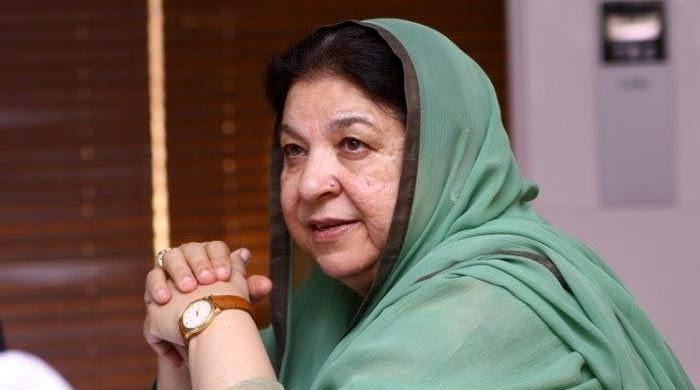
The writer is a former member of the National Assembly and a children, women and minorities advocate. She tweets/posts @Mehnazakberaziz
Disclaimer: The viewpoints expressed in this piece are the writer's own and don't necessarily reflect Geo.tv's editorial policy.
Originally published in The News