The day climate diplomacy stopped pretending: Inside collapse of COP31
UN climate talks collapse in longest summit on record after fossil fuel standoff
Published November 23, 2026
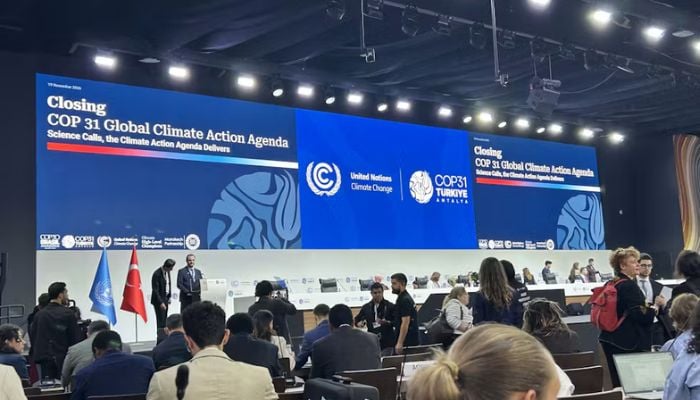
Climate summits tend to end the same way: exhausted ministers, a text watered down until it says nothing, and a press release calling it “a step forward.”
Antalya broke the pattern. The longest UN climate conference on record ended Sunday, November 22, without its flagship agreement. It was first such collapse since Copenhagen in 2009.
The summit ran two days past its Friday deadline. The “Antalya pact” drafted by the Turkish and Australian presidencies would have urged countries to electrify their economies, limit the overshoot of the 1.5C threshold and at least triple adaptation finance by 2035. But what it never did was name fossil fuels.
Turkey’s Murat Kurum admitted there was no consensus, and the package died.
However, one detail stands out. The first draft, published a week earlier, called for an immediate transition away from fossil fuels. Every version after that scrubbed it.
Saudi Arabia and Russia refused any wording and under one determined holdout is enough.
The COP 28 pledge to “transition away” from fossil fuels was sold as a breakthrough. Three years on, it looks like a ceiling; nobody has built on it.
For years, vulnerable and wealthy countries alike have swallowed weak texts and called them progress. This time the EU, Panama, the Marshall Islands, and Norway said no, and the hall applauded. Australia’s Chris Bowen essentially admitted that worsening climate impacts had turned certain words into red lines.
That shift is real. It is also not a clean morality tale, and telling it that way would be dishonest.
Addressing the uncomfortable aspect, the African Group’s chair, Mohamed Adow, told the BBC that the fossil fuel fight swamped his bloc’s actual priority, which is “Adaptation money.”
The tripling pledge had no baseline, so donors could claim to have met it while spending almost nothing new.
Adow called Europe’s stance hypocritical, since it demands fossil-fuel roadmaps from others while expanding supply at home. China, Pakistan, and the African group did not join the rejection. So, the principled “no” has a price, and the countries most exposed to floods and droughts will pay it first, in delayed funding.
The EU deserves credit for the stand. But a walkout that costs the vulnerable more than the rich is not free virtue.
The rejected text also leaned on carbon removal. Most scientists accept some of it will be needed. But the technology is expensive and unproven at scale, and producers love it for an obvious reason: it allows talk of ambition without capping a single barrel. That is the bargain on offer. Rhetoric in, constraints out.
It is important to note that not everything fell apart. Delegates advanced a “just transition” framework and an ocean work plan. More than 80 countries backed Turkey’s goal of raising electricity’s share of final energy use to 35% by 2035, from about 23% today.
The harder question for now is reform. UN climate chief Simon Stiell said he would seek advice on changing the process, and Al Gore called for a more majority-driven system. But any change to consensus rules would itself require consensus, which the beneficiaries of the veto are unlikely to grant.
The more plausible route is coalitions of the willing. Groups of countries would pursue electrification, finance, and fossil-fuel phase-down outside the formal text, and COP would ratify what they have already done.
Ethiopia hosts COP32 in November 2027. Its test will be whether the process can still deliver one shared outcome, or whether the real action has moved elsewhere. The warming trajectory of roughly 2.8C on current policies suggests the world cannot wait long for the answer.